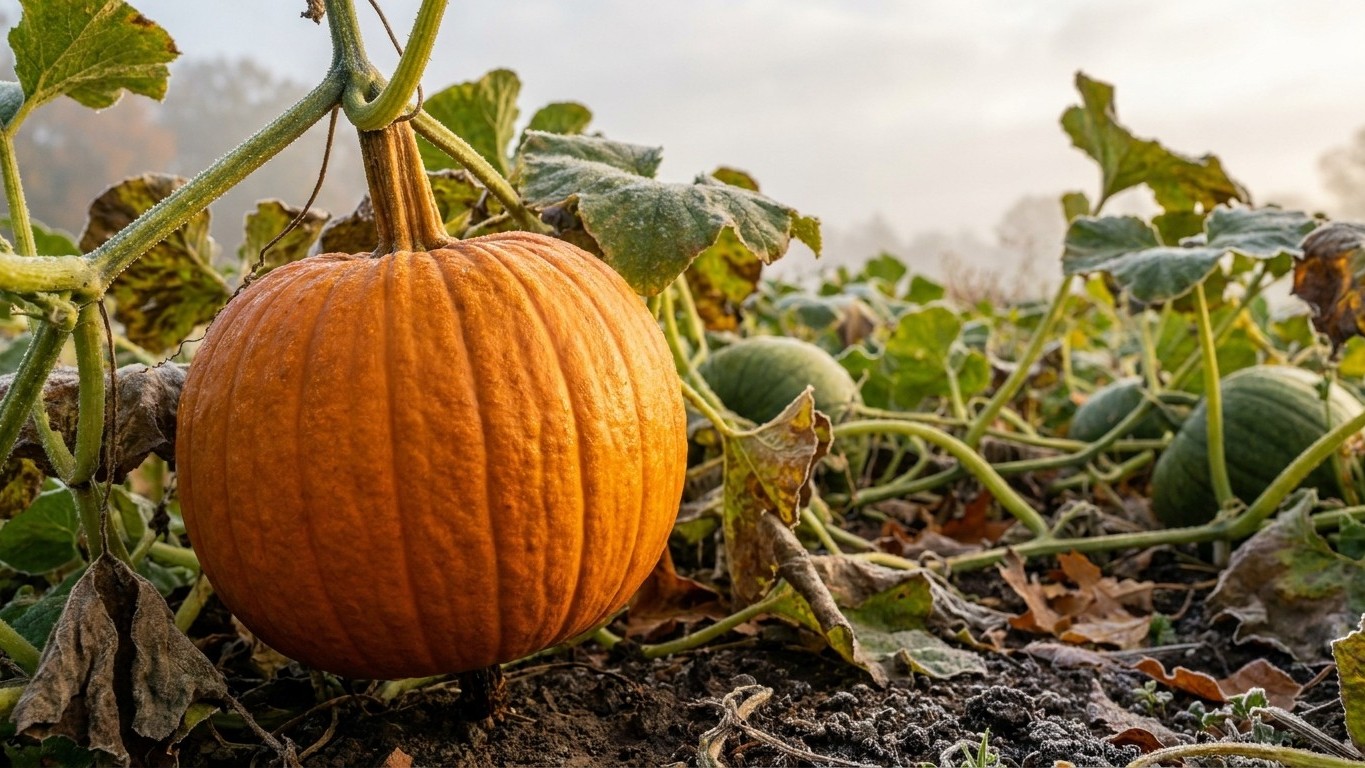

New Mexico’s growing season leaves a narrow but real window for pumpkins to ripen before the first hard frost. Based on the first fall frost arriving between October 29 and November 9, and pumpkins needing 45 to 55 days from the day a flower opens to a ripe, cured fruit, the flowers that will produce this year’s jack-o’-lanterns need to open sometime between early and late September. The question of Will Pumpkins Ripen Before Frost in New Mexico? comes down to this narrow window. Miss that window and the vine runs out of season before the pumpkin runs out of green.
The short answer
Start from the frost, not the seed packet. NOAA’s climate data for this reference station puts the first fall freeze somewhere between October 29 and November 9. That’s a two-week band, not a single date, and it’s the anchor for everything else in this calculation. A pumpkin needs 45 to 55 days counted from the day its flower opens, not the day it was planted or transplanted, to finish maturing into a fruit with a hardened, storable rind.
Working the dates backward
Run the arithmetic from both ends of each range and you get the safe window for the last usable flower. Take the earliest frost date, October 29, and subtract the slower 55-day maturation period: that lands on roughly September 4. Take the latest frost date, November 9, and subtract the faster 45-day period: that lands on roughly September 25. Between those two points, September 4 to September 25, sits the flowering window that gives a pumpkin a fighting chance to color up before the vine gets hit. Flowers that open earlier than that window have margin to spare. Flowers that open after it are racing a clock they’re likely to lose.
That’s a wide window on purpose. Frost dates aren’t fixed, and neither is the maturation clock, so squeezing both into a single date would be false precision. What the window tells a gardener is this: by the time the calendar turns to late September, any new flower on the vine is a gamble, not a plan.
One more wrinkle worth sitting with. The frost dates above come from an airport weather station, and airport stations tend to run warmer than the yards, valleys, and foothills where most people actually garden. Suburban and rural sites in New Mexico often see their first fall frost arrive earlier than the reference dates, sometimes by one to two weeks, and elevation pushes that earlier still. A garden at higher elevation should treat the September 4 end of the window as the realistic cutoff, not the September 25 end. That’s not a minor footnote; in a state with this much elevation variation, it can be the difference between a full harvest and a bin of green pumpkins.
When to sow here
Here’s where a lot of pumpkin patches go wrong before they even sprout. Knowing When to Sow Pumpkins in New Mexico matters more than the temptation to plant on or right after the last spring frost date, March 31 to April 12, but pumpkin seed doesn’t care what the air is doing. It cares about the soil, and soil needs to hit 65 F before pumpkin seed will germinate reliably. Soil warms far more slowly than air, especially in a state where nights stay cool well into spring and where many gardens sit at elevation. That gap between the last frost and 65 F soil is real and it should shape the planting date, not the frost date alone.
- Mark the last spring frost window. For this reference area, that’s March 31 to April 12. Treat it as the earliest the air stops threatening seedlings, not as a soil signal.
- Wait for the soil, not the calendar. Soil temperature lags behind air temperature by weeks in early spring, so 65 F soil typically shows up well after that frost window closes. A soil thermometer pushed a few inches into the bed, checked in the morning, is the only honest way to know.
- Use row covers to buy time if the season feels tight. Floating row covers trap heat and can effectively pull the safe sowing date forward by about two weeks, which matters in a state where the gap between last frost and ripe soil already eats into the calendar.
- Count forward from sowing to flowering, then flowering to harvest. The 45-to-55-day clock doesn’t start until the plant flowers, so a late sowing pushes flowering later, which pushes the harvest window closer to that October 29 to November 9 frost band. The later the soil warms, the less room there is at the other end of the season.
None of this is a single fixed date, and that’s the point. Two gardens ten miles apart, one in a low valley and one on a bench above it, can see 65 F soil arrive a week or more apart. The frost date tells you when the season ends. The soil thermometer tells you when it can start.
What goes wrong here
Three ways the season runs out
- A late flower that never colors. A vine that keeps setting new female flowers into late September is betting on 45 days it may not get. The fruit swells but stays green or pale as the days shorten and cool. Remedy: pinch off new flowers and small fruit that open after the safe window calculated above, and put the plant’s energy into the fruit already sized and on track to finish.
- A fruit caught by frost before the rind hardens. Even a fruit that’s fully orange can still have a soft, thin rind that a freeze will damage, leading to rot in storage within days. Remedy: watch the forecast as the frost window approaches and pick early rather than late if a freeze is called, cutting with several inches of stem attached.
- A vine that dies back before the skin hardens. Powdery mildew, squash vine borer damage, or an early cold snap can kill the foliage while fruit is still maturing, cutting off the plant’s ability to finish the job. Remedy: keep foliage as healthy as possible through the season, and if the vine collapses early, move the fruit to a warm, dry spot out of direct sun to let the rind cure as much as it still can.
Insect pressure plays into all three of these failures, since a weakened vine flowers later and dies back sooner. Squash bugs and cucumber beetles are common culprits in New Mexico gardens, and both have their own dedicated pages on this site with identification and control details specific to this state.
Checking this against your own county
Everything above is built on one weather station’s data, and New Mexico’s terrain makes that a shaky stand-in for any specific garden. A backyard in a river valley, a plot at 6,000 feet, and a raised bed against a south-facing wall can each see frost arrive on a different week. Before locking in a flowering deadline or a sowing date, check current local frost data and planting guidance with the New Mexico State University Cooperative Extension Service. Their county offices track local conditions far more closely than any statewide average can, and they can confirm whether your garden runs ahead of or behind the dates used in this calculation.
Common questions
Can I still plant pumpkins in July in New Mexico?
Only if the plan is for a fast-maturing flower to open by early September at the latest, since the fruit still needs 45 to 55 days after that to ripen before the first fall frost. A July sowing can work in warmer, lower-elevation spots, but it leaves little margin for setbacks like heat stress or pest damage delaying flowering.
What if my pumpkin flowers but frost is close?
Count the days since that flower opened. If it’s fewer than 45, the fruit is unlikely to finish coloring before a freeze damages the rind. Harvesting early and letting the fruit cure indoors, somewhere it won’t freeze, is a better bet than leaving it on a dying vine.
Does row cover really change my sowing date?
It can add meaningful head start by trapping warmth around young seedlings, roughly two weeks in practical terms, which matters most in years when soil is slow to reach 65 F. It doesn’t replace waiting for real soil warmth, though; it just narrows the gap.
How do I know if my pumpkin is ready before frost hits?
Check for a hardened rind that resists a fingernail, a deep, even color, and a dry, woody stem. If frost is forecast and the fruit isn’t quite there, harvest anyway with the stem attached and move it somewhere it won’t freeze rather than risk losing it on the vine.