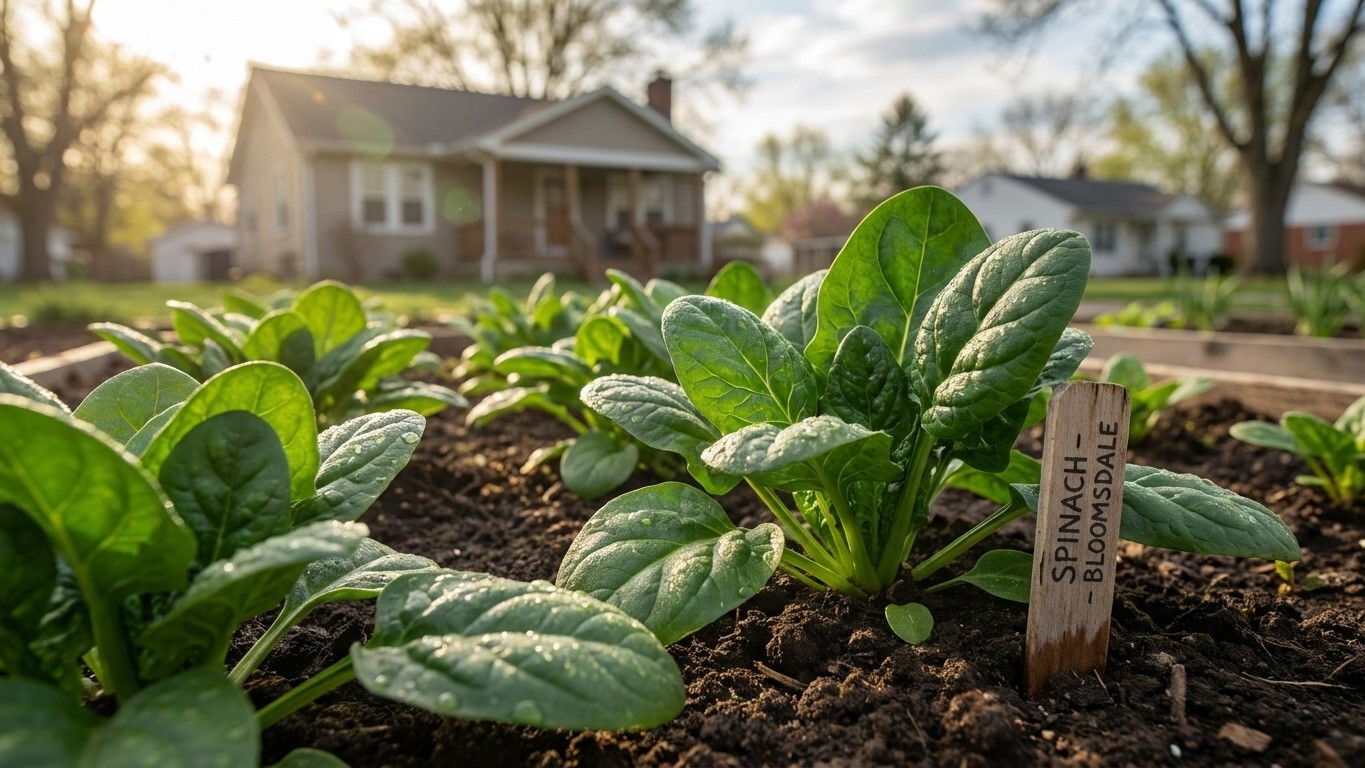

Spinach in New Mexico bolts fast because two forces hit it at once: the state’s long summer days and its early heat load. Will Spinach Bolt Early in New Mexico? Albuquerque logs 14 hours and 22 minutes of daylight on the longest day of the year, and that day length alone pushes spinach toward flowering. Add 42.5 days a year above 90 F, and the spring growing window closes quickly. The reliable crop here is the fall one, sown once soil temperatures drop, not the spring planting most gardeners try first.
The short answer
Start with the number that matters most: 14 hours and 22 minutes of daylight at the summer solstice, measured at the reference city of Albuquerque. That is a long day by any gardening standard, and for spinach, long days are the trigger for bolting. The plant reads day length as a signal to flower and set seed, and it does that regardless of how mild or wild the temperature happens to be. A cooler-than-average summer will not buy a New Mexico gardener extra weeks, because the day-length clock keeps running whether or not the thermometer cooperates.
That would be a manageable problem on its own if New Mexico’s summers were mild. They are not. The state averages 42.5 days a year at or above 90 F, a heat load that arrives early and stays late across most of the lower elevations. Spinach grows best where temperatures stay under 75 F, and above that mark the plant both slows down and turns bitter. So the limit in New Mexico is not one thing or the other. It is both: long days start the bolting process on their own schedule, and heat arrives fast enough to compress the window even further before the plant has a chance to produce much of a crop.
This is why New Mexico gardeners who plant spinach once in the spring and expect a long harvest often come away disappointed. The plant does what it is built to do. Once day length crosses its threshold and warmth pushes past the mid-70s, spinach shifts its energy from leaves to a central flower stalk, and the leaves that remain turn tough and sharp-tasting. Varieties commonly sold for home gardens, including Bloomsdale, Melody, Teton, and Olympia, are all subject to the same day-length and heat triggers. Utah State University Extension, the authority behind the growth thresholds used here, does not publish days-to-maturity or bolt-resistance figures for any of these four, so there is no reliable number to plan around variety by variety. The practical answer is to work backward from the region’s climate rather than forward from a seed packet’s promise, which is exactly what the next two sections walk through, along with When to Sow Autumn Spinach in New Mexico.
How long the spring window really is
Figuring out the real spring window means lining up three things: the last frost date, the recommended sowing lead time, and the point where heat takes over. Here is how that plays out for the Albuquerque area.
- The reference station’s last spring frost falls between March 31 and April 12. Suburban and rural gardens away from the airport station often see frost linger one to two weeks longer, and higher elevations later still, so a mid-April frost is realistic for many yards outside the immediate metro area.
- Spinach should go in the ground 2 to 3 weeks before that last frost date, since the seed tolerates cold soil and cool air far better than it tolerates heat. That puts the earliest sowing somewhere in mid-to-late March for the reference city, and into early April for gardens with a later frost date.
- From that sowing point, the plant has good growing conditions only as long as temperatures stay under 75 F. Given that Albuquerque already averages 42.5 days a year at 90 F or above, the shoulder season between “still cool” and “already hot” is short. Daytime highs in the region typically climb past the mid-70s well before the end of April in most years.
- Add the long-day effect on top of that heat curve, and the practical spring window in New Mexico runs roughly four to six weeks: sow in mid-to-late March, harvest whatever is usable by late April or very early May, and expect bolting to end the crop shortly after that regardless of how the plants look.
That is a narrow target, and it explains why so many New Mexico gardeners treat spring spinach as a quick, minor crop rather than a season-long one. The bigger opportunity sits on the other side of summer.
The autumn crop, and when the soil lets you sow
Fall spinach avoids the long-day problem almost entirely, since days are shortening rather than lengthening by the time it goes in the ground. But New Mexico’s autumn planting has its own obstacle, and it is not the one most gardeners expect.
The soil is still too warm to germinate
Spinach seed germinates poorly once soil temperature climbs above 80 F, and in New Mexico that threshold lingers well into late summer. With 42.5 days a year reaching 90 F air temperature, soil at seed depth stays hot long after the calendar says summer is winding down. Sowing directly into August soil in most of the state means fighting poor germination rates, thin stands, and seed that simply sits without sprouting. The workable move is to wait for soil to cool, which typically happens as days shorten into late August and September, rather than sowing on a fixed date regardless of conditions.
The frost that ends the season
On the other end of the calendar sits the first fall frost, which the reference station places between October 29 and November 9. As with the spring frost date, gardens outside the immediate airport station area, and especially those at higher elevation, often see frost arrive a week or two earlier than that range. Utah State University Extension’s guidance for a fall crop is to plant 50 to 75 days before the date you want to harvest. Counting back 75 days from October 29 lands sowing in mid-August, right in the middle of the soil-temperature problem described above. Counting back only 50 days from that same target lands closer to early September, which gives the soil more time to cool but leaves less margin before frost cuts the season short.
The realistic path threads between those two constraints: aim to sow as soon as soil temperature drops below the germination-limiting 80 F mark, generally sometime in late August to early September across most of New Mexico’s lower elevations, and expect a harvest window opening 50 to 75 days later, right around the first frost dates the region typically sees. That timing favors gardeners who watch soil conditions directly rather than relying on a single date circled on a calendar.
Checking this against your own county
Every figure above comes from a single reference station near Albuquerque, and frost dates in particular shift with elevation, local terrain, and distance from that station. A garden in the foothills or in a higher-elevation county can see frost arrive a week or two earlier in fall and linger a week or two later in spring than the numbers used here. Before locking in a sowing date, check current conditions and local guidance through New Mexico State University’s Cooperative Extension Service, available at aces.nmsu.edu. County extension offices there track local frost patterns and soil conditions far than a single statewide figure ever can.
Common questions
Can spinach handle a light frost in New Mexico?
Spinach tolerates cold well below freezing once established, which is why the fall crop is timed around frost rather than away from it. The bigger risk in New Mexico is heat and long days pushing the plant to bolt, not cold damaging the leaves.
Why did my spring spinach bolt so early?
Two things converge in New Mexico spring: day length crossing the threshold that triggers flowering, and temperatures climbing past 75 F earlier than in cooler states. Either one alone would shorten the season; together they compress it to a few weeks.
Is fall spinach really more reliable than spring here?
Yes, largely because shortening days remove the day-length trigger for bolting. The remaining challenge is timing the sowing date around warm soil in late summer and the first frost that follows.
Do Bloomsdale, Melody, Teton, or Olympia handle New Mexico’s climate better than each other?
Utah State University Extension’s published guidance names these varieties but does not provide days-to-maturity or bolt-resistance data for any of them, so there is no sourced way to rank them against New Mexico’s day length and heat conditions.