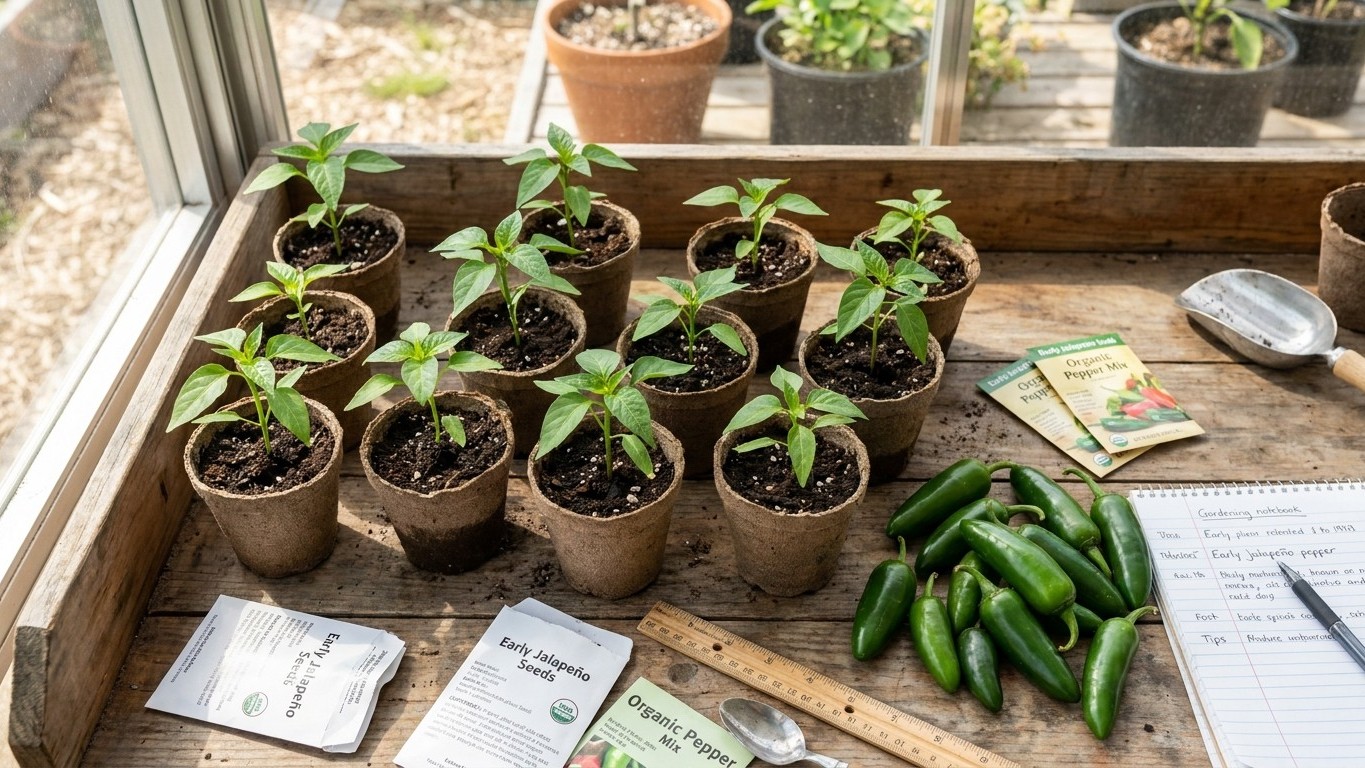

The Early Jalapeno pepper, according to NC State Extension, produces “compact, medium-hot fruits” in about 60 to 65 days from transplant. That’s the whole published record for this cultivar. No Scoville number, no fruit size, no yield count exists in the source, so anything more specific you read elsewhere is a guess dressed up as a fact.
What the Early Jalapeno Pepper Actually Offers
Here’s a wrinkle worth knowing before you buy seed. Clemson Cooperative Extension’s recommended pepper list sorts cultivars into clear categories: bell, banana, jalapeno, habanero, cayenne, and a catch-all “other hot peppers” group. The Early Jalapeno doesn’t appear in that sorted list. NC State Extension describes it on its own, without placing it in a type category at all. So despite the name, nothing in these two sources formally confirms it belongs to the jalapeno group as Clemson defines it. The name may reflect lineage or marketing, but the university description doesn’t make that claim outright, and guessing at a classification the source itself doesn’t offer isn’t a service to the reader.
What NC State does say, word for word, is this: “Compact, medium-hot fruits produced in about 60 to 65 days.” That’s the entire cultivar-specific record. No fruit length in inches, no wall thickness, no per-plant yield estimate, no disease resistance rating. A reader comparing seed catalogs will find plenty of confident claims about this pepper’s size or output. None of that comes from Clemson or NC State. Knowing what isn’t published is more useful than filling the silence with a plausible-sounding number.
One more distinction matters here. Ornamental pepper plants, the kind sold for colorful foliage and holiday displays, are a different category entirely and are not food. The Early Jalapeno is an edible cultivar grown for fruit production, not a decorative variety. Mixing up the two is an easy mistake at a garden center where both sit on the same shelf.
How Hot Is the Early Jalapeno Pepper?
Heat in peppers tracks with type more than with any single cultivar name. A bell pepper carries essentially none. A jalapeno, as a category, runs moderate, landing between 2,500 and 8,000 Scoville units. A habanero sits at the extreme end, and the Carolina Reaper averages 1.64 million Scoville units, among the hottest peppers grown anywhere. Those two figures, jalapeno’s range and the Reaper’s average, are the only Scoville numbers documented across these sources.
The Early Jalapeno has no such number attached to it. Since Clemson doesn’t place this cultivar in its type list, and NC State’s description stops at “medium-hot,” there’s no scoville-range to responsibly report. What NC State does offer instead is more useful than a fake number would be: fruits are edible “but spiciness is unpredictable in intensity.” That single line explains more about how this pepper behaves in a real backyard than any borrowed Scoville figure could.
The mechanism behind that unpredictability is straightforward. Capsaicin, the compound responsible for pepper heat, concentrates under plant stress. A dry summer, a heat wave, or a plant left thirsty for a stretch pushes the fruit to produce more of it. The same seed packet, planted in a mild, well-watered season, can yield noticeably milder peppers than that identical variety grown through a drought. That’s why two gardeners growing the same cultivar three states apart can report completely different heat levels from the same harvest, and why no single number would honestly describe what comes off any one plant.
Growing Requirements for the Early Jalapeno Pepper
Days to Maturity and Plant Habit
This is one of the few cultivars in this silo where the source actually publishes a maturity window: about 60 to 65 days, counted from transplant into the garden, not from seed. That’s a real, sourced figure, worth writing on a calendar. NC State’s description also flags it as compact, which suggests a plant suited to smaller garden beds or containers, though the source doesn’t spell out an exact mature height or spread.
Beyond that, the record goes quiet. There’s no published note on disease resistance, drought tolerance, or how this cultivar performs under heat stress compared to others. If your seed packet lists a different day count for the specific strain you bought, trust the packet. Seed producers test their own stock under specific conditions, and that printed number will apply more directly to your garden than a general university description ever could.
The Constant That Applies to Every Pepper
One rule holds regardless of cultivar: peppers are a warm-soil crop. Transplant into cold ground, and the plant doesn’t die, it just stalls, sometimes for weeks, waiting for soil temperature to catch up. Gardeners who set plants out too early in a cool spring often end up with transplants that sit stubbornly the same size while later-planted neighbors pull ahead. Timing transplant to soil warmth rather than the calendar date matters more than almost any other single decision in growing peppers, and it’s covered in more depth on our transplanting peppers and starting pepper seeds indoors pages.
Taste and Culinary Use
Because the Early Jalapeno isn’t placed in a type category by either source, describing its flavor with confidence is harder than it looks. NC State’s description doesn’t include a taste note beyond “medium-hot,” which rules out inventing a tasting profile for this specific cultivar. What can be said honestly comes from the pepper category it most resembles by description: fruits in the medium-hot range are the workhorses of home kitchens, suited to fresh salsa, pickling, and stuffed poppers, where the heat adds bite without overwhelming the other ingredients.
That’s a description of the category, not a confirmed claim about this exact cultivar’s flavor. Some named cultivars in this silo do carry a specific published note, like NC State’s mention of a “sugary sweet flavor” on a different pepper, or its description of “no heat but the prolific production of a habanero pepper” on another. The Early Jalapeno has no equivalent quote. Its record stops at “medium-hot,” and stretching that into a flavor profile would be inventing detail the source never provided.
For a cook, the practical takeaway is to treat the fruit as you would any medium-heat pepper until you’ve tasted your own harvest. Given the unpredictability NC State documents, a taste test from the first ripe fruit tells you more about your specific plant, in your specific season, than any general description can.
Common questions
Is the Early Jalapeno the same thing as a regular jalapeno?
Not according to the sources behind this page. Clemson’s recommended list sorts peppers into distinct types, including jalapeno, but doesn’t include the Early Jalapeno in that sorted list. NC State describes it separately, without confirming a type classification. The name suggests a connection, but neither source states it plainly.
Is the Early Jalapeno an ornamental pepper?
No. This cultivar is grown for edible fruit. Ornamental pepper plants, grown for colorful foliage rather than food, are a separate category and should never be eaten.
How many days until I can harvest Early Jalapeno peppers?
NC State Extension publishes about 60 to 65 days, counted from transplant into the garden rather than from seed. If your seed packet lists a different number for your specific stock, follow the packet.
Why does the heat level vary between harvests?
Capsaicin, the compound behind pepper heat, concentrates under plant stress like drought or heat waves. NC State notes that spiciness in this cultivar is “unpredictable in intensity,” which reflects that same mechanism rather than any flaw in the seed.
Related guides
- Hot Returns Pepper: When to Plant the Tomatoes That Ripen All at Once
- Mad Hatter Pepper: When to Plant the Tomatoes That Ripen All at Once
- Purple Flash Pepper: When to Plant the Tomatoes That Ripen All at Once
- Biscayne Pepper
- Plato Pepper
- Serrano Pepper
- Tula Pepper: When to Plant the Tomatoes That Ripen All at Once