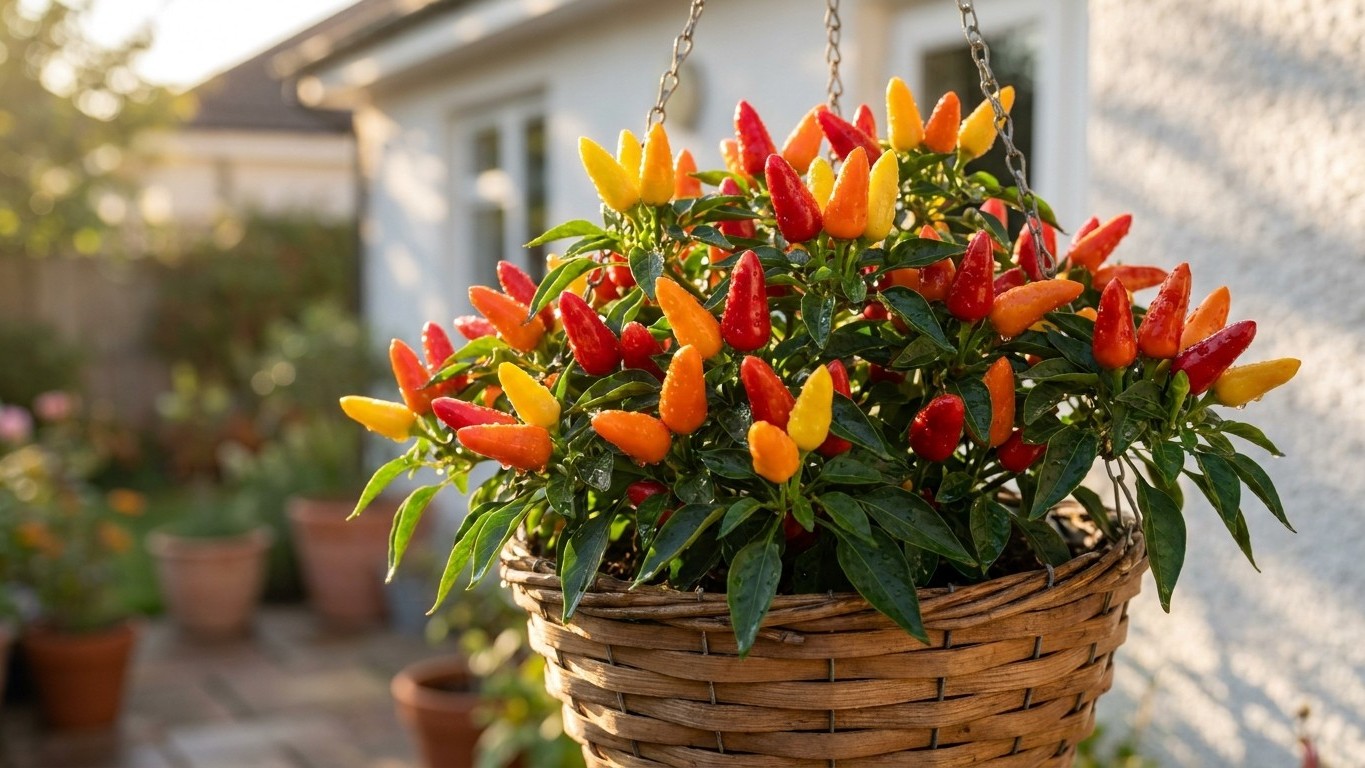

The short answer: wait until your soil holds steady at 65°F or warmer, usually two to three weeks after your last frost date, because this cultivar is bred for containers and hanging baskets and stalls in cold ground just like any other pepper. There’s no published days-to-maturity for it, so the count on your own seed packet is the number that actually applies to your growing season.
What You’re Actually Growing
Here’s where this cultivar gets tricky to pin down. Clemson Cooperative Extension sorts recommended peppers into clear groups: bell, banana, jalapeño, habanero, cayenne, and a catch-all “other hot peppers” category. Basket of Fire doesn’t appear on that list, and it isn’t dropped into one of those buckets by any source available here. That matters, because with most cultivars the type tells you almost everything you need to know before you even read the variety name.
NC State Extension describes it in a single line, word for word: “Edible, hot pepper bred for hanging baskets and containers.” That’s the whole official description. Credit where it’s due, because that sentence is doing a lot of work. It confirms two things and only two things: the fruit is meant to be eaten, and the plant was developed with container and basket growing in mind rather than open-field rows.
What it doesn’t confirm is worth stating plainly rather than papering over. There’s no published days-to-maturity figure for this cultivar in these sources. No fruit size. No yield estimate. A lot of pepper marketing fills those gaps with confident-sounding numbers, but a reader who knows what’s actually unknown is better served than one handed a guess dressed up as fact.
One distinction matters here too. Some pepper plants sold at garden centers, often bushy little things covered in colorful upright fruit, are grown purely as ornamentals for the fall porch display. Those are not food. Basket of Fire is described as edible by NC State, which puts it in a different category entirely, but the two get mixed up on plant tags often enough that it’s worth saying once, clearly.
How Hot Is It, Really?
This is the question everyone actually wants answered, and the honest answer is that no Scoville number exists for this cultivar in either source behind this page. That’s not an oversight worth working around. It’s a fact worth explaining.
Heat in peppers runs on a spectrum tied to type. A bell pepper carries essentially none. A jalapeño lands in moderate territory, typically 2,500 to 8,000 Scoville units. Move up to habanero and beyond, and you’re in a different world: the Carolina Reaper averages 1.64 million Scoville units, extreme enough that it’s handled with gloves in serious kitchens. Those two figures are the only measured numbers in this cocon, and neither applies to Basket of Fire, since it isn’t classified against either.
What NC State does say is more useful than a fake number would be anyway. Their description notes the fruits are edible “but spiciness is unpredictable in intensity.” That single phrase tells you more about how to handle this pepper in the kitchen than a Scoville figure ever could, because it’s warning you that the same plant can surprise you fruit to fruit, season to season.
The mechanism behind that unpredictability is well understood in horticulture circles. Capsaicin, the compound responsible for heat, concentrates under plant stress. A hot, dry stretch with irregular watering tends to push heat levels up. A cool, wet season with steady moisture tends to mellow it. Same seeds, same variety, different summer, different bite. That’s why growers who’ve raised a pepper for years still get caught off guard by one particularly fiery fruit from an otherwise mild plant.
And again, worth repeating separately from the ornamental point above: decorative pepper plants bred purely for colorful foliage or fruit display are a different product line entirely, not intended for eating regardless of how hot or mild they might taste.
Growing Conditions This Cultivar Asks For
Built for Small Spaces
The one detail NC State gives that actually shapes how you grow this plant is right there in the name and the description: it’s bred for hanging baskets and containers. That’s a meaningful design choice, not marketing language. Container-bred cultivars are typically selected for a more compact, contained growth habit that doesn’t sprawl the way a field-row pepper plant might, making them a fit for patios, balconies, and porch rails where ground space isn’t available.
The Timing Nobody Can Skip
Days to maturity isn’t published for Basket of Fire in these sources. Rather than estimate one from its type or its container-bred background, the more useful move is pointing to what will actually govern your harvest: the days-to-maturity number printed on your own seed packet. Seed lots vary even within a named variety, and that packet number reflects the specific stock you’re holding, which beats any general estimate.
What does hold true across every pepper, container-bred or not, is soil temperature. Peppers are a warm-season crop through and through, and they don’t just grow slowly in cold soil, they effectively stop. Transplant into ground or a container mix that’s still cool from spring rains, and you can lose two to three weeks of growing time waiting for the plant to recover, sometimes more if a late cold snap follows. That’s the single most common mistake with home pepper growing, and it applies here exactly as it does to a jalapeño or a bell pepper.
If you’re starting from seed indoors or trying to get the transplant timing right, our guides on starting pepper seeds indoors and transplanting peppers outdoors walk through the soil-temperature thresholds and hardening-off steps in more detail than fits here.
Taste and Kitchen Use
NC State’s description for Basket of Fire stops at “edible, hot pepper.” No tasting note, no flavor profile beyond that. So rather than invent a flavor description that sounds authoritative but isn’t backed by the source, it’s more honest to talk about what hot peppers as a category typically offer in the kitchen, and let you match that against whatever fruit you actually harvest.
Hot peppers in general, as distinct from sweeter bell or banana types, tend to be used in small quantities rather than eaten whole the way a bell pepper might be. Fresh, a small hot pepper works diced into salsa, sliced thin over tacos, or minced into a hot sauce base. Dried and ground, hot peppers become a pantry spice used a pinch at a time. Given the “unpredictable” heat NC State flags for this specific cultivar, the practical kitchen advice is to taste a tiny piece before committing a whole fruit to a dish, since one plant’s fruit can run noticeably milder or hotter than the next.
Some other named cultivars in this same family do get a specific tasting note from NC State, things like a “sugary sweet flavor” or being praised for prolific fruit despite carrying no heat at all. Basket of Fire doesn’t get that treatment in the source material, and pretending otherwise would be the one claim on this page a careful reader could catch as invented.
Common questions
Is Basket of Fire pepper the same as an ornamental pepper plant?
No. NC State Extension describes it as an edible hot pepper. Ornamental peppers sold for their colorful upright foliage and fruit display are a separate product intended for decoration, not eating, and the two should never be confused.
How hot is Basket of Fire pepper on the Scoville scale?
No Scoville figure is published for this cultivar. NC State Extension notes only that its spiciness is “unpredictable in intensity,” which points to stress-driven capsaicin variation rather than a fixed heat level.
How many days until Basket of Fire pepper is ready to harvest?
No days-to-maturity figure is published for this cultivar specifically. Check the number printed on your seed packet, since that reflects the actual seed lot you’re growing.
Can Basket of Fire pepper grow in a hanging basket?
Yes, that’s its intended use. NC State Extension describes it directly as a hot pepper “bred for hanging baskets and containers,” making it suited to porch, balcony, or patio growing where ground space isn’t available.
Related guides
- Black Pearl Pepper: When to Plant the Tomatoes That Ripen All at Once
- Buena Mulata Pepper: When to Plant the Tomatoes That Ripen All at Once
- Calico Pepper: When to Plant the Tomatoes That Ripen All at Once
- Carolina Reaper Pepper
- Antebellum Pepper
- Habanero Pepper
- Cubanelle Pepper: When to Plant the Tomatoes That Ripen All at Once