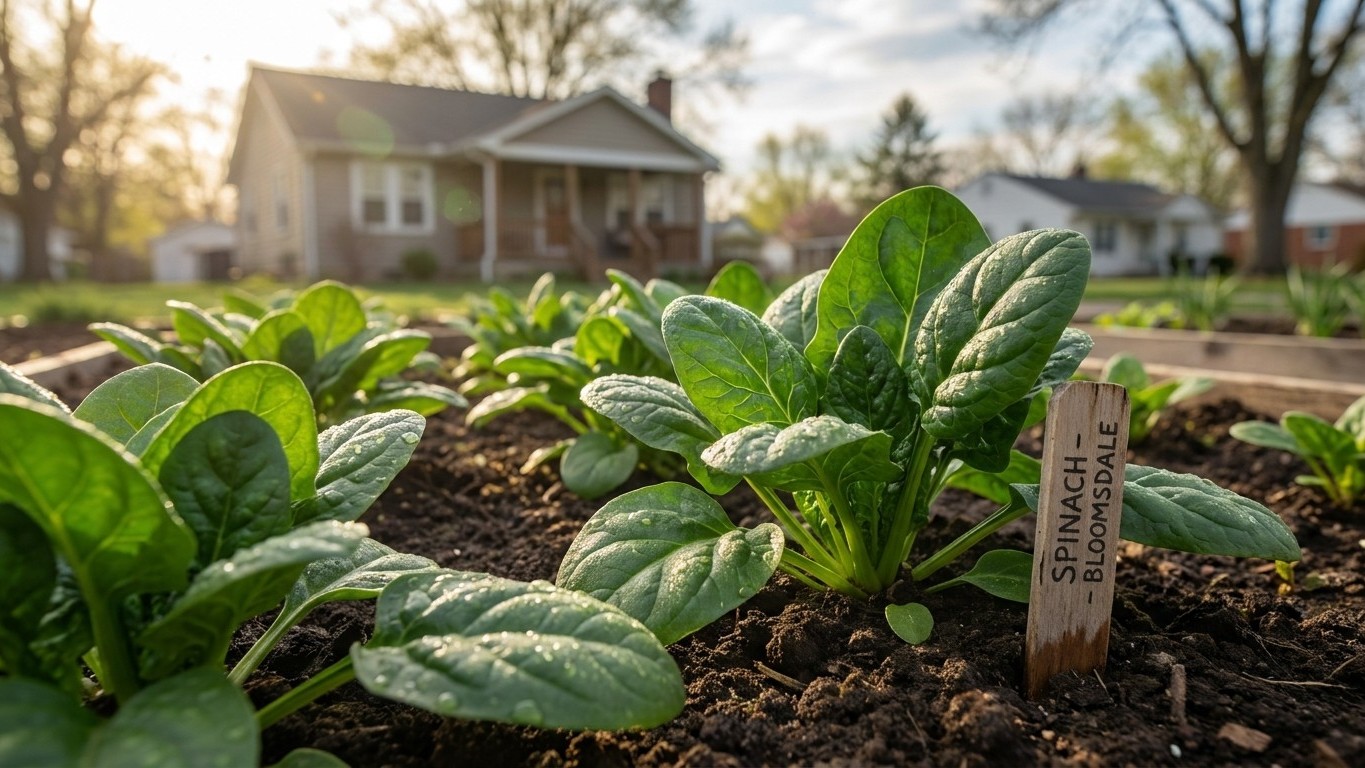

Will Spinach Bolt Early in Oklahoma? Spinach in Oklahoma bolts fast, often within six to eight weeks of a spring sowing, because two forces converge at once: days that lengthen past the point that triggers flowering, and temperatures that push through spinach’s 75 F growth ceiling before May is over. A mild summer doesn’t slow the clock, since day length keeps climbing no matter what the thermometer says. The fall planting, timed to soil that has finally cooled below 80 F, is the more dependable crop here, though it has to outrun a frost that usually lands in late October or early November.
The short answer
At the reference city for this region, the longest day of the year brings 14 hours and 24 minutes of daylight. That number matters because spinach flowers, or bolts, once day length gets long enough, and that trigger fires whether the air feels cool or hot. A shady summer, a wet spring, none of that changes the calendar the plant is reading. So the first limit on how long you can keep spinach in the ground is simply how fast the days are stretching toward that long midsummer stretch.
The second limit is heat, and in Oklahoma it arrives hard. The reference station averages 70.7 days a year at 90 F or above, a heat load that pushes soil and air temperatures well past spinach’s 75 F growth ceiling for long stretches of the warm season. That 75 F mark isn’t a date on a calendar. It’s a threshold the plant crosses whenever a warm spell settles in, and once it’s crossed, growth slows, leaves turn bitter, and the plant channels its energy into flowering instead of leaf production.
Here’s the part that catches new gardeners off guard: these two triggers, long days and high heat, don’t take turns. They land together. By the time Oklahoma’s days are long enough to nudge spinach toward flowering, the state is also sliding into its stretch of 90-degree afternoons. A gardener hoping a cool, cloudy spring will buy extra weeks is fighting the wrong variable. Day length keeps advancing on its own schedule, heat piles on top of it, and the result is a spinach season that closes from both directions at once.
That combination is why Oklahoma spinach growers get better results treating this as a two-crop plant: a short, early spring run finished before the heat and long days catch up, and a fall planting that starts once the ground has cooled again. Knowing When to Sow Autumn Spinach in Oklahoma is just as important as timing the spring crop. Trying to stretch a single planting across the whole warm season almost always ends in bitter, flowering plants by early summer.
How long the spring window really is
Working backward from the region’s frost data gives a realistic picture of how much usable spring actually exists before both limits close in.
- The last spring frost at the reference station falls somewhere between March 28 and April 10. Sowing spinach 2 to 3 weeks ahead of that date puts seed in the ground roughly between March 7 and March 27, depending on how the season is running.
- From that sowing date, the plant has a stretch of cool weather where day length is still short enough and temperatures are still under the 75 F ceiling. That stretch is where nearly all the useful leaf growth happens.
- By mid-to-late April, day length is climbing fast, and Oklahoma’s spring warm-ups start crossing 75 F with increasing frequency. Given that the region logs an average of 70.7 days a year at 90 F or hotter, warm spells arriving well before summer are not unusual.
- Putting those pieces together, the realistic spring window runs about six to eight weeks from sowing to bolt, meaning most of the crop should be harvested by early-to-mid May rather than left in the ground hoping for a few more pickings.
- Variety choice can shift results at the margins. Bloomsdale, Melody, Teton, and Olympia are all commonly planted spinach varieties, but there’s no published data here on how their bolting timing compares, so treat variety selection as a secondary factor rather than a way to outrun the calendar.
The practical takeaway is to sow early, sow densely, and plan on harvesting the whole bed rather than stretching a few plants across the season. Once the six-to-eight-week window closes, quality drops fast even if the plants haven’t fully bolted yet.
The autumn crop, and when the soil lets you sow
Fall spinach in Oklahoma isn’t blocked by cold. It’s blocked by heat that lingers in the soil long after the calendar says summer is winding down, and then it’s squeezed by a frost date that arrives sooner than gardeners expect.
Soil still too warm to germinate
Spinach seed germination drops once soil temperature climbs above 80 F. In a region averaging 70.7 days a year at 90 F or hotter, soil stays hot well past the point when the air finally starts to feel like fall. Sowing into July or August ground in Oklahoma usually means poor, patchy germination, not because of the season on the calendar but because the soil itself hasn’t caught up yet. The practical move is to check soil temperature directly, either with a probe thermometer a few inches down or by tracking a stretch of milder overnight lows, rather than sowing by a fixed date.
Racing the first fall frost
The first fall frost at the reference station arrives between October 29 and November 8. Counting back 50 to 75 days from that range puts the ideal sowing window somewhere between mid-August and mid-September, depending on how quickly the crop is expected to mature. The tension is obvious once both facts sit side by side: mid-August soil in Oklahoma is almost certainly still too hot to germinate reliably, which pushes the real sowing date toward the later end of that window, closer to early or mid-September. That compresses the growing period and leaves less cushion before frost. Gardeners who want a fuller fall harvest often start seed indoors or in a shaded nursery bed while outdoor soil is still too warm, then transplant once temperatures drop, buying back some of the days lost to a slow-to-cool garden.
Checking this against your own county
Every figure above comes from a single reference station, and Oklahoma’s soil and frost timing shift noticeably between the Panhandle, the metro corridor, and the eastern hill country. Suburban and rural gardens typically see frost arrive later in spring and earlier in fall than an airport station records, sometimes by one to two weeks, and more at higher elevation. Before locking in a sowing date, check current soil temperature readings and local frost history through the Oklahoma State University Extension office for your county. They track conditions specific to your area rather than a single statewide average, and that local read is what actually determines whether a given week is the right one to plant.
Common questions
Can spinach survive an Oklahoma summer if I keep it watered?
Watering doesn’t change the trigger. Bolting is driven by day length and by temperatures crossing the 75 F growth ceiling, not by soil moisture, so even a well-watered plant will flower once those thresholds are crossed.
Which spinach variety bolts slowest here?
Bloomsdale, Melody, Teton, and Olympia are common named varieties, but there’s no published comparison of their bolting timing for this region, so variety alone isn’t a reliable way to extend the season.
Does shade cloth or afternoon shade help delay bolting?
Reducing heat exposure can help keep soil and leaf temperatures lower, but day length still advances regardless of shade, so it addresses only one half of the two-part trigger.
Is fall spinach really easier than spring spinach in Oklahoma?
It tends to be, mainly because day length is shrinking rather than growing during a fall crop, removing one of the two bolting triggers. The remaining challenge is timing sowing around soil that’s still too warm to germinate well, then finishing before frost.