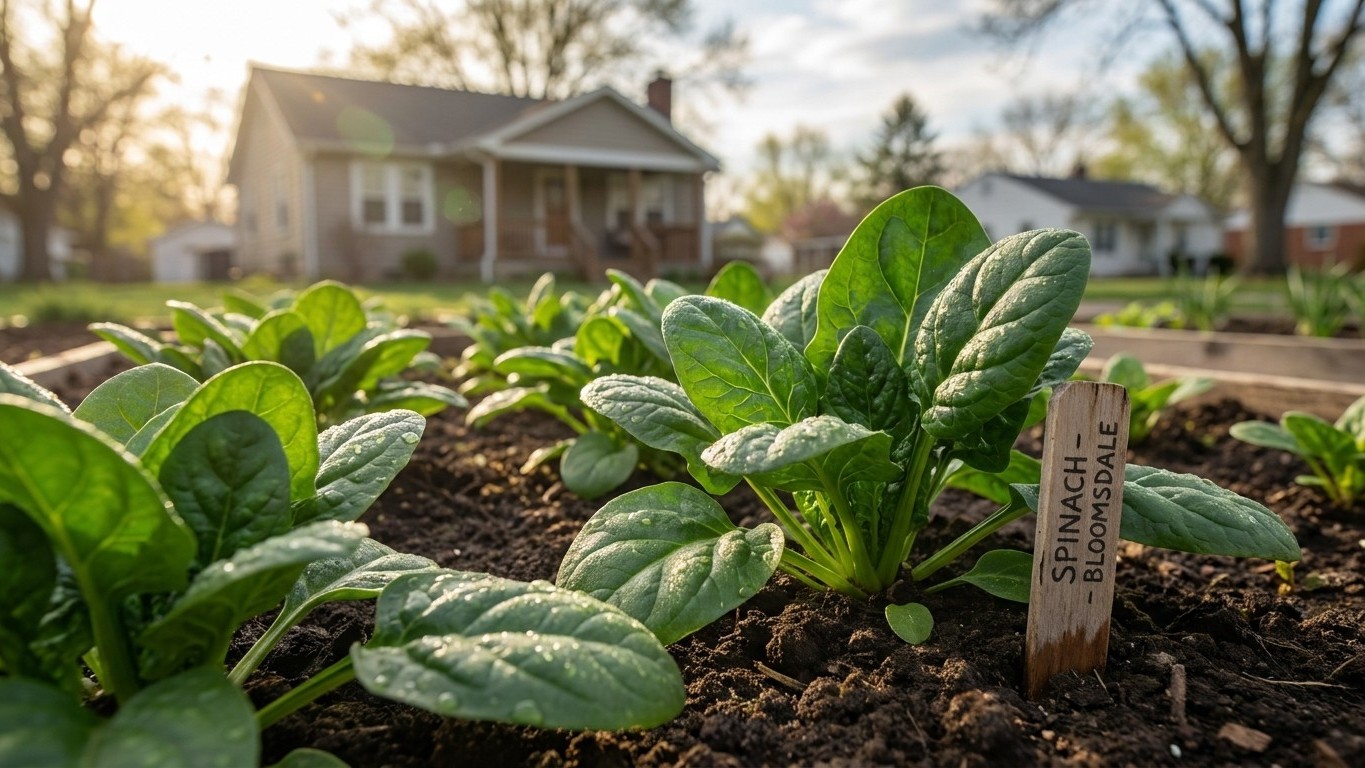

In the Houston area and along most of the Gulf Coast, spinach bolts fast: by the time spring day length climbs past 13 hours, the crop is already racing to flower, and the region’s 102-plus days a year above 90 degrees finish the job. There is no long, mild summer window here. Will Spinach Bolt Early in Texas? Spinach in Texas is a cool-season crop squeezed into two short slots, one quick spring sowing before the days stretch too far, and a fall crop timed around soil that finally cools enough to sprout the seed.
The short answer
On the longest day of the year, the Houston-area station behind these regional numbers records 13 hours and 56 minutes of daylight. That figure matters more than most gardeners expect. Spinach bolts, meaning it throws up a flower stalk and turns bitter, in response to two triggers working together: long days and warm temperatures. Neither trigger needs the other to act; either one alone pushes the plant toward flowering, and Gulf Coast Texas delivers both in the same stretch of the calendar.
This is where confusion usually starts, because people assume a mild, cloudy summer will buy them extra growing weeks. It does not work that way with spinach. The plant does not care whether the air feels comfortable at 78 degrees or brutal at 98; once day length stretches long enough, flowering physiology kicks in regardless of how the season otherwise feels. A cool, overcast stretch along the coast will not stop bolting if the days are still 13-plus hours long. That is the opposite of what happens with a crop like onions, where long days build the bulb. For spinach, long days are the trigger that ends the crop, not something the plant is waiting for.
Layer heat on top of that, and Houston’s conditions turn hostile twice over. The region logs an average of 102.4 days a year at or above 90 degrees Fahrenheit, a heat load that starts building well before the calendar says summer and often lingers into fall. Spinach grows best when temperatures stay under 75 degrees Fahrenheit, and that same 75-degree mark is also the point where leaves start turning bitter. The ceiling that ends good growth and the ceiling that ruins flavor are the same number, leaving little margin once spring temperatures start climbing.
So is the limit here day length, heat, or both? Both, and they arrive close together. By the time spring days lengthen enough to trigger bolting, Houston’s air is usually already warm enough to push the plant past its 75-degree comfort zone on its own. Neither factor waits for the other. That double pressure is why spinach along this part of the coast is treated as a narrow-window crop, planted hard against the calendar in spring and again in fall, rather than left in the ground through the warm months; knowing When to Sow Autumn Spinach in Texas becomes just as important as timing the spring crop.
How long the spring window really is
Counting backward and forward from the region’s frost data shows just how tight the spring slot really is.
- Start with the last spring frost. At the Houston-area station behind these climate normals, the last spring freeze typically falls between February 4 and March 1.
- Move the sowing date earlier. Spinach seed goes in the ground 2 to 3 weeks before that last frost date, since the crop tolerates cold far better than heat. That puts a realistic sowing window somewhere from mid-January through mid-February.
- Track how fast the region warms. Once seedlings are up, they have to finish growing before temperatures push past the 75-degree Fahrenheit ceiling. Gulf Coast Texas does not ease into summer, it accelerates into it, and the same stretch of days that drives the area toward its annual average of 102.4 days above 90 degrees starts building real heat well before summer officially starts.
- Add the day-length trigger. Independent of temperature, day length is climbing through this same stretch, working toward that 13-hour, 56-minute peak. Bolting pressure builds whether or not the thermometer cooperates.
- Total the usable weeks. Sown in mid-January to mid-February and shut down by rising heat and lengthening days sometime around mid-spring, the crop realistically gets something in the neighborhood of eight to ten usable weeks before both triggers close the window.
That is a workable spring crop, but not a lazy one. Gardeners who wait for weather that feels reliably warm before sowing are planting directly into the bolting window instead of ahead of it. The four spinach varieties most commonly sold to home gardeners, Bloomsdale, Melody, Teton, and Olympia, are not distinguished here by any published days-to-maturity or heat-tolerance figures, because that data simply is not published by the source behind these regional numbers. Choosing among them along the Gulf Coast is a matter of local trial, not a claim on a seed packet.
The autumn crop, and when the soil lets you sow
Fall is the better season for spinach across most of Texas, but it runs into a different obstacle than spring. Instead of racing lengthening days, the fall crop waits on soil temperature at one end, then races an early frost at the other.
Soil still too warm to germinate
Spinach seed germinates poorly once soil temperature climbs above 80 degrees Fahrenheit. Along the Gulf Coast, where the air itself averages 102.4 days a year at or above 90 degrees, soil holds that heat well into what feels like fall on the calendar. Sowing spinach seed in August or early September ground here is largely wasted effort, not because the plant cannot handle heat once established, but because the seed itself will not sprout reliably in soil that warm. The practical fix is patience: wait for real cool snaps to pull soil temperature down, which along this stretch of coast does not usually happen with any consistency until well into fall.
The frost that ends the season
At the other end of the calendar, the Houston-area station’s climate normals put the first fall frost between December 1 and December 19. Working backward from that date using the fall-planting rule, spinach goes in 50 to 75 days before the date you want to harvest. Counting back 50 to 75 days from early-to-mid December lands sowing somewhere between late September and late October, depending on how close to first frost the harvest is meant to land, and on how quickly the soil has actually cooled below that 80-degree germination threshold.
That leaves a real, workable slot, roughly a month wide, between soil finally cooling enough to sprout seed and the season finally ending in frost. It is narrower than gardeners further north get, but more forgiving than the spring window, since neither day length nor heat is climbing during those weeks. The plant is coasting into shorter, cooler days instead of racing away from them.
Checking this against your own county
Every date and figure above comes from a single Houston-area weather station, and Texas is too large a state for that to double as a statewide planting calendar. The Panhandle sees its last frost months later than the Gulf Coast and its first fall frost months earlier; Hill Country and North Texas fall somewhere between the two. Even within the Houston metro, a station like Hobby Airport runs about two weeks milder than the one behind these numbers, which is enough on its own to shift a sowing date.
Before planting, check current freeze data and local guidance through Texas A&M AgriLife Extension, at agrilifeextension.tamu.edu. County extension offices under that system track local frost dates and soil conditions far than any single regional station can, and they are the practical way to turn the mechanics above, day length, heat, soil temperature, into an actual date on a calendar for a specific county.
Common questions
Can spinach survive a Texas summer if I keep it watered and shaded?
Not really. Shade and water lower leaf temperature, but they do nothing about day length, and day length alone is enough to trigger bolting. A shaded spinach bed under 13-plus hours of daylight will still flower, just possibly a little later than one baking in full sun.
Does the 75-degree ceiling mean one hot afternoon ruins the crop?
No. The 75-degree mark describes sustained growing conditions, not a single spike. A hot afternoon followed by cooler nights won’t end the crop on its own, but once daytime highs sit above that mark consistently, growth quality drops and the same threshold that limits growth also starts pushing the leaves toward bitterness.
Which of the common spinach varieties bolts slowest in Texas?
That comparison is not available from the data behind these regional figures. Bloomsdale, Melody, Teton, and Olympia are the varieties commonly sold to home gardeners, but no days-to-maturity or bolt-resistance numbers are published for any of them here, so the honest answer is local trial rather than a guaranteed pick.
Why does the fall sowing date depend on soil temperature instead of the first frost?
Because germination itself fails once soil climbs above 80 degrees Fahrenheit, the constraint at the start of the fall season is leftover summer heat, not approaching cold. The first frost only matters at the other end, marking when the season closes rather than when it can begin.