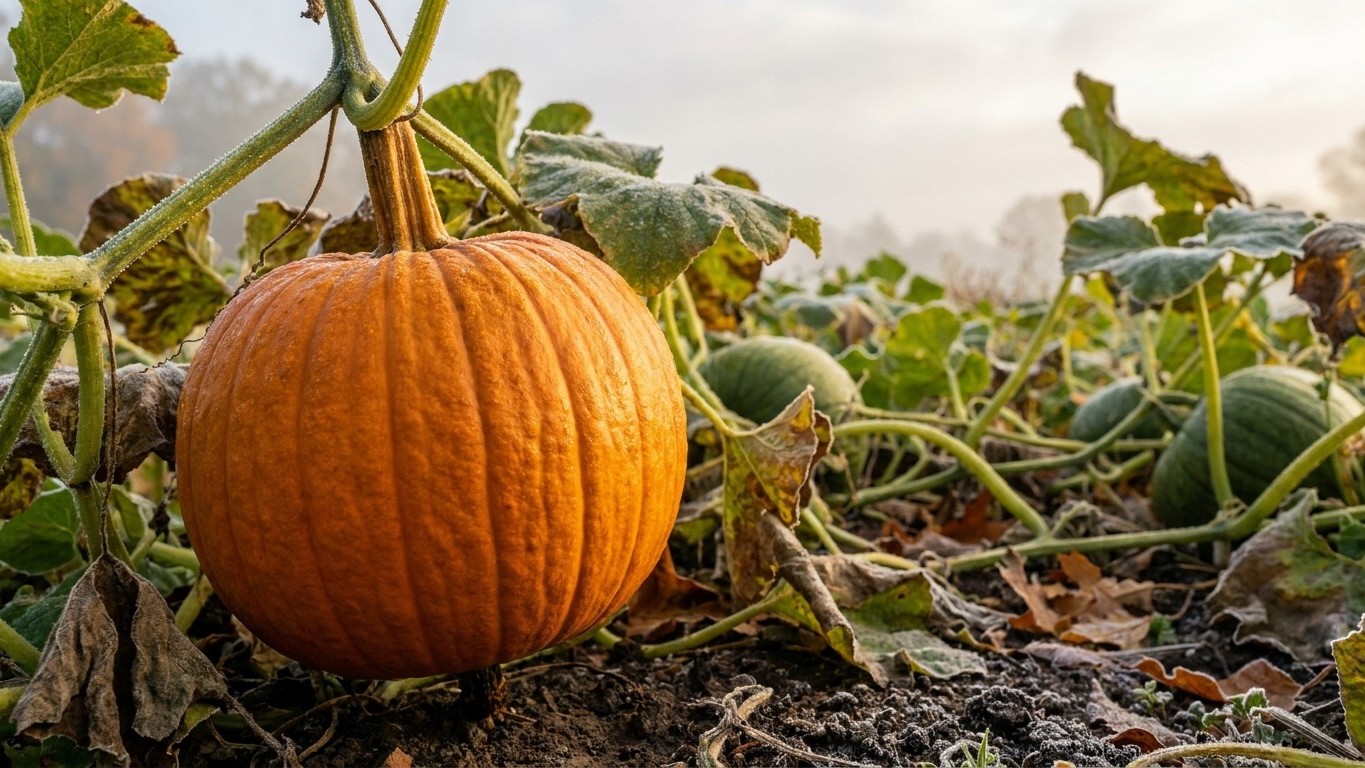

West Virginia’s growing season allows pumpkins to ripen in time, but only if the vine flowers before the calendar runs out. The math works backward from the state’s first fall frost, which arrives between October 18 and November 1 depending on where you sit in the state. Miss that flowering window and the fruit stays green on the vine. Here’s how the timeline actually plays out, and where growers tend to run out of days.
The short answer
West Virginia’s first fall frost lands somewhere between October 18 and November 1, based on 30-year climate normals from a weather station in the Charleston area. That date is the backstop for every pumpkin patch in the state, and it’s the number every other calculation has to bend around. A pumpkin flower needs 45 to 55 days after it opens to turn into a ripe, hard-skinned fruit ready for harvest. Not 45 to 55 days from the seed going into the ground. From the flower.
Run the subtraction both ways and you get a window, not a single date. Take the earliest frost date on record, October 18, and the slower end of the maturation range, 55 days, and the last flower that can still finish has to open by around August 24. Take the latest frost date, November 1, paired with a faster-maturing 45-day fruit, and you can push a flower opening as late as roughly September 17. Somewhere between those two dates is where most West Virginia gardens land.
That’s a wide spread, and it matters which end of it you’re planning around. A grower in a warm river valley with a fast variety has more room to work with than someone at higher elevation planting a big, slow jack-o’-lantern type. The station behind these frost dates sits in the Charleston area, a river valley, and valleys tend to hold heat longer into fall than the ridges and hollows around them. If your garden sits higher up, or in a low spot where cold air pools overnight, your local frost risk shows up earlier than the state-level window suggests. That’s not a reason to panic. It’s a reason to aim for the conservative end of the flowering window, meaning you’d rather have your vines flowering in late August than banking on a mid-September bloom holding up.
The other piece of the short answer: harvest with the stem attached, and get the fruit off the vine before frost hits it, even if the calendar says it’s a few days shy of the full 45 to 55 days. A pumpkin that’s close to ripe and picked ahead of a freeze beats one that froze on the vine waiting for one more warm week that never came.
When to sow here
When to Sow Pumpkins in West Virginia isn’t set by the last spring frost, even though that’s the number most gardeners reach for first. Pumpkin seed wants soil at 65°F to germinate reliably, and soil temperature lags well behind air temperature in spring. West Virginia’s last spring frost falls between April 9 and April 23, but soil doesn’t just flip to 65°F the day after that frost passes. It takes weeks of steady sun and warming air before the ground itself catches up, which is the gap that trips up gardeners who plant by the frost date alone and then wonder why the seed sits in cold, wet soil doing nothing.
- Wait on the soil, not the air. Check soil temperature with a simple soil thermometer at planting depth, a few inches down, rather than trusting that the last frost date means the ground is ready. In West Virginia, that 65°F mark typically shows up well after the April 9 to April 23 frost window closes.
- Use row covers to buy time. Floating row covers trap daytime heat and can push your effective planting window about two weeks earlier than bare, uncovered soil would allow, by warming the top few inches of ground faster than open air does. That two-week head start can matter a lot when you’re working backward from a fixed fall frost date.
- Work backward from your flowering deadline. Once you know how late a flower can open and still ripen (the August 24 to September 17 window from the section above), check the days-to-flower figure on your specific seed packet, since that varies by variety and isn’t a single fixed number across all pumpkins. Subtract that from your flowering deadline to land on a target sow date.
- Adjust for elevation. Gardens at higher elevation warm more slowly in spring, which pushes the 65°F soil mark later in the calendar. If you’re above the valley floor, lean toward the earlier end of your sowing window rather than the latest date that theoretically still works.
What goes wrong here
Most pumpkin failures in West Virginia trace back to the same root cause: not enough runway between flowering and frost. Here’s where that shows up in the field.
- A late flower that never colors. When the first female flowers don’t open until late September, the fruit is still green and hard when frost shuts the vine down, because it never got its full 45 to 55 days. The remedy is planning backward from the flowering deadline in the first section, not forward from the sow date, and choosing a faster-maturing variety if your garden sits at higher elevation or in a low-lying frost pocket.
- A fruit caught by frost before it fully hardens. Even a pumpkin that’s close to done can get nipped if a frost arrives on the early side of the October 18 to November 1 window. The fix is watching the forecast closely once you’re inside that window and harvesting early rather than gambling on a few extra warm days. Cut the stem, don’t yank it, and bring the fruit in before a hard freeze, even if it’s a touch short of full color.
- A vine that dies back before the skin hardens. Foliar disease and pest pressure can take down the vine’s leaves weeks before the fruit is ready, cutting off the plant’s ability to keep feeding the pumpkin and finish hardening its skin. Squash bugs and cucumber beetles are common culprits behind that early collapse, and both have their own dedicated pages on this site covering identification and control. Keeping vines healthy through the full maturation window matters as much as picking the right sow date in the first place.
Checking this against your own county
The frost dates and soil-temperature guidance here come from statewide climate data centered on a station in the Charleston area, and West Virginia’s terrain is varied enough that your own hollow or ridge can run noticeably earlier or later than that. Before you lock in a sow date or a flowering deadline, check in with your county office of the West Virginia University Extension Service. Extension agents track local frost patterns and soil conditions county by county, and they can tell you whether your specific location tends to run ahead of or behind the statewide window used in this article. That local check is worth five minutes, especially if you’re gardening at elevation or in a spot known for pooling cold air.
Common questions
How many days before the first frost should a pumpkin flower open in West Virginia?
The flower needs to open 45 to 55 days before frost hits, which places the safe flowering window sometime between roughly August 24 and September 17, depending on your local frost timing and how fast your variety matures.
Does the last spring frost date tell me when to plant pumpkin seed?
No. Pumpkin seed needs soil at 65°F to germinate well, and soil warms up weeks after the last spring frost passes, which falls between April 9 and April 23 statewide. Check soil temperature directly rather than planting by the frost date alone.
Can row covers really change my planting date?
Row covers trap heat in the top layer of soil and can move your effective planting window up by about two weeks compared to bare ground, giving vines more time to flower before the fall deadline closes in.
What should I do if my pumpkin isn’t ripe when frost is forecast?
Harvest it anyway, cutting the stem rather than pulling it, and move it somewhere it won’t freeze. A pumpkin picked a little early and kept out of the cold has a better shot than one left on the vine through a hard freeze.