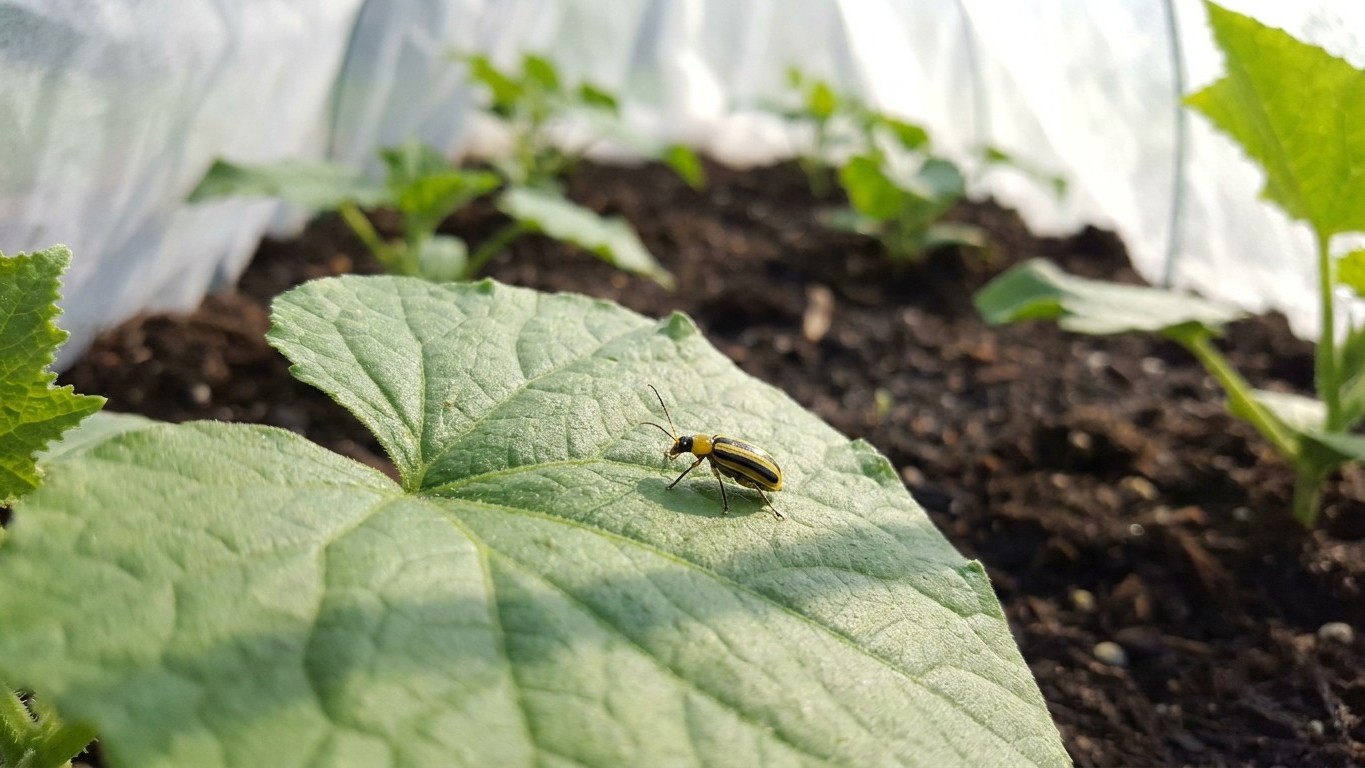

Cucumber beetles start showing up in West Virginia gardens as soon as soil temperatures climb past 65°F, which usually lands somewhere between mid-May in the Eastern Panhandle’s lower valleys and early June in the higher elevations around Pocahontas or Randolph County. They stick around through September, feeding on squash, cucumbers, melons and pumpkins the whole time. The fastest way to knock back their numbers is a combination of timing your planting to dodge peak emergence, covering young seedlings until they flower, and choosing varieties bred to resist the bacterial wilt these beetles carry.
That last part matters more than most gardeners realize. The beetle itself does some chewing damage, but the real threat is what it spreads. A handful of adults can wipe out a squash patch in a week, not from feeding, but from the disease riding along on their mouthparts.
When Cucumber Beetles Show Up Across West Virginia

West Virginia’s terrain creates a patchwork of microclimates, and cucumber beetle timing follows that patchwork closely. In the Eastern Panhandle counties like Jefferson and Berkeley, where elevations sit lower and spring warms faster, overwintered adults typically emerge from leaf litter and soil debris by the second or third week of May. In the mountainous central and eastern counties, where frost can linger into late May, emergence often slides two to three weeks later.
The beetles overwinter as adults, tucked into plant debris, fence rows, and the edges of wooded areas bordering gardens. They don’t fly in from somewhere else each spring; they’re already there, waiting for soil and air temperatures to warm enough to trigger movement. Once daytime temperatures hold consistently above 70°F, adults become active and start searching for host plants, often before your cucumber or squash seeds have even sprouted.
A second wave complicates things further. Adults that survive the early season lay eggs at the base of host plants, and those eggs hatch into root-feeding larvae. By late July and into August, a new generation of adults emerges, meaning West Virginia gardeners often deal with two distinct pressure points in a single season, not one.
Elevation Changes the Math
Gardeners at higher elevations, say above 2,500 feet in counties like Pocahontas or Webster, sometimes get a small advantage. Cooler nights slow beetle reproduction and can push that second-generation emergence closer to the first frost, giving crops a shorter window of exposure. It’s not a guarantee, but it’s a real factor worth building into planting schedules if you garden in the mountains.
Striped and Spotted: Two Beetles, One Big Problem
West Virginia deals with two species, and telling them apart takes about two seconds once you know what to look for. The striped cucumber beetle is roughly a quarter-inch long, yellow-green with three bold black stripes running lengthwise down its back. It’s the more aggressive of the two when it comes to spreading bacterial wilt, and it tends to concentrate on cucumbers and melons more than squash.
The spotted cucumber beetle looks similar in size and base color but swaps the stripes for a dozen black spots scattered across its back. It’s also known as the southern corn rootworm in its larval stage, which tells you something important: this beetle isn’t picky. It feeds on corn, beans, and a wide range of garden plants beyond the cucurbit family, making it a bit more of a generalist pest.
Both species lay eggs at the soil line near host plants. The larvae, thin and white with a darker head, tunnel into roots and stems below the surface, which is why plants sometimes wilt and collapse even when you haven’t spotted many adults above ground.
Why Bacterial Wilt Is the Bigger Threat
Chewed leaves look bad, but they rarely kill a plant outright. Bacterial wilt does. The pathogen, Erwinia tracheiphila, lives in the beetle’s gut and gets deposited in feeding wounds or in the beetle’s frass left on damaged leaf tissue. Once the bacteria enter the plant’s vascular system, they multiply and physically clog the tubes that move water, causing individual leaves, then whole vines, to wilt even when soil moisture is fine.
Cucumbers and muskmelons are the most susceptible. Squash and pumpkins show more natural resistance, though certain squash varieties can still succumb under heavy beetle pressure. Once a plant shows wilt symptoms, there’s no cure. The plant needs to come out before it becomes a source of bacteria that healthy beetles can pick up and carry to neighboring plants.
Cucumber beetles also transmit cucumber mosaic virus, which causes mottled, distorted leaves and stunted fruit. It’s a slower-moving problem than bacterial wilt but still cuts yields significantly if left unmanaged across a full growing season.
What Actually Stops Cucumber Beetles in a West Virginia Garden
No single tactic solves this problem on its own. Beetle control works best as layered timing decisions, not a single spray or product.
Delay Planting or Use Transplants
Direct-seeded cucurbits are most vulnerable in their first two to three weeks, when cotyledon leaves are tender and plants have little foliage to spare. Starting seeds indoors and transplanting hardened seedlings after beetles have already had a few weeks to disperse can reduce the odds of a young plant taking a hit right when it’s most fragile. In West Virginia, waiting until early June to transplant in most counties, rather than direct-seeding in mid-May, often means avoiding the worst of the first beetle wave.
Row Covers, Used Correctly
Floating row covers made of spun polyester are one of the most reliable physical barriers available to home gardeners. The catch is timing removal. Cucurbits need pollinators to set fruit, so covers have to come off once flowering starts. That creates a narrow window, roughly three to four weeks after germination, where covers protect seedlings during the highest-risk period, then get pulled before blossoms need bee access. Secure the edges with soil or landscape staples; beetles will find any gap left along the fabric’s border.
Trap Crops and Timing Tricks
Blue Hubbard squash is famously more attractive to cucumber beetles than most other cucurbits. Planting a small border of it a week or two before the main crop can pull beetles away from cucumbers and melons, concentrating the pest population where it’s easier to treat or remove. This works best on larger garden plots where there’s room to dedicate a border row without sacrificing much production space.
Kaolin Clay and Reflective Mulch
Kaolin clay, sold under various horticultural brand names, coats leaf surfaces with a fine white film that confuses beetles’ feeding and egg-laying cues. It needs reapplication after rain but has a solid track record in reducing beetle landings on treated foliage. Reflective silver mulch under young plants has shown similar disruption effects, since the beetles seem to navigate partly by visual contrast between plant and soil.
Resistant Varieties
Plant breeders have made real progress here. Some cucumber and muskmelon varieties carry genetic resistance to bacterial wilt specifically, meaning even if beetles feed and transmit bacteria, the plant’s vascular system resists colonization. Seed catalogs typically flag bacterial wilt resistance directly in variety descriptions, so it’s worth checking before ordering seed each spring, especially for anyone who’s lost a cucumber patch to wilt in a previous season.
Biological and Chemical Options
Beneficial nematodes applied to soil around the base of plants can target beetle larvae before they mature into the next wave of egg-laying adults. This works as a preventive measure more than a rescue treatment, since it takes time for nematodes to establish and find larvae underground.
For active adult infestations, pyrethrin-based sprays applied in the early morning, when beetles are most active and pollinators are less present, offer a faster knockdown. Spinosad is another option with a shorter residual impact on beneficial insects compared to broad-spectrum synthetic pesticides. Whatever product gets used, spraying in early morning or evening reduces harm to bees visiting open blossoms during the day.
Cleanup Matters More Than People Think
Since adults overwinter in garden debris, fall cleanup is a control tactic, not just tidiness. Removing spent cucurbit vines, tilling soil after harvest to expose overwintering sites to birds and cold temperatures, and clearing leaf litter along garden borders all cut down on the population that survives to emerge the following spring. Gardeners who leave vines in place through winter, thinking it doesn’t matter once the growing season ends, are essentially building a beetle hotel for next year.
Crop rotation helps too, though it’s less powerful against cucumber beetles than against some other pests since adults can fly reasonable distances to find host plants. Still, moving cucurbits to a different section of the garden each year, combined with the debris cleanup, adds another layer of pressure against the population building up in one spot season after season.
One detail that catches a lot of West Virginia gardeners off guard: beetle pressure tends to be noticeably heavier near wooded edges and unmown field borders, since those areas provide the leaf litter and grass cover adults prefer for overwintering. Gardens tucked against a tree line or an unmanaged fence row often see earlier and heavier beetle activity than plots out in open, regularly mowed areas, even within the same county and same planting date.
Related guides
- Cucumber beetles in Virginia: When It Shows Up and What Stops It
- Cucumber beetles in Wisconsin: When It Shows Up and What Stops It
- Cucumber beetles in California: When It Shows Up and What Stops It
- Cucumber beetles in Missouri: When It Shows Up and What Stops It
- Cucumber beetles in Nebraska: When It Shows Up and What Stops It