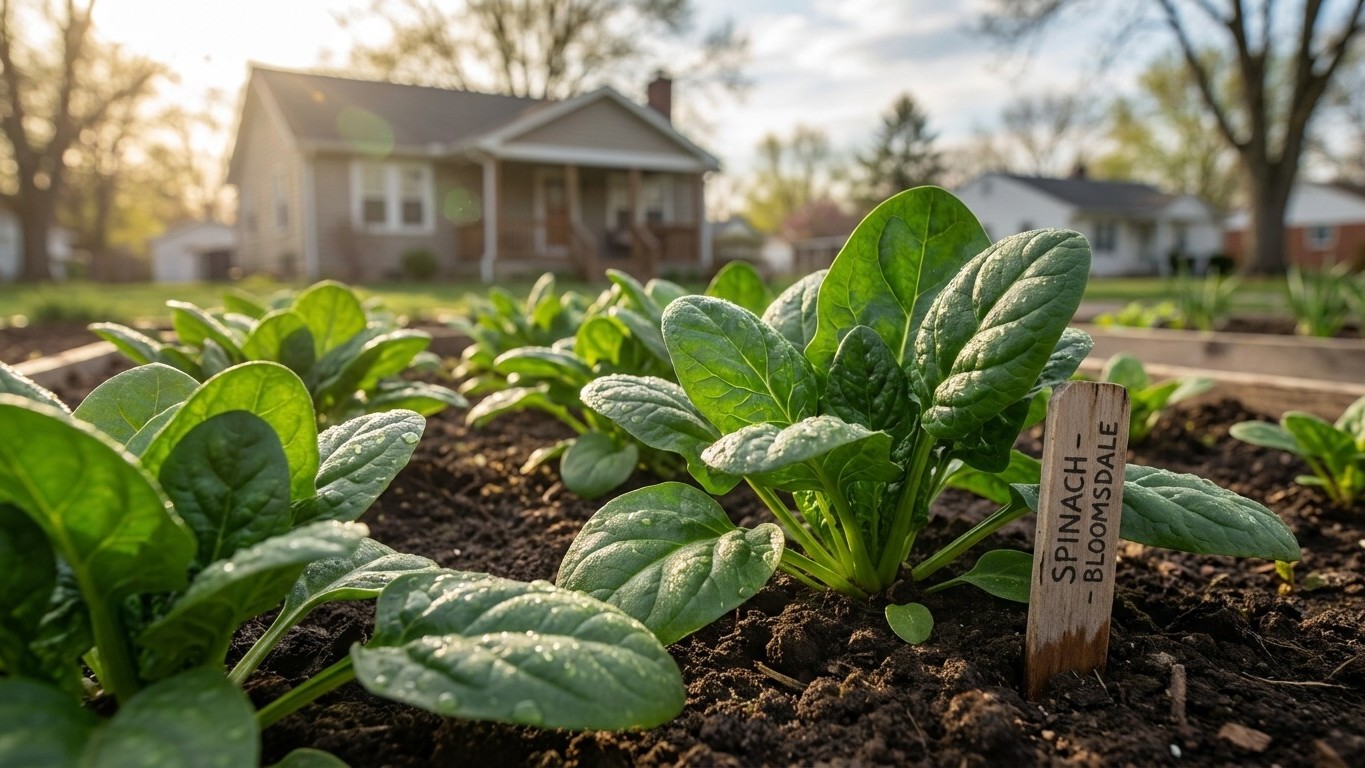

Spinach in West Virginia runs into trouble from two directions that arrive close together: the long daylight of early summer, and the heat that tags along right behind it. On the longest day of the year, this state gets 14 hours and 41 minutes of daylight, more than enough on its own to push spinach toward flowering. Add in temperatures that climb past 90 degrees on roughly 16 days a year, and the plant is squeezed from both sides at once, usually before most gardeners expect it.
The short answer
Fourteen hours and 41 minutes of daylight on the longest day sounds like a summer bonus. For spinach, it’s the opposite. Spinach bolts under long days and warm temperatures together, and it grows best only where temperatures stay under 75 degrees. That means a mild or cool summer in the mountains doesn’t buy extra growing weeks the way it might for a tomato or a pepper. The clock that matters most here is the calendar, not the thermometer, at least in the weeks leading into June. Once the days stretch long, spinach starts building toward a flower stalk whether the air feels like spring or not.
That’s the surprising half of the story. The heat is the half most gardeners already suspect. West Virginia’s Kanawha Valley averages 16 days a year at 90 degrees or hotter, and even short stretches well below that mark are enough to push spinach past its comfortable ceiling. Once temperatures regularly sit above 75 degrees, growth slows, leaves turn bitter, and the plant channels its energy into a seed stalk instead of new foliage. So the limiting factor in West Virginia isn’t one thing, which raises the question, Will Spinach Bolt Early in West Virginia? It’s day length and heat, arriving in the same six-to-eight-week stretch of late spring, each one reinforcing the other.
Four spinach varieties come up often in seed catalogs and extension guidance: Bloomsdale, Melody, Teton, and Olympia. Utah State University Extension, the source behind the bolting figures used on this page, doesn’t publish days-to-maturity or bolt-resistance data for any of these four, so there’s no verified number to compare here. If a seed packet or catalog claims a specific bolt-resistance rating, that number is coming from the seed company, not from the extension research this article draws on.
What that means practically is that timing matters more than variety selection. A grower who sows two weeks late in West Virginia’s river valleys is fighting both the sun angle and the thermometer at the same time, and no seed choice fully cancels that out.
How long the spring window really is
Working out the usable spring stretch in West Virginia means lining up three things: when it’s safe to sow, when growth stays favorable, and when the long-day trigger starts working against you. For growers who miss this narrow spring window or want to sidestep the bolting risk entirely, When to Sow Autumn Spinach in West Virginia offers a second, often more forgiving, planting opportunity.
- Sowing window: Spinach goes in the ground two to three weeks before the last spring frost. With Charleston’s last frost falling between April 9 and April 23, that puts sowing somewhere from mid-to-late March into early April, depending on how the season is running.
- Early growth: For the first several weeks after sowing, spring temperatures in West Virginia’s valleys and hollows sit comfortably under the 75-degree ceiling, which is exactly the range spinach needs to keep producing tender leaves instead of bitter, tough ones.
- The closing squeeze: As the calendar moves toward the June solstice, day length climbs toward that 14-hour-41-minute peak. Because long days alone are enough to trigger flowering, the crop starts working against itself even before the hottest weather sets in.
- Heat arrives on top of it: With 16 days a year reaching 90 degrees, and plenty more sitting in the 80s, the region’s early summer heat load stacks directly on top of the day-length pressure, closing the window from the other side.
- Net result: Sown from mid-to-late March into early April, a spring spinach crop in West Virginia typically has somewhere around six to eight weeks of genuinely favorable growing conditions before day length and rising heat start working against it together.
That’s a tighter window than many root or fruiting crops get, and it’s worth planning around rather than fighting once the plants have already started bolting.
The autumn crop, and when the soil lets you sow
Soil too warm to germinate
Fall spinach in West Virginia isn’t blocked by cold. It’s blocked by soil that’s still holding onto summer heat. Utah State University Extension notes that germination drops off once soil temperatures climb above 80 degrees, and in a region averaging 16 days a year at 90-degree air temperatures, soil at seed depth can easily sit above that mark well into August. That means the practical start of fall sowing isn’t a fixed calendar date. It’s whenever the soil actually cools below that threshold, which usually happens gradually as August turns toward September rather than on any single day.
The frost that ends the season
On the other end, the first fall frost in Charleston’s valley falls between October 18 and November 1. Extension guidance for a fall spinach crop is to sow 50 to 75 days before the date you want to harvest. Counting back from a harvest target near the earlier end of that frost range, October 18, lands sowing somewhere between late August and early September. Counting back from the later end, November 1, pushes the earliest sowing date back into mid-to-late August. Either way, the practical fall sowing window in West Virginia’s lower valleys sits roughly from early August through mid-September, narrower for gardeners at higher elevations where frost typically arrives sooner than it does in the Kanawha Valley.
That timing detail matters more here than in flatter states. Higher ground across West Virginia’s mountains and ridges cools and freezes noticeably earlier than the river-valley station this data comes from, so a fall sowing date that works in Charleston can be too late a county or two over at higher elevation.
Checking this against your own county
Every figure here comes from a single reference station in Charleston’s river valley, and West Virginia’s terrain changes fast enough that a ridge ten miles away can run on a noticeably different frost calendar. Before locking in a sowing date, it’s worth checking local conditions against West Virginia University Extension, which tracks county-level frost data and growing advice across the state’s varied elevations. Extension agents there can also confirm current soil temperature readings, which matter more for fall sowing than any calendar date does, since germination depends on the soil cooling below 80 degrees rather than on the arrival of a particular month.
Common questions
Does shade slow down bolting in West Virginia?
Partial shade can lower leaf temperature somewhat, but it doesn’t change day length, and long days are one of the two triggers behind bolting. Shade helps more with the heat half of the problem than the daylight half.
Can spinach be grown through summer in West Virginia?
Not reliably in open ground. Between 14 hours and 41 minutes of daylight at the peak of summer and 16 days a year above 90 degrees, both bolting triggers are active at the same time through most of the season.
Is Bloomsdale better for West Virginia’s climate than the other varieties?
There’s no published bolt-resistance data from Utah State University Extension for Bloomsdale, Melody, Teton, or Olympia, so no variety comparison can be made from the source behind these figures. Any resistance claim on a seed packet comes from the seller, not from this research.
What actually stops fall sowing from starting earlier in August?
Soil temperature, not frost. Germination drops once soil passes 80 degrees, and West Virginia’s summer heat load, measured by those 16 days a year above 90, keeps soil warm well into late summer in many spots.