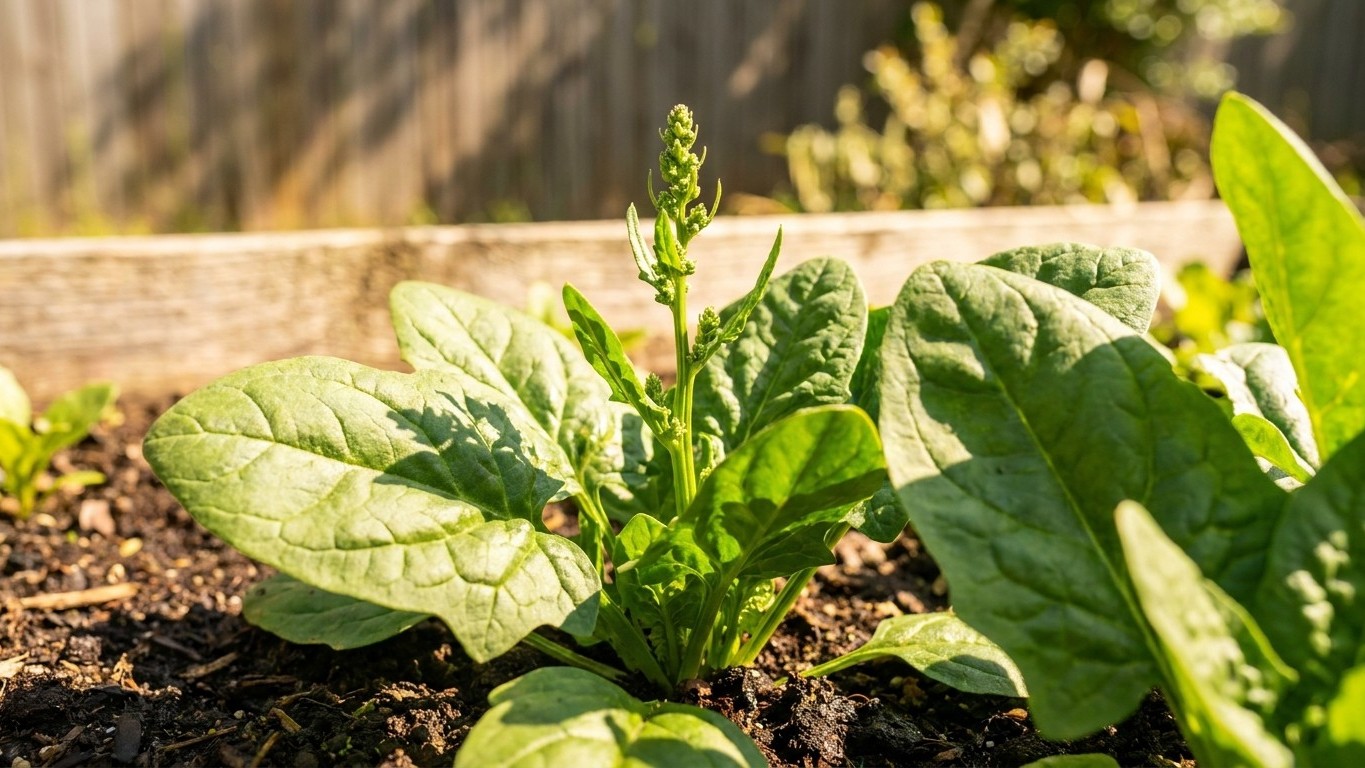

Spinach bolts early nearly everywhere in Arizona’s low desert, and the short growing window here comes from heat more than from frost. Phoenix logs 168.9 days a year above 90°F, while spinach starts losing quality once temperatures pass 75°F. Add over 14 hours of daylight at the summer solstice, and the plant gets both signals to flower well before true summer heat even arrives. There’s no meaningful spring frost to plan around, only a cool season that closes fast.
The short answer
On the longest day of the year, Phoenix gets 14 hours and 13 minutes of daylight. That number matters because spinach flowers, or bolts, in response to long days combined with warmth. It’s not a crop that waits for heat alone to trigger the shift into seed production; the lengthening days of late winter and early spring are already pushing it toward bolting before the thermometer even gets uncomfortable. So the idea that a cooler-than-usual spring might buy extra weeks doesn’t hold up here, or anywhere spinach is grown, because day length keeps moving on its own calendar regardless of temperature.
But in Arizona’s low desert, heat arrives so fast and stays so long that it’s the dominant force pushing spinach out of the garden, not day length by itself. A location that averages 168.9 days a year at or above 90°F simply doesn’t stay under spinach’s 75°F comfort ceiling for very long. Compare that to the total absence of a reliable spring frost, since 32°F was recorded in only 6 of 30 recent springs at the reference station, and you get a season shaped almost entirely by the heat side of the equation. Day length still plays its part, nudging the plant toward flowering as the days stretch past midwinter, but it’s the rapid climb into the 80s and 90s that actually ends the productive window in most years.
So the limit in Arizona is both, working together rather than one canceling the other out. Long days set the plant’s internal clock toward bolting, and rising heat pushes it there faster and makes the leaves bitter along the way, since 75°F functions as a quality ceiling as well as a growth ceiling. A gardener in a cooler, higher-latitude state might get a few extra weeks of decent spinach because the days there stay long but the air stays mild longer into the season. In the low desert, those two brakes don’t exist. The days lengthen on schedule and the heat shows up right behind them, which is why spinach here behaves less like a spring crop with room to stretch and more like a cool-season sprint that has to be timed tightly around the coldest, shortest part of the year.
How long the spring window really is
Working out the usable spring stretch for spinach in low-desert Arizona means setting aside the usual frost-based math, because frost barely exists here to begin with.
- The general rule for spinach is to sow it 2 to 3 weeks before the last expected frost. In most of the country that anchors a calendar. In Phoenix, NOAA’s 1991-2020 normals list the frost-free season at 365 days, and the 30-year record shows 32°F was reached in only 6 of those 30 springs. There’s effectively no last frost date to count back from.
- Because that anchor doesn’t exist, the planting window opens whenever the soil and air are cool enough for germination and steady growth, which in practice means the coldest stretch of the year rather than a date tied to a frost line.
- The window closes when daytime highs push past spinach’s 75°F growth ceiling, since growth quality drops above that point and the long days already building toward the solstice add their own push toward bolting.
- Given that Phoenix averages 168.9 days a year at or above 90°F, the climb from cool winter mornings into the 80s and 90s happens quickly once the season turns, leaving only a handful of weeks in the depth of winter through very early spring as reliably productive.
- The practical result is a spring window measured in weeks, not months, bookended not by frost but by how fast the heat load returns each year.
Seed catalogs and extension guides name several widely grown spinach varieties, including Bloomsdale, Melody, Teton, and Olympia, but no days-to-maturity figures for any of them appear in the source data used here. Anyone comparing varieties for a compressed desert spring window will need to check maturity timing directly with a seed supplier rather than assume a number.
The autumn crop, and when the soil lets you sow
Fall is where low-desert gardeners usually get their better spinach crop, since the plant is heading into cooling weather rather than racing away from it. But two separate limits still shape when sowing can actually happen.
The soil is still too warm to germinate
Spinach seed germination drops off once soil temperature climbs above 80°F, according to Utah State University Extension. In a region where 168.9 days a year sit at or above 90°F air temperature, soil holds that heat well past the point when the calendar says fall has started. Sowing too early simply means poor or spotty germination, regardless of how appealing an early-fall planting date looks on paper. The practical fix is to wait until soil has actually cooled, checking it directly rather than going by the date on a seed packet.
The frost that ends the season, or doesn’t
In most parts of the country, a fall spinach crop is timed backward from the first hard freeze. That math doesn’t really apply in the Phoenix area. NOAA’s climate normals list no reliable fall frost date for the low desert, consistent with the same 365-day frost-free season and the 6-in-30 record of any 32°F reading at all. That means an autumn spinach planting isn’t cut short by cold the way it would be almost anywhere else; it can often keep producing well into what would be winter elsewhere, only slowing again once day length and returning warmth start pushing it back toward bolting.
Utah State University Extension recommends sowing a fall crop 50 to 75 days before the date you want to harvest, since no separate days-to-maturity figure is published for spinach itself. Applied to the low desert, that means counting back from whenever a gardener wants leaves on the table, typically deep in the cooler months, and working backward to a sowing date that also falls after the soil has dropped below that 80°F germination threshold. The two constraints, warm soil on one end and the return of long, warm days on the other, define the real autumn window here far more than any frost date does.
Common questions
Can spinach be grown year-round in Arizona’s low desert?
Not comfortably. The absence of reliable frost removes one obstacle other regions face, but the long stretch of days above 90°F and the long-day trigger for bolting still confine good spinach production to the cooler months, roughly late fall through winter into very early spring.
Why does a mild spring not extend the spinach season here?
Because bolting is triggered by long days as well as heat. Even in a year with a cooler-than-usual spring, the days keep lengthening on the same schedule toward the solstice, and Phoenix’s typical heat arrives close behind, so the plant still moves toward flowering on roughly the same timeline.
Does frost ever affect spinach planting decisions in Phoenix?
Barely. NOAA’s 30-year record shows 32°F occurred in only 6 of 30 springs at the reference station, and the frost-free season is listed at 365 days. Planning around frost dates, the way gardeners do in colder climates, doesn’t reflect how the season actually behaves in the low desert.
Which spinach varieties do best in a short, hot spring window?
Bloomsdale, Melody, Teton, and Olympia are commonly named varieties, but no maturity-length data for any of them appears in the extension sources used for this guide. Checking maturity timing with the seed source directly is the safer route when the window is this tight.