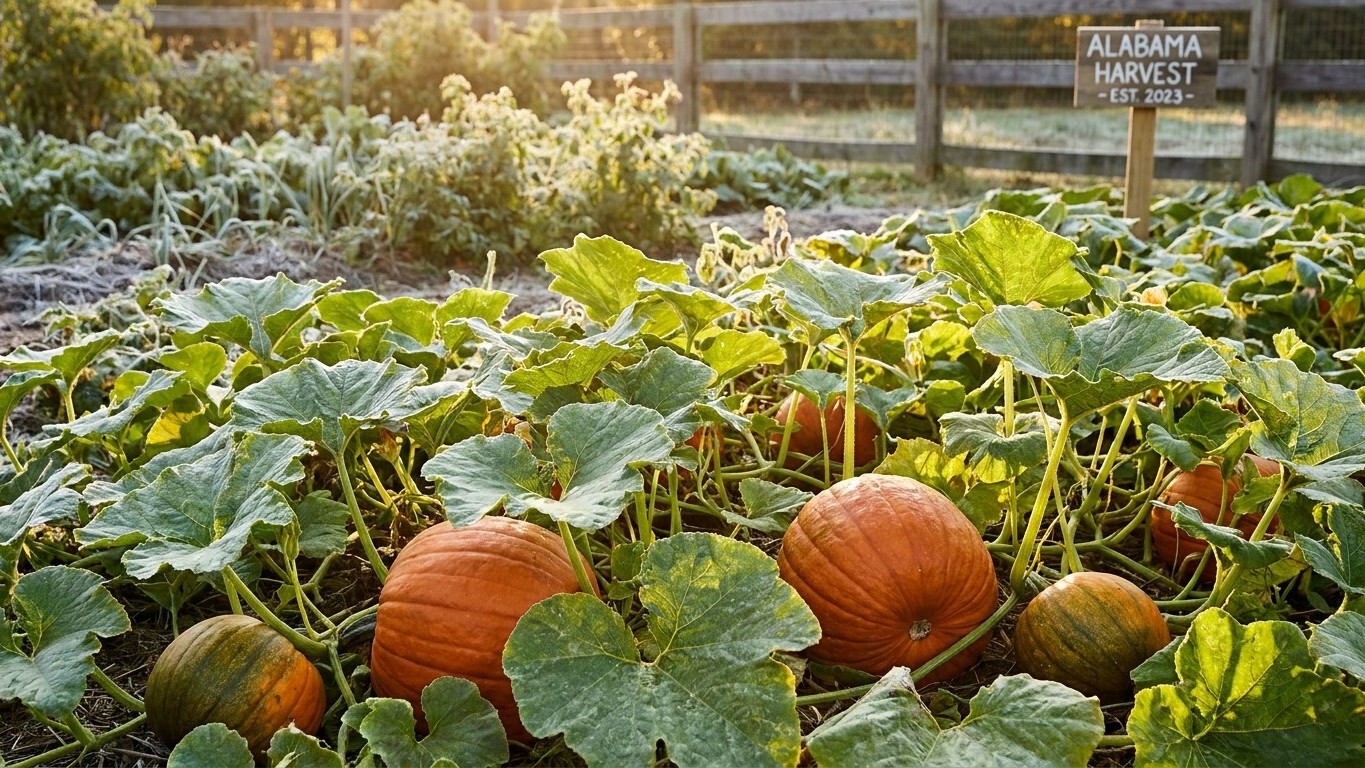

In most years, a pumpkin planted in British Columbia’s coastal valleys has a real shot at ripening before frost, but the margin is thin. The math depends on when the flower opens, not when the seed goes into the ground, and on this coast that flowering deadline sits in the second half of September. Miss it by even a week, and you’re picking green fruit off a dying vine.
The short answer
Environment and Climate Change Canada’s climate normals put the average first fall frost at Vancouver Int’l A on November 10. Utah State University Extension puts pumpkin maturity at 45 to 55 days after flowering, not after seeding, not after transplanting. Count backward from November 10 and that window lands between roughly September 16 and September 26. That’s the latest a flower can open and still give the plant enough warm days to finish filling out and coloring the rind before the cold arrives.
That’s a narrow target, and it comes with a warning built into the source itself. November 10 is a mean date, not a guarantee. Climate normals average three decades of frost dates together, which means in roughly half of those years the first frost actually fell later than the mean, and in the other half it fell earlier. Treat November 10 as the middle of a spread, not a line you can plan against with confidence. A grower who assumes the frost will always wait until November 10 is gambling with the same odds as a coin flip.
There’s a second layer of uncertainty worth naming plainly: this figure comes from one weather station, Vancouver Int’l A, sitting in the mild Lower Mainland climate near sea level and near the moderating influence of the coast. British Columbia is not one climate zone. The Okanagan, the Kootenays, the Cariboo, and anywhere at elevation or further north run their own frost calendars, often weeks behind the coast. A gardener in a valley bottom in the Interior should treat the Vancouver-derived window as optimistic, not as a number that applies to their own soil.
None of this changes the underlying arithmetic, though. Whatever your local frost date turns out to be, the rule stays the same: count back 45 to 55 days from that date to find the last acceptable flowering date, then work further back from there to figure out when seed needs to go in. On the coast, using the mean date as a rough guide, that means flowers opening after the last week of September are running a real risk of never finishing. The pumpkin doesn’t care about the calendar month. It cares about how many warm days are left between the flower opening and the first freeze.
When to sow here
Getting the flowering window right starts with getting the sowing date right, and that decision hinges on soil temperature, not on the last frost date. Utah State University Extension is specific on this: pumpkin seed wants soil at 65 F to germinate reliably. That’s a soil measurement, taken with a thermometer a couple of inches down, not an air temperature and not a date pulled off a calendar.
Here’s where growers go wrong most often: they treat the average last spring frost, March 18 in this data set, as if it were the same milestone as 65 F soil. It isn’t. Soil warms far more slowly than air. A sunny, frost-free week in late March does very little to a cold, wet clay soil that spent the winter saturated. In practice, that 65 F mark tends to arrive weeks after the last frost mean has passed, sometimes a full month or more later depending on soil type, drainage, and how much direct sun the bed gets. Treating March 18 as planting day is a common and costly mistake.
- Start from the average last frost, March 18, and use it only as the earliest point at which frost risk begins to fade, not as a planting signal.
- Ignore the calendar after that and start checking soil temperature directly. Push a soil thermometer a couple of inches into the bed at the same time each morning for a few days running.
- Expect the 65 F threshold to show up well after the frost mean has passed. Heavy or shaded soils lag further behind than light, sun-exposed raised beds.
- Use black plastic mulch or a row cover over the bed in the two to three weeks before the intended sowing date. Row covers can buy roughly two weeks, warming the soil faster than bare ground exposed to cool spring air and rain.
- Once the thermometer holds 65 F for several consecutive days, not just one warm afternoon, sow directly or set out transplants that have been hardened off.
The payoff for getting this sequence right is real: every week gained at the sowing end is a week of slack at the flowering end, pushing that late-September deadline further out of reach of an early frost.
What goes wrong here
Three failure patterns show up again and again in a season this tight, and each one traces back to the same miscalculation: not respecting the 45-to-55-day clock that starts at flowering, not at planting.
- A late flower that never colors. This happens when the vine keeps setting new blossoms into September because the grower kept the plant fed and watered without pinching back late growth. A flower that opens after the safe window simply runs out of warm days before the rind hardens and colors up. The remedy is to count backward from your expected frost date, mark the cutoff, and pinch off any new flowers and small fruit that appear after that point so the plant’s energy goes into the fruit that still has time to finish.
- A fruit caught by frost while still immature. Even a fruit that set within the window can get caught by an early frost if the season runs colder than the mean. Since November 10 is only a midpoint and frost can arrive earlier in a given year, keep frost cloth or a heavy blanket on hand in October to throw over exposed fruit on the nights a frost is forecast. That can buy the last few days a borderline pumpkin needs.
- A vine that dies back before the skin hardens. Foliage damage from pests can shut down the plant weeks before frost even arrives, cutting the maturation clock short regardless of the calendar. Squash bugs and cucumber beetles are the usual culprits behind this kind of early vine collapse, and both have dedicated pages on this site covering identification and control specific to garden conditions in this region.
Common questions
What happens if frost arrives before the mean date this year?
Since November 10 is an average and not a guaranteed safe date, plan for the possibility that frost lands earlier in any given year. Fruit that’s already turned mostly orange with a hardened rind can often be harvested early and will continue coloring in storage, but green, soft-skinned fruit caught by an early freeze generally won’t recover.
Can a green pumpkin ripen after it’s been picked?
Utah State University Extension’s guidance covers harvesting with the stem attached and keeping fruit somewhere it won’t freeze, but it doesn’t publish a storage temperature, humidity level, or a keeping-time figure for pumpkins picked green. Treat any claim of a specific ripening timeline after harvest as unverified rather than relying on it.
Does the Interior of British Columbia follow the same dates as the coast?
No. The frost figures here come from a single Lower Mainland station near Vancouver. Interior valleys, higher elevations, and northern regions of the province typically see their last spring frost later and their first fall frost earlier, which shrinks the flowering window further than the coastal figures suggest.
How do I actually check soil temperature instead of guessing?
A simple soil thermometer pushed a couple of inches into the bed, read at the same time each morning over several consecutive days, gives a far more reliable answer than counting days on a calendar since the last frost. Look for the reading to hold steady at 65 F before sowing, not just spike on one unusually warm afternoon.