
In coastal British Columbia, aim to have pumpkin flowers opening no later than the third week of September. Working back from that, seed goes into the ground once soil temperature holds at 65°F, which on the coast usually means late May to early June, not the March frost date. That timing gives fruit enough of the 45- to 55-day flower-to-harvest window before the average November 10 frost arrives.
The short answer
Start with the end of the season, because that’s what actually limits a British Columbia pumpkin patch. Environment and Climate Change Canada’s 1981-2010 normals put the average first fall frost at the Vancouver Int’l A station on November 10. That’s a mean, not a guarantee: in roughly half of all years, frost holds off past that date, and in the other half it arrives earlier. Treat November 10 as the midpoint of a window, not a line you can plan against with confidence.
Utah State University Extension’s guidance on pumpkins puts the maturation clock at 45 to 55 days after flowering, not from the day seed goes into soil. That distinction matters more than almost anything else on this page. Count backward from November 10 using that window and the math lands like this: 55 days back is roughly September 17, and 45 days back is roughly September 26. So the last flowers with a real shot at turning into a ripe, harvestable pumpkin need to open somewhere in that stretch, roughly mid-to-late September, not later.
Because the frost date itself is only a 50/50 average, a cautious grower doesn’t plant to hit September 26 exactly. Pushing the flowering deadline earlier, toward mid-September, builds in a cushion for the years when frost shows up ahead of schedule, or for a vine that’s slower to set fruit than expected. A flower that opens in early October in a coastal BC garden is a gamble; the fruit may size up but never fully color or harden before cold weather stops it cold.
None of this addresses when to actually put seed in the ground, that’s a separate calculation built around soil temperature rather than frost dates, and it’s worth walking through on its own. But the flowering deadline is the fixed point everything else in a British Columbia pumpkin season has to work backward from. Get this part wrong and no amount of careful sowing timing later fixes it.
When to sow here
The last spring frost at the Vancouver Int’l A station averages March 18, and it’s tempting to treat that as the green light for planting. It isn’t. Pumpkin seed doesn’t germinate reliably in cold soil, and soil temperature lags well behind air temperature in early spring. A yard can be frost-free for weeks while the top few inches of soil are still too cold for pumpkin roots to get going.
- Track the frost date, but don’t sow by it. March 18 is a mean, so treat it as roughly the middle of a range rather than a safe cutoff, and expect frost risk to linger past it in many years.
- Wait for soil, not air, to reach 65°F. In practice, that gap between last frost and workable soil temperature commonly runs four to six weeks in home gardens on the coast, which pushes reliable sowing conditions into late May or even early June for most Lower Mainland yards.
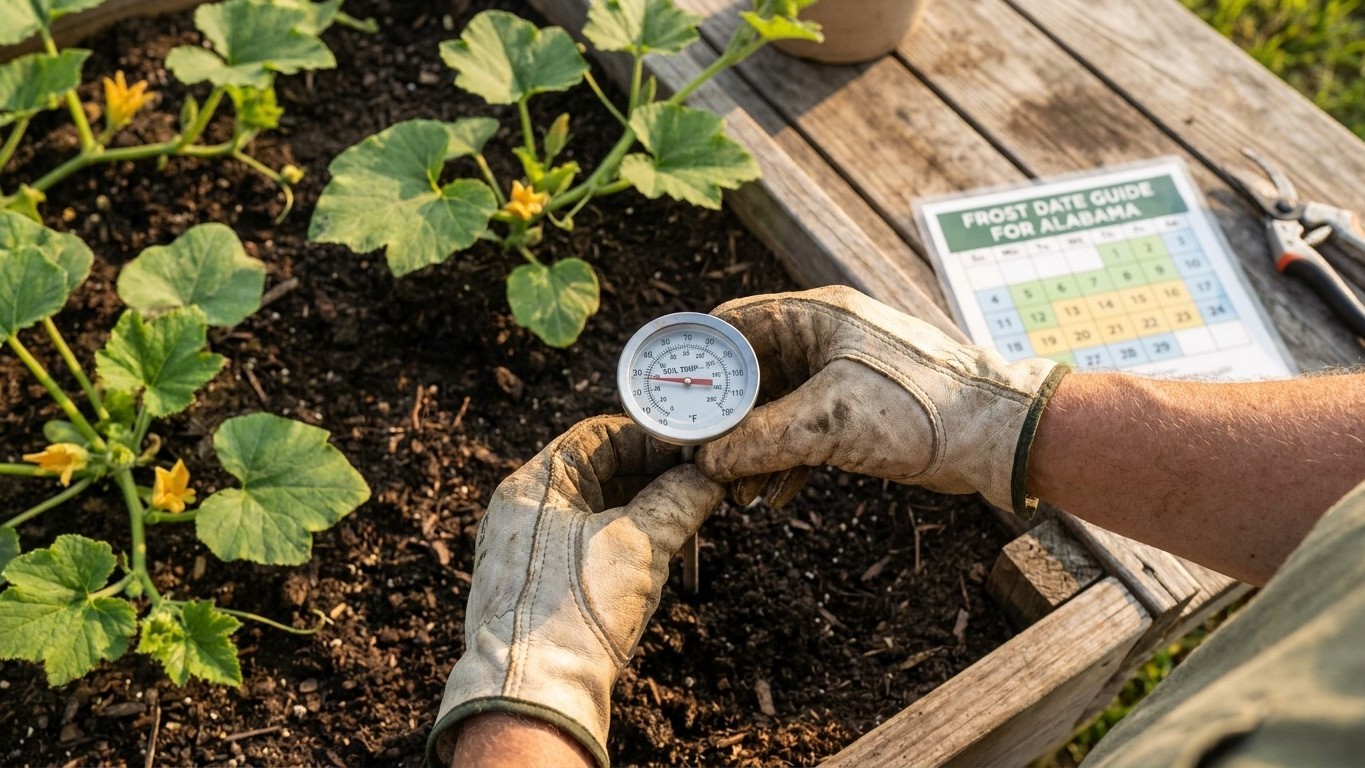
- Use a soil thermometer instead of guessing. Air temperature swings day to day; a few inches of soil holds a steadier reading and is the only number that actually tells you seed will germinate rather than rot.
- Warm the bed early with row covers or dark mulch. Covering soil ahead of planting can buy roughly two weeks against the calendar, letting a grower sow that much earlier than bare, uncovered ground would allow.
- Check the math against the fall deadline. Sowing in late May to early June, plus the weeks a vine needs to reach its first flowers, should still land flowering inside the mid-to-late-September window this territory needs.
The two dates, 65°F soil and March 18 frost, are not the same milestone, and mixing them up is the single most common planning mistake in a British Columbia pumpkin patch. One is about survival; the other is about germination and growth. A grower who sows the moment frost risk passes, ignoring soil temperature, usually ends up with seed that sits and rots rather than a head start on the season.
What goes wrong here
- A late flower that never colors. When the vine’s main flush of female flowers opens after late September, the fruit behind it runs out of the 45 to 55 days it needs before frost. The remedy is choosing a sowing date that pushes flowering earlier, not later, and pinching off new flowers that appear after the safe window has closed so the plant’s energy goes into fruit already set.
- A fruit caught by frost before the skin hardens. A pumpkin that’s still green-rinded or soft-skinned when the average November 10 frost hits, or arrives earlier, as it does in half of all years, won’t finish ripening off the vine the way a tomato might. Covering plants overnight with row cover or old sheets on the first cold nights can buy a few extra days, but once a hard freeze is forecast, cutting the fruit with stem attached and moving it somewhere it won’t freeze is the only real fix.
- A vine that dies back before the fruit is ready. Powdery mildew and cool, wet fall weather can collapse foliage weeks before a fruit has finished sizing or hardening. Watching for early leaf yellowing and removing the worst-affected leaves keeps the plant photosynthesizing longer, which matters more in a coastal climate where the growing season margin is already thin.
- Pest damage compounding a short season. Vine and root feeding early in the season sets plants back at exactly the point when they can least afford it. This site’s pages on squash bugs in British Columbia and cucumber beetles in British Columbia cover identification and timing specific to this territory.
Common questions
Can I sow pumpkins directly in the ground in British Columbia, or should I start indoors?
Either works, but starting seed indoors a few weeks ahead and transplanting once soil reaches 65°F can shave time off the season without exposing seed to cold, wet outdoor soil that tends to rot it.
What happens if my pumpkin flowers open in October?
Fruit from flowers that open that late in a British Columbia garden is unlikely to size up and harden before the average November 10 frost, and in years when frost arrives earlier than average, the risk is higher still. Removing late flowers redirects the plant’s energy to fruit that already has a chance.
Is soil temperature or air temperature more important for sowing pumpkins?
Soil temperature. Utah State University Extension’s guidance ties sowing to soil reaching 65°F, which is a separate and later milestone than the last spring frost date. Air can be safely warm while soil is still too cold for germination.
How should I store harvested pumpkins?
Harvest with the stem attached before frost damages the fruit, and keep pumpkins somewhere they won’t freeze. Utah State University Extension’s guidance doesn’t publish a specific storage temperature, humidity level, or keeping time beyond that frost-free requirement.