
In Illinois, pumpkin seeds go into the ground once soil temperature holds steady at 65°F, which for most of the state falls somewhere in May. That sowing window exists because of a deadline working backward from fall: the first frost of the season, arriving between October 24 and November 3 depending on where in Illinois a garden sits. Everything about pumpkin timing here traces back to that stretch of calendar.
The short answer
Start with the frost date, because that’s the fixed point everything else bends around. Illinois growers near the reference weather station used for this data can expect the first fall freeze somewhere between October 24 and November 3. That’s a nine-day window, not a single day, and it comes from NOAA NCEI’s 1991-2020 Climate Normals for 32°F freeze probabilities, drawn from an airport weather station. Gardens outside town, especially in low spots or at higher elevation, often see that first freeze arrive a week or two earlier than the airport reading suggests.
Now work backward. Pumpkins need 45 to 55 days after flowering to reach maturity, according to Utah State University Extension. That’s after the flower opens, not after the seed goes into the ground. Confusing those two points is the single most common miscalculation gardeners make with pumpkins, and it’s the one that quietly turns a promising vine into a patch of green, unripe fruit come October.
Subtract 45 to 55 days from the frost window and a picture starts to form. If frost lands on the early side of the window, October 24, a flower needs to open by roughly early September to leave enough runway. If frost holds off until November 3, a flower opening in mid-September can still finish. Because both the frost date and the maturation length are ranges rather than fixed numbers, the safe flowering deadline for Illinois pumpkins spans from late August through mid-September, tightening toward the earlier end for anyone gardening outside the reference city or at a cooler site.
That’s the real answer to “when to sow”: not a date on the calendar, but a countdown that has to clear two thresholds, the flowering deadline and the frost line behind it. Miss either one, and the pumpkin on the vine when frost hits is still hard, dull green, and worthless as a harvest.
When to sow here
Getting from “sow” to “flower by the deadline” takes a soil thermometer, not a calendar page. Illinois gardeners tend to rush this step because the air warms up well before the ground does, and pumpkin seed doesn’t care what the air is doing.
- Let the last spring frost pass first. The reference window for Illinois’s last spring frost runs from April 11 to April 22, per the same NOAA NCEI dataset. That date matters for tender transplants, but pumpkin seed sown directly into cold soil won’t germinate reliably even after frost risk clears.
- Wait for the soil, not the air. Pumpkins need soil holding at 65°F before sowing, and soil temperature lags well behind air temperature in spring. In practice that gap stretches the safe sowing window deep into May across much of Illinois, even though the last frost has already come and gone weeks earlier.
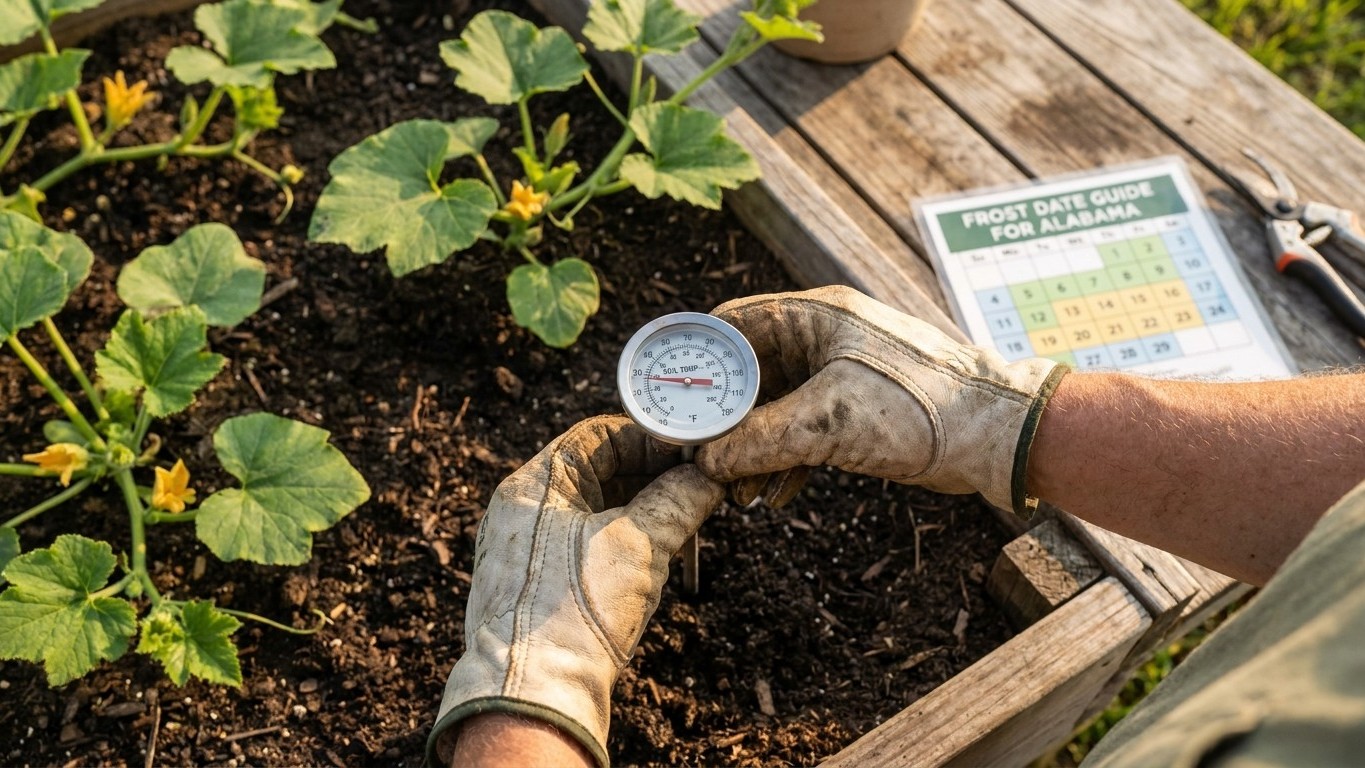
- Check with a soil thermometer, not a guess. Push a probe thermometer two to three inches into the bed at mid-morning for several days running. A single warm afternoon doesn’t mean the soil has caught up.
- Use row covers to buy roughly two weeks. Clear or fabric row covers trap daytime heat and can push effective soil warming up by about two weeks, letting a grower sow earlier than bare soil would allow and still hit 65°F under the cover.
- Count forward from sowing to confirm the flowering deadline fits. Once seed goes in, the plant still needs time to grow before it flowers at all, then another 45 to 55 days after that first flower to finish the fruit. Sowing too late in May, especially in a cooler or shaded yard, can push flowering past the safe deadline calculated above.
Direct sowing is standard practice for pumpkins rather than starting indoors and transplanting, since the vines resent having their roots disturbed. That makes the soil-temperature step even more important in Illinois: there’s no head start from a transplant to make up for cold ground.
What goes wrong here
Illinois’s season length isn’t generous, and the gap between “should work” and “actually ripens” is where most pumpkin patches fall short. Three failures show up again and again.
- A late flower that never colors up. When a vine flowers past the mid-September deadline calculated from the frost window, the fruit is still small and pale green when cold weather arrives. Remedy: track the sowing date against the 65°F soil threshold rather than the calendar, and if a vine is clearly running late by August, consider removing new blooms so the plant channels energy into fruit already set rather than starting new ones that have no chance of finishing.
- A fruit caught by frost before harvest. Even a pumpkin that’s mostly orange can be damaged by a hard freeze if it’s still on the vine when temperatures drop. Remedy: watch the first fall frost window (October 24 to November 3, adjusted earlier for gardens outside town) and harvest with the stem attached before that window opens, rather than waiting for a “perfect” color that a frost might beat you to.
- A vine that collapses before the skin hardens. Powdery mildew, vine borers, or simply the plant running out of season can kill foliage before the rind toughens enough for storage. Remedy: give the fruit as much of the full 45- to 55-day post-flowering window as possible by sowing on time, and once vines start dying back, cut the pumpkin free with a long stem and let it finish curing off the vine in a warm, dry spot rather than leaving it on a dead plant exposed to moisture.
Common questions
Can I sow pumpkins in Illinois in June and still get a harvest?
It depends on how the flowering deadline lines up. Working back 45 to 55 days from the October 24 to November 3 frost window puts the safe flowering cutoff around late August to mid-September. A June sowing date leaves a plant very little margin to germinate, grow, flower, and still finish within that window, especially in a cooler or shaded location.
Does the 65°F soil rule apply everywhere in Illinois the same way?
The 65°F threshold itself comes from Utah State University Extension and applies to the plant, not the location. What changes across Illinois is when the soil actually reaches that mark, since soil warming depends on local conditions like drainage, sun exposure, and whether beds are raised or in-ground.
Should I count the 45 to 55 days from sowing or from when flowers appear?
From flowering. This is the detail that trips up the whole calculation. The maturation clock starts the day a flower opens, not the day the seed went into the ground, so two vines sown on the same date but flowering weeks apart will have very different ripening deadlines.
Is there a published storage temperature for cured pumpkins?
Not in the Utah State University Extension source this page draws from. It notes only that pumpkins should be kept where they won’t freeze, without specifying a storage temperature, humidity level, or keeping time.