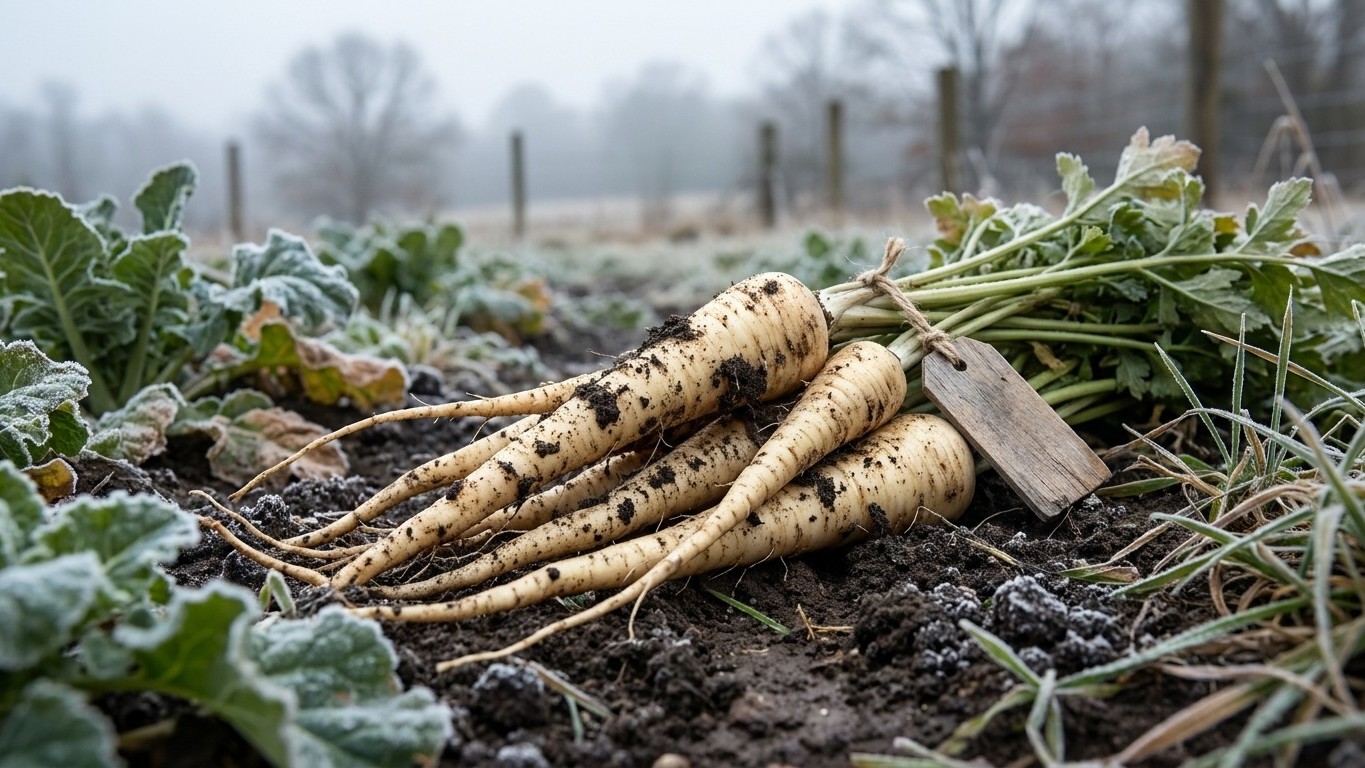

Yes, but with a real caveat. New Mexico’s high desert winters hand parsnips exactly what they need: weeks below freezing to convert stored starch into sugar. Albuquerque’s coldest month averages a minimum of 26.4°F, cold enough for that chemistry to run its course. The catch isn’t the cold. It’s making sure the crop is planted early enough, and left in the ground long enough, to actually meet that cold.
The short answer
Here’s the question that actually decides whether a parsnip pulled from New Mexico soil tastes sweet or just tastes like a parsnip: does the territory deliver several consecutive frosty weeks before you dig? In Albuquerque, the answer is yes, and it isn’t close. NOAA’s 1991-2020 climate normals put the mean daily minimum for the coldest month at 26.4°F. That’s not a one-night dip below freezing. That’s a full month where the average low sits six degrees under the freezing mark, which means multiple frosty nights strung together, week after week.
That distinction matters more than gardeners usually realize. A parsnip doesn’t sweeten because it survives winter. It sweetens because cold temperatures trigger a specific starch-to-sugar conversion inside the root, and that conversion needs sustained exposure to frost, not just a technical freeze event. Utah State University Extension is explicit on this: the crop tastes best after several weeks of cool, frosty weather. A single light frost followed by a warm stretch won’t do it. A mild winter, even one that never damages the plant, won’t do it either.
This is where hardiness zone talk leads people astray. A hardiness zone tells you the coldest extreme a plant might face in a typical year, useful for deciding whether a perennial will survive. It says nothing about how many frosty weeks a root vegetable will actually sit through before harvest. New Mexico’s high-desert stations report exactly the kind of numbers parsnip growers want to see: a coldest month that stays solidly below freezing on average, not just brushing it on the coldest single night. That 26.4°F figure describes the typical low across an entire month, which is a far more useful number for sweetening than any zone label.
So the mechanism lines up. Cold enough, for long enough, in the right season. Whether any individual garden actually captures those weeks depends on when the crop went into the ground and when it comes out, which is where timing takes over from climate.
Does the season fit?
Parsnips are direct-sown, never transplanted, and the 100 to 120 days Utah State University Extension cites run from the moment seed goes into the soil, not from germination. Here’s how that timeline lays out against New Mexico’s frost calendar, using Albuquerque’s reference dates as the anchor.
- Sowing window. Seed goes in the ground 2 to 3 weeks before the last spring frost. Albuquerque’s last spring frost falls between March 31 and April 12, which puts sowing in the middle-to-late part of March for most gardens near that reference point.
- Germination lag. Parsnip seed is famously slow. Expect 14 to 21 days before seedlings break the surface, meaning a garden sown in mid-March may not show a full stand of seedlings until early April. Don’t dig up bare soil in the meantime assuming the seed failed.
- Maturity target. Count 100 to 120 days from that original sowing date, not from germination. A mid-March sowing lands maturity somewhere between late June and mid-July.
- Frost window on the other end. Albuquerque’s first fall frost arrives between October 29 and November 9. That leaves roughly three to four months of open growing season after the roots have technically matured, time the crop can spend sitting in the ground absorbing exactly the frosty weeks it needs.
- The verdict. The arithmetic works comfortably. There’s no scramble to beat an early frost, and no need to rush the harvest the moment the crop hits 100 days. Growers can leave roots in place through several fall freezes, then dig once that sweetening has had time to happen.
One thing to flag: these dates come from a single reference station. Suburban and rural gardens across New Mexico, especially at higher elevation, typically see the last spring frost arrive later and the first fall frost arrive earlier than the airport-station figures suggest, sometimes by one to two weeks or more. A garden sitting higher than the reference point should treat the season as tighter than the numbers above imply, and should check local frost records rather than assume the state capital’s timeline applies everywhere.
What goes wrong here
- Forked or split roots from heavy or stony ground. Parsnips push a single long taproot straight down, and New Mexico’s clay-heavy or rocky plots can split that root into two or three forks the moment it hits resistance. Utah State University Extension recommends deep sandy soil for straight roots, and where that’s not available, double digging the bed before sowing to break up compaction well below where the root will travel.
- Forked roots from overwatering, a separate cause entirely. Even in loose, sandy soil, roots forked or hairy roots can result from too much water, which pushes the plant to send out side roots chasing moisture instead of growing one clean taproot. The fix isn’t soil prep, it’s a lighter, steadier watering schedule rather than heavy, irregular soakings.
- A season that runs out before maturity. This is less likely given the timeline above, but a late sowing, a cold snap that delays germination past the usual 14 to 21 days, or a higher-elevation garden with an earlier fall frost can compress the window. Sowing at the early edge of the recommended range, rather than the late edge, builds in a buffer.
- A winter too mild to trigger sweetening. Not the typical New Mexico problem given the state’s cold winter minimums, but low-elevation pockets or unusually warm winter stretches can shortchange the frost exposure the crop needs. If a harvest tastes flat despite reasonable cold, leaving roots in the ground through a few more hard freezes before digging is the standard remedy.
Common questions
Do parsnips need to be frozen solid to sweeten?
No. What they need is repeated exposure to frosty conditions over several weeks, the kind of sustained cold that converts stored starch to sugar. A brief hard freeze followed by weeks of mild weather isn’t the same thing, and won’t produce the same sweetness.
Can I leave parsnips in the ground all winter in New Mexico?
Many gardeners do, since the roots handle cold soil well and the extended exposure only improves flavor. Just track your local frost dates rather than the reference-station figures alone, since your garden’s actual first freeze may arrive earlier than the regional average, particularly at elevation.
Why did my parsnips come up forked even though my soil isn’t rocky?
Check your watering habits before blaming the soil. Overwatering is a separate and equally common cause of forked or hairy roots, distinct from the compaction and stones that cause forking in heavy ground.
How long does it take parsnip seed to germinate?
Expect 14 to 21 days, slower than most root vegetables. Resist the urge to dig up the bed and re-sow during that stretch; bare-looking soil at day 10 is normal, not a failed planting.