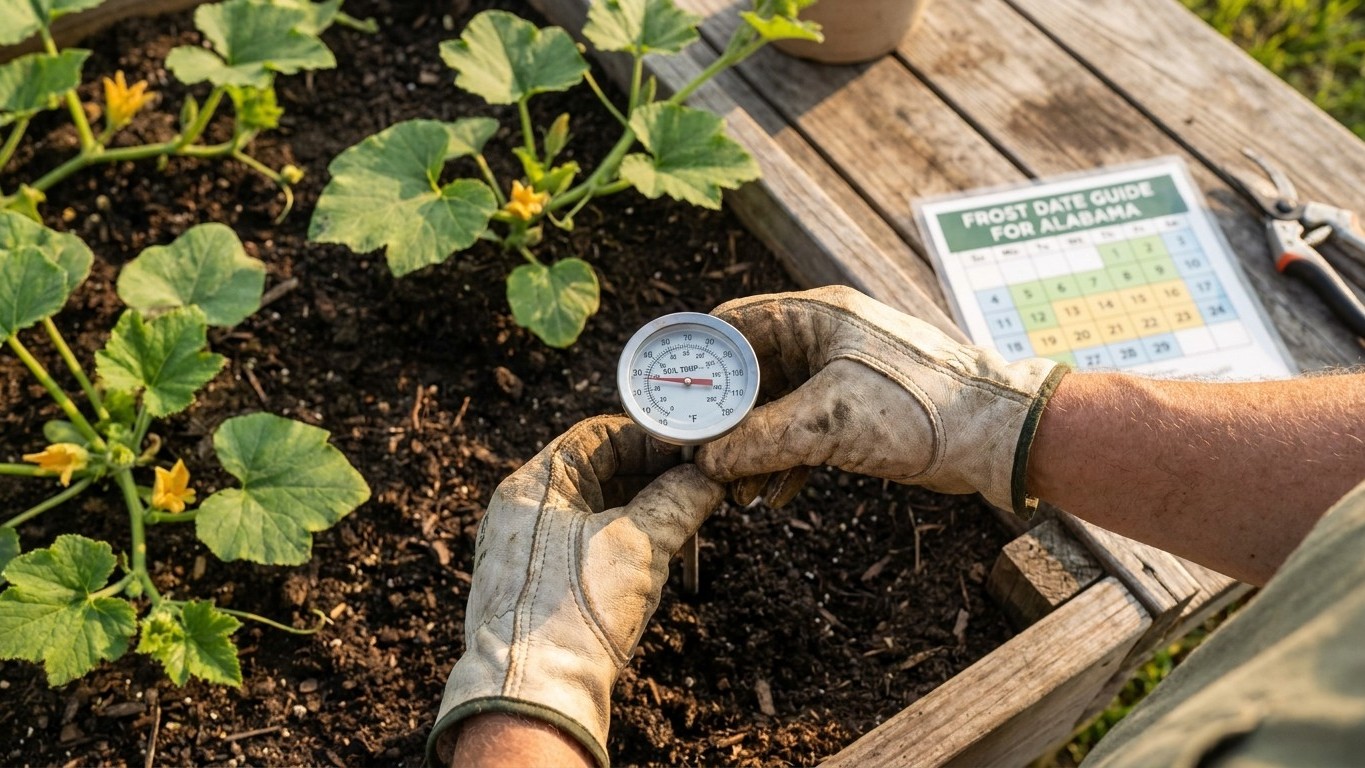

Pumpkin seed goes into Pennsylvania ground once the soil itself reaches 65°F, which most years lands somewhere from mid-May in the Philadelphia corridor to early June across the northern tier. The other half of the equation matters just as much: the last flower on that vine needs to open by roughly mid-September to early October, so the fruit has 45 to 55 days to finish ripening before the first fall frost shuts the season down.
The short answer
Pennsylvania’s first fall frost arrives between November 5 and November 16, based on NOAA’s 1991-2020 climate normals for the state’s freeze probabilities. That’s the hard stop. Everything about pumpkin timing in this state works backward from that window, because a pumpkin isn’t measured from the day the seed sprouts, it’s measured from the day the flower opens. Utah State University Extension puts that figure at 45 to 55 days from flowering to a fully mature, harvest-ready fruit.
Run the arithmetic against the frost window and the safe zone comes into focus. Subtract 45 to 55 days from November 5, the earliest possible frost, and the last flower needs to have opened by September 12 to September 21. Subtract that same range from November 16, the latest edge of the frost window, and the deadline stretches to September 23 through October 2. Put the two together and the workable range for that final flower sits somewhere between mid-September and the first few days of October, depending on how the fall plays out.
That’s not a single date. It’s a window, and it should be treated as one. A gardener aiming for the tight end of that range, the earlier side around mid-September, builds in a cushion against an early frost. Someone flowering vines into late September or the first days of October is betting on the frost holding off toward the back half of its usual window. Given that the difference between November 5 and November 16 is eleven days, and the difference between 45 and 55 days of maturation is another ten, that’s roughly three weeks of slack built into the calculation, useful, but not something to spend carelessly.
Geography narrows the bet further. The frost data above reflects the Philadelphia area, the mildest corner of the state. Move into the northern tier or the Alleghenies and spring runs two to four weeks later, which pushes the whole planting calendar back and compresses how much room there is for a late-blooming vine to finish before autumn cold arrives. A gardener in Erie or Potter County isn’t working with the same calendar as one in Chester County, even though both are technically in Pennsylvania.
When to sow here
Sowing pumpkin seed isn’t triggered by the calendar date of the last frost. It’s triggered by the soil itself warming up, and soil is slower than air. A yard can sit at a comfortable 60°F afternoon high while the dirt six inches down is still cold and wet from winter. That lag is why the last spring frost date and the sowing date are two different things, and treating them as the same thing is one of the more common mistakes gardeners make with this crop.
- Mark the last spring frost window. For this state that’s March 29 to April 6, per NOAA’s climate normals. This date tells you when the air has stopped freezing. It does not tell you when to plant.
- Wait for the soil, not the air. Pumpkin seed needs soil at 65°F to germinate reliably, according to Utah State University Extension. In Pennsylvania’s clay-heavy ground, that threshold typically arrives well after the frost date has passed, sometimes weeks later, since soil holds onto cold far longer than the air above it.
- Check with a soil thermometer rather than a memory of last year. Years vary. A cold, wet spring can push the 65°F mark later than usual even after a mild frost season.
- Use row covers to buy time if the calendar is tight. Row covers can effectively move the sowing date up by about two weeks by trapping daytime warmth against the soil surface, which matters most for gardeners in the northern tier working with a shorter runway to the fall frost.
- Count forward from the sowing date to flowering, then check it against the fall frost window. Pumpkins take time to grow before they even start flowering, so the sowing date has to leave enough runway for that first flower to open inside the mid-September to early-October target described above.
Skipping straight from “frost is over” to “seeds go in the ground” is the shortcut that gets a lot of home gardens into trouble. The soil, not the frost date, sets the real starting line.
What goes wrong here
- A late flower that never colors. If the vine’s last flowers open past the early-October edge of the window, there simply isn’t enough runway left for a 45 to 55 day fruit to finish before frost. The remedy is working the calendar in reverse from planting day: choose a sowing date early enough, once soil hits 65°F, that flowering realistically lands before mid-September rather than after it, and consider one of the shorter-season varieties among the many grown in home gardens, since matching variety to available season length matters more than most gardeners assume.
- A fruit caught by frost before it hardens. A pumpkin that’s still orange but soft-skinned when a hard freeze hits can rot within days. The remedy is watching the forecast as the frost window approaches and harvesting with the stem attached the moment a freeze looks likely, rather than waiting for a “perfect” last week that frost may not allow.
- A vine that dies back before the skin has hardened. This can come from disease or insect pressure as much as from weather, and Pennsylvania gardens deal with both squash bugs and cucumber beetles regularly during the growing season. Rather than re-diagnosing the insect here, check the dedicated squash bugs in Pennsylvania and cucumber beetles in Pennsylvania guides for identification and timing, since an early infestation that weakens the vine has the same end result as a late frost: an unfinished pumpkin.
- Confusing a green fruit for one that’s simply behind schedule. Gardeners sometimes leave a green pumpkin on a dying vine expecting it to ripen off the plant. Utah State University Extension is clear that pumpkins should be harvested with the stem attached and kept somewhere they will not freeze, but it publishes no specific storage temperature or keeping time beyond that. A green fruit cut from a collapsed vine generally isn’t going to finish maturing the way a properly timed, field-ripened pumpkin does.
Home gardeners in Pennsylvania grow a wide range of pumpkins, from field types like Connecticut Field and Howden, to carving standards like Jack-O’-Lantern, to baking types such as Sugar Pie, to novelty and specialty forms including Cinderella, Baby Boo, Big Max, Atlantic Giant, and Wolf. Each has its own place in a garden, but none of it matters if the flowering window and the fall frost don’t line up first.
Common questions
Can I still plant pumpkins in July in Pennsylvania?
It depends heavily on how far south in the state a garden sits and how much runway is left before the first fall frost. Working backward from the November 5 to November 16 frost window and the 45 to 55 day maturation period after flowering leaves very little margin for a July sowing, since the vine still needs weeks of growth before it even starts flowering. It’s a tight bet in most of the state and a poor one in the northern tier.
What happens if pumpkins don’t Ripen Before Frost?
A frost that hits before the fruit has fully colored and hardened typically ends its development. The skin stays soft, the flesh doesn’t finish converting starches into the texture and color expected from a mature pumpkin, and the fruit is prone to rot rather than long keeping.
Do different pumpkin varieties need different sowing times in Pennsylvania?
Varieties differ in how long they need on the vine, so a variety suited to a longer season carries more risk in a garden with a compressed frost window, especially in the northern tier. Matching the variety to the local frost dates matters more than picking a favorite name off a seed packet.
Should I use transplants instead of direct sowing pumpkin seeds in Pennsylvania?
Pumpkins have sensitive root systems and generally don’t transplant as easily as some other garden crops, which is part of why direct sowing into 65°F soil, once that threshold is reliably reached, remains the standard approach described by Utah State University Extension.