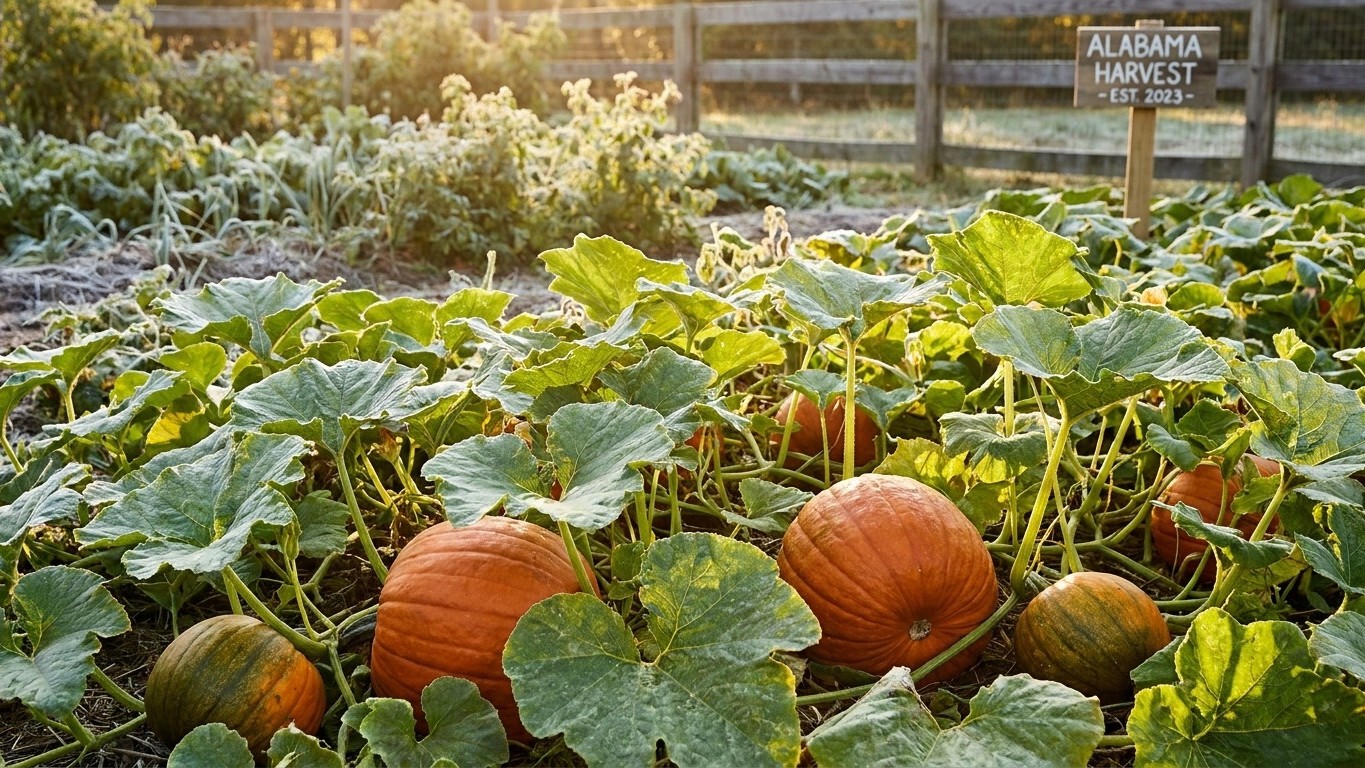

Yes, in most seasons, but only if the flowers open early enough. Rhode Island’s first fall frost typically arrives between October 24 and November 3, and a pumpkin needs 45 to 55 days from the moment a female flower opens, not from the day you drop a seed, to turn from green to orange. Miss that flowering window and no amount of sun in October will save the fruit.
The short answer
Start with the frost date, because everything else in this calculation works backward from it. NOAA’s 1991-2020 climate normals put Rhode Island’s first fall freeze between October 24 and November 3, based on airport station data. That’s the wall. Now subtract the 45 to 55 days a pumpkin needs after flowering, and you get the true deadline for the season, the last date a flower can open and still have time to ripen into a fruit with hard, colored skin.
Run the math both ways. If you’re counting on the earlier end of the frost window (October 24) and growing a variety that needs the full 55 days, your flowers need to open by roughly the end of August. If you’re working with the later frost date (November 3) and a quicker 45-day type, you can push flowering into mid-September and still make it. Put those two scenarios together and the practical cutoff for this state lands somewhere between late August and mid-September, depending on which end of the frost window your yard actually sees and which type of pumpkin is in the ground.
That’s a wide spread for a reason. A flower is not a fixed event on a calendar; it depends on when you sowed, how warm the summer ran, and how many female flowers a vine bothered to set before August heat or vine borers slowed it down. Two vines planted the same week can flower ten days apart. So the “short answer” isn’t a date, it’s a test you run in your own garden: count backward from your frost window, then check your vines for open female flowers (the ones with a tiny swollen bulb behind the petals) against that count.
One caution matters more than any other here. NOAA’s frost dates come from an airport weather station, and airport stations tend to run warmer than the yards around them. Suburban and rural gardens in Rhode Island often see their first fall frost one to two weeks earlier than the airport reading, and gardens at higher elevation or in low-lying frost pockets can be earlier still. If your property has ever collected frost while neighbors down the hill stayed clear, treat the October 24 date as optimistic and plan for flowering to finish by late August rather than banking on that extra two weeks into September.
When to sow here
Sowing date is where most of the miscalculating happens, because gardeners anchor it to the wrong number. The last spring frost here falls between April 7 and April 17, but pumpkin seed doesn’t care about air temperature at planting time. It cares about soil temperature, and soil needs to hit 65°F before pumpkin seed will germinate reliably. Soil warms far slower than air, lagging behind the last frost date by weeks, not days, because a few warm afternoons don’t move the needle the way a full stretch of settled, sunny weather does. Treat “last frost” and “65°F soil” as two separate checkpoints on the calendar, because equating them is the single most common reason pumpkin seed rots in cold, wet ground before it ever sprouts.
- Confirm the last spring frost window first. Use April 7 to April 17 as your area’s reference point, then adjust later for your own yard, since this figure comes from an airport station and your garden may run a week or two behind or ahead depending on drainage and exposure.
- Wait for the soil, not the air. Push a soil thermometer two inches into the bed and don’t sow until it reads 65°F on multiple mornings in a row, not just one warm afternoon after a sunny weekend.
- Use row covers to buy roughly two weeks. A floating row cover over the bed traps daytime heat and can move your effective sowing date up by about two weeks compared to bare, uncovered soil, which matters directly for hitting the flowering window described above.
- Count forward from sowing to flowering, then to harvest. Once seed is in the ground, the plant still needs time to grow before it flowers at all, and only then does the 45-to-55-day ripening clock start. Track flowering dates on your vines rather than assuming a fixed number of weeks from the seed packet.
- Build in slack for a cool July. A cold, wet start to summer delays flowering by days to weeks, which eats directly into the margin between your last realistic flower and Rhode Island’s early-fall frost window.
What goes wrong here
Rhode Island’s season length punishes a few specific mistakes more than others, and each one traces back to the flowering-to-frost math above.
- A late flower that never colors. When female flowers don’t open until mid-to-late September, the fruit may size up but never finishes turning orange before the vine shuts down. The remedy is upstream: sow as soon as soil hits 65°F, use row covers to gain that extra two weeks, and remove the first few male-only flower flushes if the plant is slow to set female flowers, which sometimes nudges earlier fruit set.
- A fruit caught by frost while still green or half-colored. This is the direct result of flowering happening too close to the October 24 to November 3 window without enough margin. Once frost is forecast and a pumpkin still shows green patches, pick it anyway with the stem attached and bring it somewhere it will not freeze; a partially ripe pumpkin harvested ahead of frost has a chance to finish coloring indoors, while one left on a frozen vine does not.
- A vine that dies back before the skin hardens. Powdery mildew, vine borers, or an early cold snap can collapse the foliage weeks before the fruit’s skin has toughened enough to resist bruising and cracking. Skin hardness matters as much as color for judging whether a pumpkin is actually done; press a thumbnail into the rind, and if it dents easily, the pumpkin needs more time on a living vine, not more time in storage. If the vine is already dying, cut the fruit with a few inches of stem and let it cure somewhere dry and frost-free rather than leaving it attached to a plant that can no longer feed it.
- Insect damage speeding up vine collapse. Squash bugs and cucumber beetles both shorten the usable growing window by weakening vines earlier than a frost date alone would. If either is showing up in your patch, the state-specific pages on squash bugs in Rhode Island and cucumber beetles in Rhode Island cover identification and timing in more detail than fits here.
Common questions
How many days before frost should pumpkins flower in Rhode Island?
Given a first fall frost window of October 24 to November 3 and a 45-to-55-day maturation period after flowering, female flowers generally need to open by late August to mid-September, depending on which end of the frost window and which maturity length applies to your vines.
Does 65°F soil mean the last frost has passed?
No. Rhode Island’s last spring frost falls between April 7 and April 17, but soil takes additional weeks beyond that date to warm to the 65°F pumpkin seed needs. Air temperature and soil temperature move on different clocks, and sowing by the frost date alone risks seed rotting in cold ground.
Can a green pumpkin ripen after picking?
A pumpkin harvested with some color already showing can continue turning orange indoors if kept somewhere it will not freeze. A pumpkin still fully green with no color started has little chance of finishing properly once cut from the vine.
Do row covers really change the harvest math?
Row covers used at planting time can effectively add about two weeks to the usable season by warming soil and air around young seedlings faster than bare ground would, which can shift sowing (and eventually flowering) earlier without changing the fixed frost date at the other end of the season.