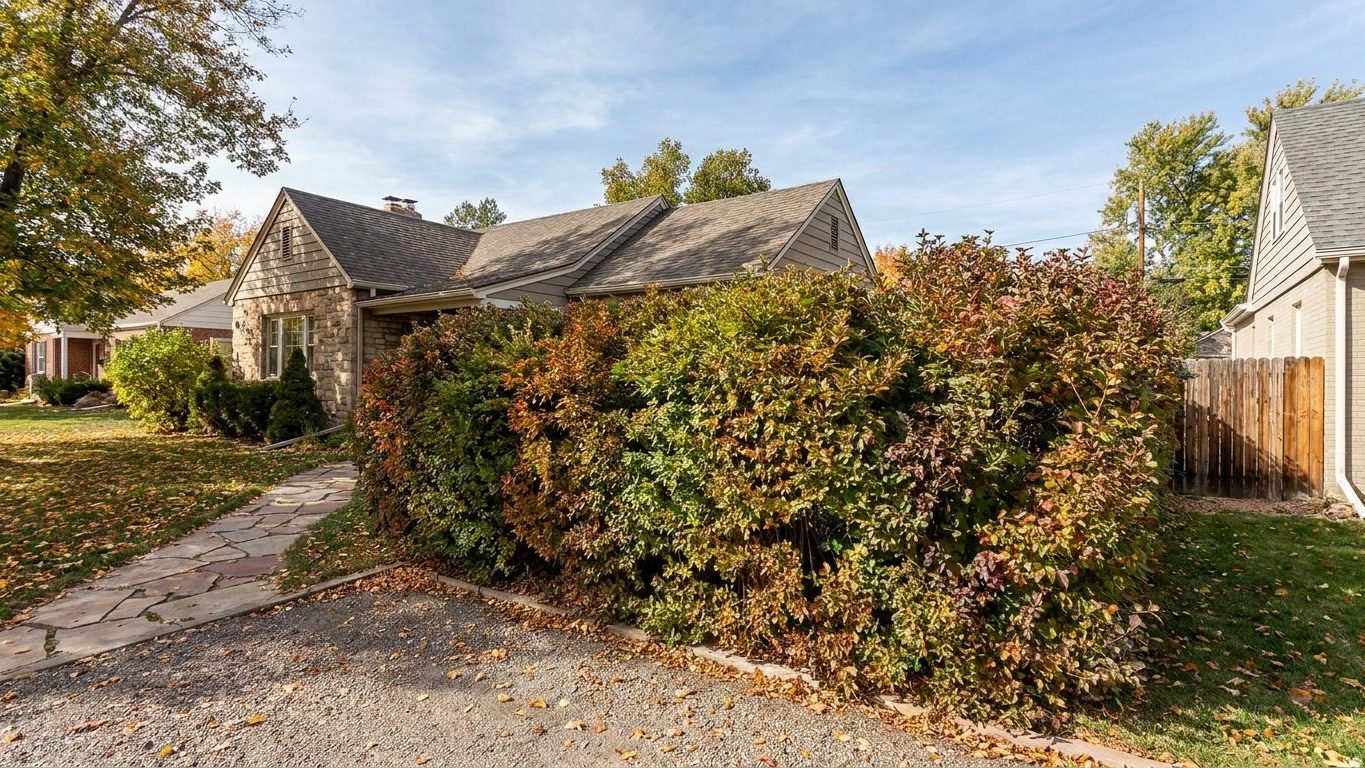

Rhode Island has no statewide hedge height law. No state statute sets a maximum for how tall a hedge, screen, or living fence can grow on private property. The rule that actually governs your yard comes from your city or town’s zoning code, and it can be completely different from the one two towns over. If you’ve read a figure quoted as “Rhode Island’s hedge law,” it almost certainly came from a single municipality’s ordinance, mislabeled as a state rule.
There is no Rhode Island hedge height law
This surprises a lot of homeowners, but it’s not unique to Rhode Island. No state in the country regulates hedge height at the state level. Fence and hedge limits are a form of land-use control, and land use in the United States is handled through zoning, which is a power the state delegates down to local government. Rhode Island has 39 cities and towns, and each one writes and enforces its own zoning ordinance. There’s no central Rhode Island building code chapter that says “hedges shall not exceed X feet.” That number, if it exists at all, lives in a specific municipal code book.
This is exactly where a lot of commercial gardening sites get it wrong. They publish a single figure, something like “Rhode Island allows hedges up to 6 feet,” and present it as if it applies from Westerly to Woonsocket. In reality, that number was likely pulled from one town’s code, and it may not even be a hedge rule. It might be a fence height limit that someone assumed also covers living plants. Treating one municipality’s number as the state’s answer is the single most common mistake on this topic, and it’s the reason a search for “Rhode Island hedge law” turns up so many contradictory answers.
There’s a second wrinkle worth understanding before you go looking for your own town’s rule. Many zoning codes regulate “fences” as a category of structure, meaning something built from posts, rails, or panels, and they define that separately from living vegetation. Some ordinances fold hedges into the same section as fences under a broader term like “screening” or “obstructions.” Others don’t mention hedges at all, which can mean either that no height limit applies to them, or that the town handles overgrown vegetation complaints through a general nuisance ordinance instead of a numeric limit. You can’t assume your town’s fence height automatically caps your hedge until you’ve actually read the definitions section of the code.
No specific Rhode Island municipality’s hedge ordinance is documented here, and it would be a mistake to guess one and present it as settled. The honest, useful answer for a Rhode Island homeowner isn’t a number. It’s a method for finding your own town’s number, because that’s the only figure that will hold up if a neighbor or a code enforcement officer ever raises the question.
How to find the rule that actually applies to you
Most American municipalities, including the great majority of Rhode Island’s cities and towns, publish their zoning code online through one of three services: Municode (library.municode.com), American Legal Publishing (codelibrary.amlegal.com), or eCode360. These are the platforms that host municipal codes for local governments across the country, and a quick search for your town’s name plus “municipal code” will usually land you on one of them within the first couple of results.
Once you’re on the right site, don’t start browsing randomly. Head straight for the section labeled Zoning (sometimes called “Zoning Ordinance” or “Land Development” depending on the town). Inside that chapter, look for a subsection on “Fences,” “Accessory Structures,” or “Screening and Buffers.” That’s where height limits for fences, walls, and often hedges are grouped together. Use the search bar on the code platform itself and type “hedge,” “height,” and “fence” as separate searches. Codes are inconsistent about which word they use, so searching only one term can make you miss the relevant clause entirely.
Pay close attention to how the code defines things before you assume a fence rule covers your hedge. Some towns explicitly write “fences, walls, and hedges” together in one sentence, applying the same limit to all three. Others define “fence” narrowly as a “constructed barrier” and never mention living plants, which can leave hedges technically unregulated, or governed instead by a general nuisance or visibility clause elsewhere in the code. Read the exact wording. Don’t extrapolate.
If the online code search doesn’t turn up a clear answer, or if you want to confirm what you found before you plant, call the town directly. Look for the Zoning Office, Planning Department, or Building/Code Enforcement Department, depending on how your town organizes it. These offices field this exact question regularly, and a five-minute phone call can save you a rewrite of your landscaping plan later. Before you call, have three things ready: your property address, whether your lot is a corner lot, and which side of the property the hedge will run along (front yard, side yard, or rear yard often carry different limits in the same code). Front-yard height limits are almost always lower than rear-yard limits, and corner lots frequently have an additional restriction layered on top, which brings up the next issue.
The branches that cross the line
Height limits deal with what you’re allowed to grow. A separate question, and one that generates far more neighbor disputes, is what happens when a hedge you’re allowed to grow starts pushing branches, roots, or foliage across the property line into a neighbor’s yard.
Across most states, the general legal principle, developed through court decisions rather than written into a specific statute, works something like this: a property owner has the right to trim back branches and roots that cross onto their land, up to the boundary line and no further, generally at their own expense. This is sometimes called the “self-help” remedy. It lets a neighbor deal with encroaching growth without having to sue first, but it comes with real limits. The trimming can’t cross onto the other person’s property without permission. It can’t be done in a way that kills the plant or causes serious damage to its overall health, since some courts have held that excessive or careless cutting can create liability for the neighbor doing the trimming, not just the one who let the hedge grow unchecked.
This principle is worth knowing, but it should never be treated as a fixed Rhode Island statute with an exact procedure. It comes from case law, and case law varies from state to state in its details, its exceptions, and how aggressively courts have applied it. Rhode Island doesn’t have a single, citable statute that spells out step-by-step encroachment rules the way, say, a building code spells out a fence height. If a hedge dispute escalates, this is the point where a general understanding of “you can trim to the line” stops being enough.
The practical path, before any of this becomes a legal question, is a conversation. Most hedge disputes between neighbors get resolved once someone simply mentions that a branch is scraping their siding or blocking their driveway. If a conversation doesn’t work, or if there’s real disagreement about where the property line actually sits, the next step is a professional one: consult a Rhode Island attorney who handles property disputes, or check whether your town offers small claims mediation for a boundary disagreement. This page isn’t a substitute for that advice. It’s a starting point for understanding what’s typically at stake before you decide whether the situation calls for a saw or a phone call to a lawyer.
What to check before you plant
The best time to deal with hedge height rules is before the hedge exists, not after it’s six feet tall and a neighbor has already complained. A short pre-planting check can prevent a costly redo.
- The sight triangle at corners and driveways. This is close to a universal rule across American municipalities, and it applies even in towns with no general hedge height limit at all. At street corners and where a driveway meets a road, nothing, including a hedge, can block a driver’s line of sight. The height allowed in this triangle zone is almost always far lower than the general yard limit, sometimes measured in inches rather than feet, precisely because it’s a visibility and safety rule, not an aesthetic one.
- Underground and overhead utility lines. Before digging planting holes along a property line, call 811 to have utility lines marked. This is free in every state and prevents damage to buried gas, electric, or water lines.
- HOA or subdivision covenants. If your property is part of a homeowners association or a deed-restricted subdivision, those private rules can be stricter than anything in the town’s zoning code, and they’re enforced separately from municipal law.
- Which zoning district you’re in. A residential district and a commercial or mixed-use district in the same town frequently carry different fence and hedge rules, and corner lots are often treated differently from interior lots within the same district.
- The exact setback from the property line. Some codes tie height allowances to how far the hedge sits from the boundary, allowing taller growth further back from the line.
None of this replaces reading your specific town’s code or calling the zoning office directly, but running through this list first means you’ll ask the right questions when you do.
Common questions
Does Rhode Island have a maximum fence height that applies statewide?
No. Fence and hedge height limits in Rhode Island are set entirely at the municipal level, town by town, through local zoning ordinances. There is no statewide maximum for either fences or hedges.
Can two neighboring Rhode Island towns have completely different hedge rules?
Yes, and this is common. Since each city and town writes its own zoning code independently, a hedge that’s fully compliant in one town could exceed the limit, or fall under a different category entirely, in the town next door.
What if my hedge blocks a driver’s view at a street corner?
This falls under the sight triangle rule, which exists in nearly every municipal code regardless of whether the town otherwise regulates hedge height. It typically sets a much lower height limit near intersections and driveways than the general residential yard limit, specifically to protect visibility for drivers and pedestrians.
Can a neighbor legally force me to trim my hedge?
Generally, a neighbor can trim back branches or roots that cross onto their own property, up to the boundary line, without needing your permission first. This comes from a broader legal principle recognized in most states through court decisions, not a specific Rhode Island statute, and it doesn’t give them the right to enter your yard or damage the plant beyond what’s needed to stop the encroachment.