
Will Sweet Corn Ripen in Maine? Yes, in most of Maine, though the calendar runs tighter than many gardeners assume. Coastal Portland’s last spring frost falls between April 22 and May 1, and the first fall frost lands October 9 to October 21, a frost-free stretch of roughly five to six months. But sweet corn doesn’t care about frost dates alone: it needs soil above 60°F to germinate reliably, and that threshold arrives well after the last frost, not on it.
The short answer
Soil warms slower than air. A calm, sunny week can push the thermometer into the 60s while six inches down, the ground still sits in the 40s. That lag is the whole story here: the last frost date tells you when the air stops threatening to kill seedlings, not when the ground is ready to sprout them. In Maine, gardeners who plant sweet corn the week after the last frost, chasing that April 22 to May 1 window, often watch seed rot in cold, wet soil instead of germinating.
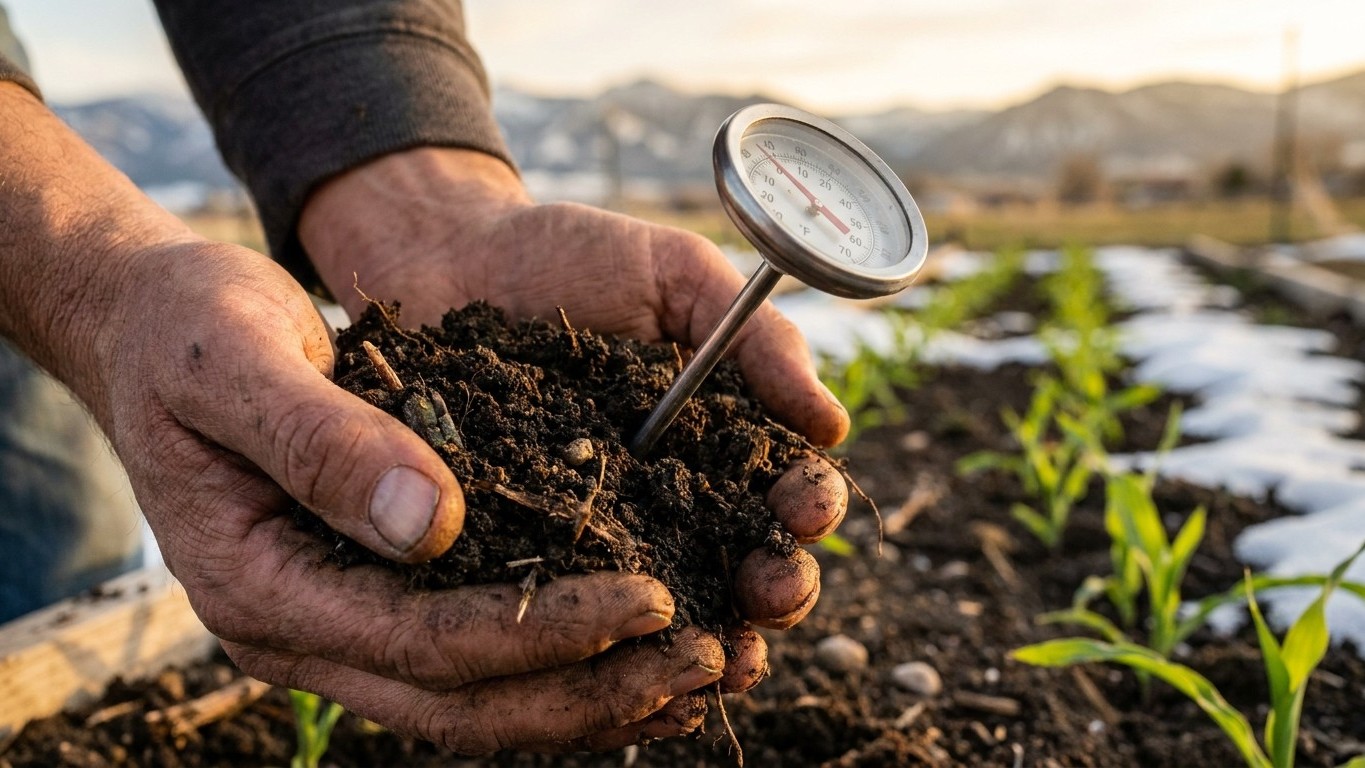
The 60°F soil mark typically arrives some weeks after the last frost has passed, once the ground has had a real stretch of warm, sunny days to catch up. No fixed calendar date for that crossing is published for Maine soils specifically, so the safest approach is a soil thermometer pushed a few inches down, checked on a dry afternoon, rather than trusting the frost date as a stand-in. For a closer look at timing this properly, see When to Sow Sweet Corn in Maine.
Once the ground is warm enough to plant, the question becomes whether 60 to 90 days of growing time fit before the first fall frost. Using the mildest end of the local range, planting once soil is warm in mid-to-late spring and harvesting before an October 9 frost still leaves a comfortable four months or so, more than enough for the entire 60 to 90 day range. Even using the more conservative end of the spring window, the season here is long enough that sweet corn is not a marginal crop the way it can be farther north in New England.
The heat load matters too. Portland’s climate normals show an average of only 3.8 days a year reaching 90°F or hotter. That’s a mild summer by national standards, and it means corn here rarely suffers the kind of heat stress that stalls pollination in hotter states. The tradeoff is that growth is steadier but slower, so the days-to-maturity number on a seed packet should be treated as a floor, not a guarantee, in a cooler coastal climate.
Does a late variety fit here?
The 60 to 90 day figure from Utah State University Extension answers one question only: does the plant have enough time, start to finish, to reach harvest before the growing season ends. It says nothing about which specific variety to buy, and no variety names belong in that calculation, only the number of days claimed on the packet.
A 60-day type
A corn that matures in about 60 days is the easy case in Maine. Planted once the soil has genuinely warmed, even accounting for the lag after the last frost, a 60-day crop reaches harvest with two or three months to spare before the first fall frost in every part of the state this data covers. There’s little risk of running out of season with a fast type here, coastal or inland.
A 90-day type
A 90-day type is the tighter case. Working from the mild end of the range (planting once soil warms in spring, harvesting before an October 9 to 21 frost), a 90-day corn generally still fits, with roughly a month of buffer in coastal areas like Portland. But that buffer shrinks fast once the calculation moves inland or north, where spring soil warms later and fall frost arrives earlier than the coastal dates above. In those harsher pockets of the state, a 90-day variety can push right up against, or past, the safe harvest window, and a shorter type is the more reliable bet. This page can’t tell you which side of that line your own garden sits on, since the numbers here reflect the milder coastal reference station, not every county.
What goes wrong here
- Soil sown too cold. Planting on the calendar date of the last frost, rather than waiting for the soil itself to warm past 60°F, is the single most common failure. Cold, wet soil rots seed before it germinates or produces a thin, uneven stand. The fix is patience: check the ground with a soil thermometer a few inches deep rather than trusting the frost date alone, and wait for a stretch of warm, sunny weather to pass first.
- A variety too late for the season. A 90-day corn planted late, or in one of the state’s cooler inland pockets, can run out of days before it fully matures, leaving ears that never fill out or ripen. The remedy is matching the days-to-maturity number on the packet to the real gap between when local soil warms and when the first fall frost is expected, favoring a shorter type whenever that gap looks tight.
- Sweetness lost to cross-tasseling. This one has nothing to do with Maine’s climate. Standard (su), sugary-enhanced (se), and supersweet (sh2) types cross-pollinate if their tassels shed pollen at the same time, and the result is starchy, disappointing corn regardless of how well the plants grew. No published isolation distance fixes this; what fixes it is timing plantings, or choosing varieties, so that different types don’t tassel in the same window, and growing each type in its own block of three or more rows rather than a single thin row, so pollination stays within that block.
Checking this against your own county
The frost dates and soil-warming pattern above come from a reference station in coastal Portland, the mildest part of Maine. Inland valleys and the northern half of the state routinely see later spring soil warming and an earlier first fall frost, which tightens the whole window this page has walked through, especially for a 90-day variety.
Before betting a season on a later type, it’s worth checking those specifics against local conditions rather than the statewide averages here. University of Maine Cooperative Extension tracks county-level frost data and variety performance trials, and can confirm whether a particular planting date or variety length holds up in a specific part of the state rather than at the coastal reference point used above.
Common questions
Can I just plant on the last frost date to be safe?
That’s usually too early. The soil needs time after the last frost to warm past 60°F, and seed planted into colder ground tends to rot rather than sprout. Checking soil temperature directly is more reliable than working from the frost calendar alone.
How do I know an ear is actually ready to pick?
Look for all three signs together: silks that have turned dry and brown, husks that are still moist and green rather than papery, and milky (not clear, not thick) juice from a kernel punctured with a fingernail. Any one sign alone can be misleading.
Is there a countdown after the silks appear?
Yes, and it’s a separate clock from the 60 to 90 day planting-to-harvest figure. Ears are typically ready roughly 17 to 24 days after silk emergence, which is the window worth checking daily for the three ripeness signs rather than relying on a single calendar guess.
Do I need to keep different corn varieties far apart?
No specific distance is published for this. What matters is that su, se, and sh2 types must not tassel at the same time, since cross-pollination between them ruins sweetness regardless of climate. Staggering planting dates, or choosing types that mature at different rates, keeps their tasseling windows apart.