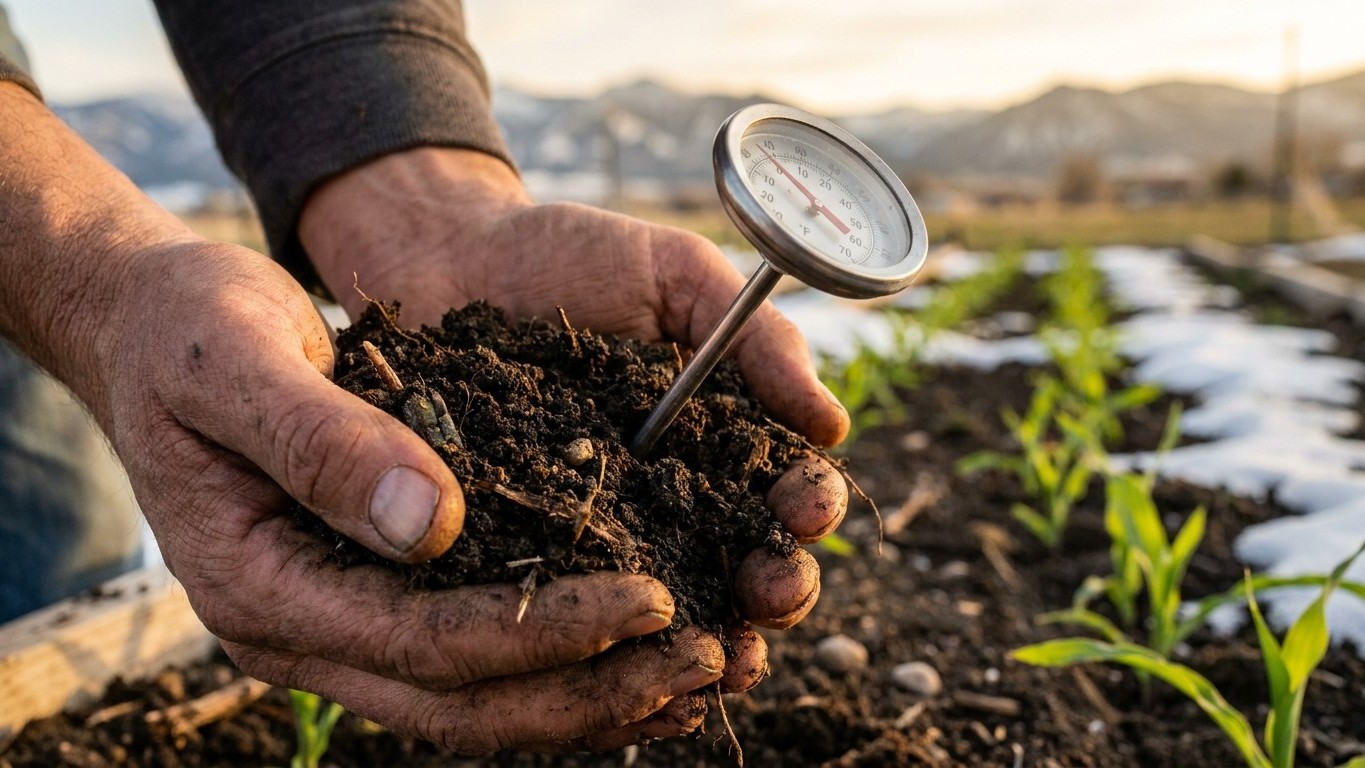

New Mexico’s high desert gives sweet corn plenty of room to mature, but only if you wait for the soil, not the calendar. Soil needs to hold above 60 F before a seed will germinate reliably, and that mark lands well after the last spring frost. Once that threshold is met, the state’s frost-free stretch is long enough to carry a 60 to 90 day crop to full ripeness in most valley and lowland gardens.
The short answer
Start with the number that actually controls planting day: soil above 60 F. That is not the same date as the last spring frost, and treating them as one is the single most common mistake home gardeners make with corn in this state. When to Sow Sweet Corn in New Mexico depends on that soil temperature threshold rather than a fixed calendar date. At the reference station used for New Mexico climate normals, the last spring frost falls between March 31 and April 12. Soil in a high desert climate warms slower than air does, so the ground typically doesn’t hold a steady 60 F until several weeks past that frost date, often deep into April or into May depending on elevation, aspect and whether the bed sits in full sun.
That delay matters less than gardeners fear, because the other end of the season is generous. First fall frost at the same reference station runs between October 29 and November 9. Even if you don’t get seed in the ground until soil finally clears 60 F in late spring, you’re still looking at somewhere in the neighborhood of five to six months before frost returns. Sweet corn needs 60 to 90 days from planting to reach harvest, so the raw math works in the gardener’s favor almost everywhere in the lower and middle elevations of the state.
Heat is the other half of the equation, and New Mexico doesn’t lack for it. The reference station averages 42.5 days a year at 90 F or hotter. That’s not a comfort statistic, it’s a warning about water. Corn under that kind of heat load pulls moisture fast, especially during the two to three weeks around silk emergence, and a garden that skips irrigation during a heat spike will show it in small, poorly filled ears regardless of how well the season length worked out on paper.
So the short version, and the full answer to Will Sweet Corn Ripen in New Mexico?, is yes: sweet corn ripens here, and the season window is wide enough to be forgiving. The catch is timing the planting to actual soil warmth rather than a fixed date, and keeping water flowing through the hottest stretch of summer. Get those two things right and the calendar stops being the limiting factor.
Does a late variety fit here?
The 60 to 90 day range covers a wide spread of maturity types, and New Mexico’s season is long enough that the choice usually comes down to garden goals rather than survival. Still, it’s worth working through both ends of that range separately, because the margin isn’t identical.
A 60-day variety
A short-season type planted once soil clears 60 F has an easy path to maturity almost anywhere in the state. Even accounting for a late soil warm-up stretching into May, and even in gardens at higher elevation where the growing season runs shorter than the valley floor, a 60-day crop still finishes with weeks to spare before the first fall frost arrives between October 29 and November 9. This is the safer choice for anyone gardening above the lower river valleys, or for anyone who wants a second planting later in summer for a fall harvest.
A 90-day variety
A full 90-day type asks more of the calendar, but the numbers still hold in most locations. Working from a soil-warm planting date and counting forward, a 90-day crop lands its harvest comfortably before the fall frost window opens in late October, as long as planting isn’t pushed unusually late into the season. Where this gets tighter is at elevation, where the growing season compresses from both ends, the way the brief’s caution about suburban and rural sites running one to two weeks behind the reference station suggests. In those higher, cooler gardens, a 90-day variety leaves less of a buffer, and a string of cool nights in early fall can slow the final stretch of ripening enough to matter. It doesn’t fail outright in most of the state, but it carries real risk in the coolest gardens, and that’s where the shorter-season choice earns its keep.
What goes wrong here
- Soil sown too cold. Planting on the calendar date of the last frost, rather than waiting for the soil itself to hold above 60 F, produces spotty germination and weak seedlings that never catch up. The remedy is simple: check the soil with a thermometer a few inches down, not the forecast, before you plant.
- A variety too late for the season, in the wrong spot. A 90-day type can still ripen in most of New Mexico, but pushed into a high-elevation garden or a late planting date, it runs out of warm days before it finishes filling ears. The fix is matching maturity length to your actual site, favoring the shorter end of the range wherever the season already runs compressed.
- Sweetness lost to timing, not climate. This failure has nothing to do with frost dates or soil temperature. Standard (su), sugary-enhanced (se) and supersweet (sh2) types cross-pollinate freely, and if two types tassel at the same time nearby, the sweeter type loses its flavor and texture to the other’s pollen. The source gives no isolation distance to plant by, so the only reliable fix is timing: stagger plantings so the different types don’t tassel together, and keep plantings organized as blocks of three or more rows rather than single lines, since corn pollinates by wind and needs a solid block to fill ears evenly regardless of type.
Checking this against your own county
Every figure here comes from a single reference weather station, and New Mexico’s terrain doesn’t treat every garden the same way that station does. A backyard in a river valley, a foothill lot, or a high-desert property at real elevation can each see the last frost land later and the first fall frost arrive earlier than the reference dates, sometimes by a week or two, more at higher elevation. That shift changes how much runway a 90-day variety actually has.
Before locking in a planting date or a variety choice, check those specifics against your own county through New Mexico State University’s Cooperative Extension Service, at aces.nmsu.edu. County-level frost data and planting guidance there will tell you how much your own garden’s window differs from the statewide reference, and that gap is exactly what decides whether a longer-season variety is a safe bet or a stretch.
Common questions
How do I know when soil has actually reached 60 F?
Use a soil thermometer pushed a few inches into the bed, checked in the morning over several consecutive days. A single warm afternoon reading isn’t reliable; the goal is a steady baseline above 60 F, not a brief spike.
Can I plant sweet corn before the soil hits 60 F to get a head start?
Seed sown into cold soil germinates unevenly at best and rots at worst. Waiting the extra weeks for the soil to warm costs less time overall than replanting a failed early crop.
How do I know an ear is actually ripe, not just full-sized?
Check three signs together: the silks have turned dry and brown, the husk is still moist and green, and a punctured kernel releases milky juice rather than clear liquid. Any one sign alone can be misleading.
Does the 17 to 24 day window after silk emergence mean the same thing as the 60 to 90 day planting window?
No, and mixing them up causes confusion. The 60 to 90 day figure runs from planting and tells you whether the crop fits the season at all. The 17 to 24 day figure starts once silks appear and tells you which week to actually pick. They answer different questions.