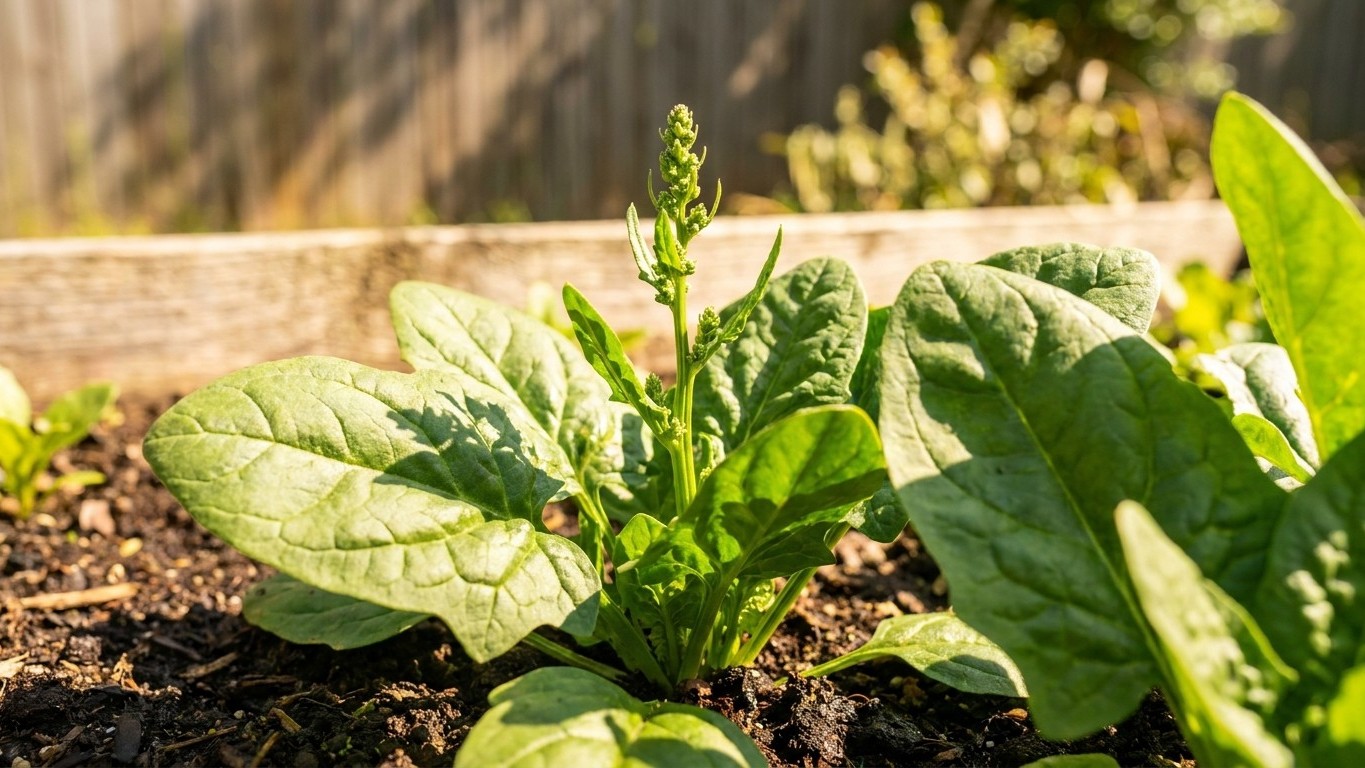

Spinach will bolt early almost everywhere in North Dakota, and the reason has less to do with heat than most gardeners assume. At the reference city, the longest day of the year runs 15 hours and 41 minutes of daylight, among the longest day lengths anywhere in the country. That single fact, combined with the plant’s habit of flowering once days stretch long and warm, means a cool northern summer does not buy extra weeks of harvest here.
The short answer
Fifteen hours and forty-one minutes of daylight on the summer solstice is a lot of light, more than gardeners in most of the country ever see. For spinach, that number matters because the crop bolts, meaning it sends up a flower stalk and turns bitter, once day length stretches long and temperatures climb. Spinach does not wait for a heat wave to make this decision. Long days alone push it toward flowering, and North Dakota’s early-summer daylight arrives whether the thermometer cooperates or not.
That puts the brakes on spring spinach here well before the hottest weather of the year shows up. The reference station averages only 11.7 days a year at 90 F or above, a modest heat load compared to states farther south. If bolting here were purely a heat problem, that low number would suggest a long, forgiving growing season. It does not work out that way, because day length does its damage on its own schedule, regardless of how mild the air stays.
So which is it, day length or heat? In North Dakota, the day length is doing most of the early work. The long daylight hours of June arrive on a fixed calendar no matter what the weather does, and they start nudging spinach toward flowering while the growing season still feels young. Heat becomes the second factor, tightening the window further once those days above 90 F start to show up in July and August. Growth also stops being good above 75 F, a threshold this region reaches with some regularity across summer, adding a second pressure on top of the daylight trigger.
None of this changes with variety choice. Seed catalogs and extension bulletins mention names like Bloomsdale, Melody, Teton, and Olympia, but no published data compares how quickly each one bolts under a given day length or temperature. Choosing a particular variety may shift flavor or leaf shape, but it does not rewrite the calendar math described here. The daylight number and the 75 F ceiling apply regardless of which packet ends up in a gardener’s hand.
The practical takeaway is straightforward: treat spring Spinach in North Dakota as a short, front-loaded crop, not a slow-and-steady one. Get it in early, expect it to finish earlier than the label promises, and plan the rest of the garden calendar around that reality rather than fighting it.
How long the spring window really is
Working out a usable spring window here means starting from the last frost date and moving forward through the daylight and heat limits described above. Here is how that math plays out step by step.
- The last spring frost at the reference station falls between May 4 and May 15. Rural and suburban gardens away from the airport station often see frost linger one to two weeks longer, so a cautious home gardener should treat late May as realistic rather than assume the earlier date applies to their yard.
- Spinach seed should go into the ground two to three weeks before that last frost date, since the crop tolerates cold soil far better than heat. That places the earliest sowing somewhere around mid to late April at the reference station, and likely early May for many home gardens once the frost buffer is factored in.
- From that sowing date, the plant has a limited number of weeks before day length alone starts pushing it toward flowering. Because the solstice daylight here reaches 15 hours and 41 minutes, that trigger arrives on the early side of the calendar compared to points farther south, regardless of how the weather behaves.
- Layered on top of day length is the 75 F growth ceiling. Once temperatures start holding above that mark with any regularity, which for this region tends to happen as June turns into July, growth quality drops and the same warmth that slows the plant also turns it bitter.
- Adding it up, a realistic spring window here runs from mid to late April sowing through harvest by mid-June for most plantings, with early sowings pushing that finish date only slightly later. That leaves roughly six to eight usable weeks, shorter than the frost-free season would suggest, because day length closes the door before summer heat fully arrives.
Gardeners chasing a longer spring harvest often sow in small batches every week or two through that window rather than planting everything at once, so the whole crop does not bolt on the same afternoon.
The autumn crop, and when the soil lets you sow
Fall spinach avoids the day-length problem, since daylight is shrinking rather than growing through late summer and into fall. But autumn sowing in North Dakota runs into a different pair of obstacles: soil that is still too warm to germinate well, and a frost that arrives sooner than gardeners expect.
Soil still too warm to germinate
Spinach seed germinates poorly once soil temperatures climb above 80 F, according to Utah State University Extension. That threshold is not about the air feeling hot on a given afternoon, it is about what the soil itself has stored up after weeks of summer sun. With the reference station averaging 11.7 days a year at 90 F or higher, soil temperatures in July and much of August are likely to sit above that 80 F mark, especially in exposed or unmulched beds. That makes early-to-mid summer a poor time to direct-sow a fall crop, no matter how appealing the idea of an early start might be. The practical fix is patience: wait until soil has cooled from its midsummer peak, typically once the hottest stretch of days above 90 F has passed and overnight temperatures start dropping again, before putting seed in the ground.
Counting back from the first fall frost
The first fall frost at the reference station arrives between September 25 and October 5, though rural gardens away from the airport station often see frost show up one to two weeks earlier. Utah State University Extension recommends sowing a fall spinach crop 50 to 75 days before the target harvest date, since no source publishes a fixed days-to-maturity figure for the crop. Working backward from a harvest goal in the last week of September, that puts sowing somewhere in the window of mid-July to early August, which lines up reasonably well with the point when soil temperatures should finally be dropping out of that above-80 F danger zone. The overlap between these two obstacles is narrow: sow too early and the seed struggles in hot soil, sow too late and frost cuts the harvest short. Aiming for the earliest safe date once soil has clearly cooled gives the crop the best chance of reaching a full harvest before the first frost closes out the season.
Common questions
Does shade help delay bolting in a North Dakota garden?
Shade can lower soil and leaf temperature somewhat, which helps against the 75 F growth ceiling, but it does nothing about day length. Since long days themselves push spinach toward flowering here, shade alone will not prevent early bolting once the solstice daylight sets in.
Is there a spinach variety that resists bolting better in this region?
Extension sources name varieties such as Bloomsdale, Melody, Teton, and Olympia, but no published data compares how each performs under North Dakota’s day length or heat pattern. Variety choice may affect flavor or texture, but it does not override the day-length trigger described here.
Should I trust the reference station’s frost dates for my own yard?
Treat the May 4 to May 15 last-frost window and the September 25 to October 5 first-frost window as a starting point rather than a guarantee. Rural and suburban sites often see frost arrive later in spring and earlier in fall than the airport station records, sometimes by one to two weeks or more at higher elevation.
Why does fall spinach avoid the bolting problem that spring spinach faces?
Daylight is shrinking through late summer and fall rather than growing, so the long-day trigger that pushes spring spinach toward flowering is not in play during the fall planting window. The obstacles in fall are soil warmth blocking germination and the earlier arrival of frost, not day length.