
On Prince Edward Island, pumpkin seed goes into the ground once soil reaches a steady 65°F, and every flower needs to open no later than early September to have a real shot at a ripe, orange fruit before the average October 17 frost. Miss that flowering window and the calendar simply runs out.
The short answer
Start with the frost, because everything else on this page works backward from it. Environment and Climate Change Canada’s 1981-2010 normals put Charlottetown’s average first fall frost at October 17. That’s a mean date, not a promise: in roughly half the years on record, frost arrives later than that, and in the other half it arrives sooner. Treat October 17 as the middle of a window, not a line you can plan against with confidence.
Counting backward from flowering
Utah State University Extension puts pumpkin maturity at 45 to 55 days after flowering, not from the day the seed goes into the ground. That distinction matters more here than almost anywhere else in the country, because Prince Edward Island’s growing season is short enough that a week lost on either end shows up in the harvest. Working backward from October 17, a flower needs to open between roughly August 23 and September 2 at the very latest to reach maturity before that mean frost date lands. Open later than that, and the fruit is still green when the vine gets hit.
That flowering window isn’t the sowing date, it’s the finish line for the plant’s early growth. Between germination and the first female flower, a pumpkin vine spends several weeks building leaves and runners before it starts setting fruit. So the real planning question isn’t “when is the frost,” it’s “when does the seed need to go in so the plant is flowering by the last days of August.” Given how late Island soil warms in spring, that pushes sowing into a fairly narrow band, which is exactly what the next section walks through step by step.
None of this accounts for microclimate. The Charlottetown A station sits in a specific spot, and a garden further inland, at higher elevation, or closer to the north shore can run noticeably cooler in both spring and fall. If your yard tends to hold frost pockets or sits in a low spot where cold air settles, treat the whole window as a few days earlier than what’s written here, not later.
When to sow here
- Start from the mean last spring frost, May 16, and treat it as a midpoint. Environment and Climate Change Canada’s normals put it there, but the same caution applies as with the fall date: in about half the years, frost shows up after May 16, sometimes well after. Sowing on that date alone, without checking the soil, is a common way to lose a planting.
- Wait for the soil, not the calendar. Pumpkin seed needs soil at 65°F to germinate reliably, and that threshold is never the same as the last frost date. Air temperature climbs faster than the ground underneath it, especially on Island soils that hold spring cold longer than the air does. In practice, 65°F soil on Prince Edward Island lands well after May 16, often by two to three weeks, which means early June is a more realistic starting point for many gardens than the frost date itself suggests.
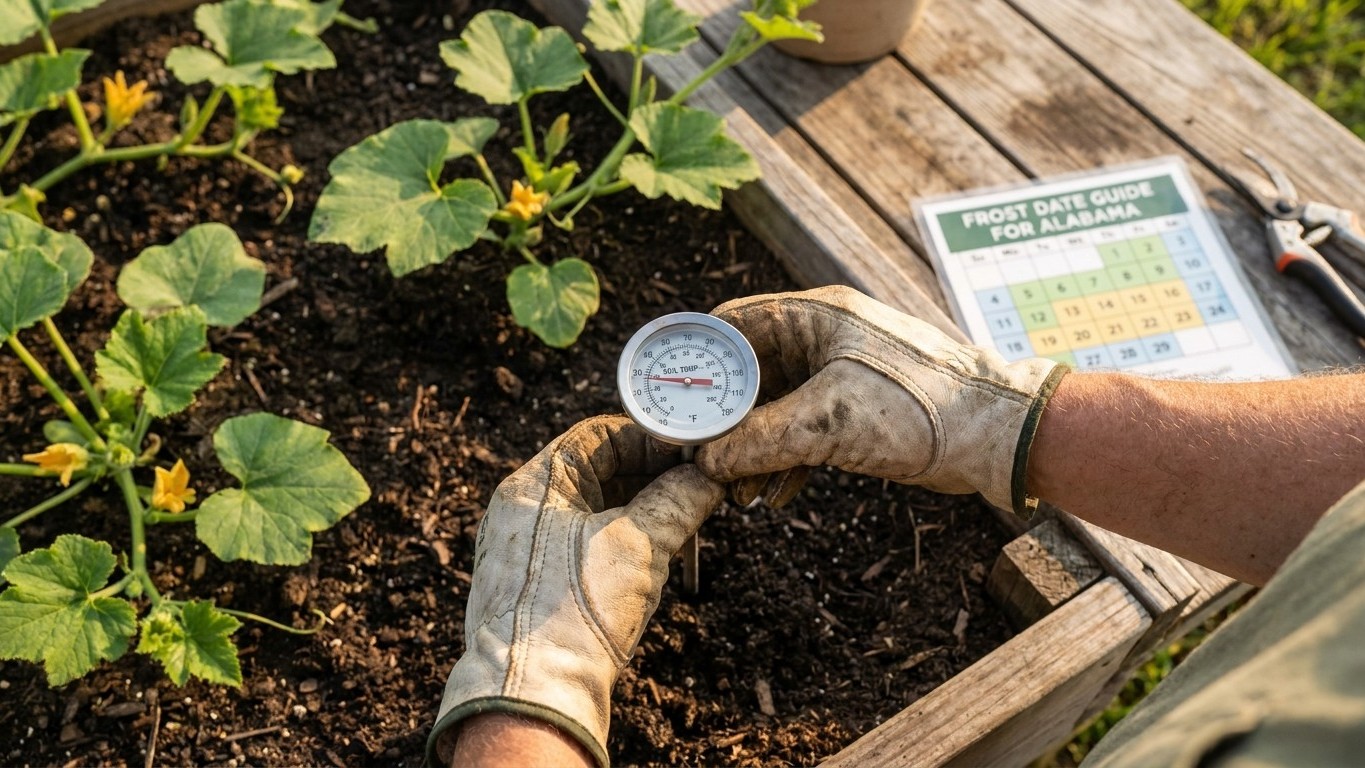
- Use a soil thermometer instead of guessing. Push it four inches into the bed where the seed will go, check it in the morning before the sun has warmed the surface, and look for a run of consistently warm days rather than a single lucky reading. One warm afternoon doesn’t mean the root zone has caught up.
- Row cover can buy about two weeks. Laying row cover over a prepared bed traps daytime heat and can nudge soil warming forward, giving a grower roughly a two-week head start on sowing compared with bare, exposed ground. That head start is worth having here, since it moves the flowering date earlier and adds a buffer against an early fall frost.
- Count forward from sowing to flowering to the 45-to-55-day maturity clock, and check the total against October 17. If the arithmetic puts flowering past the first days of September, the planting is already running late for this season length, and it’s worth choosing the earliest sowing date the soil will allow rather than the latest one the calendar permits.
What goes wrong here
- A late flower that never colors. When sowing gets pushed into mid or late June because the soil stayed cool, flowering slides past the early-September cutoff, and the fruit is still green and firm when growth stalls. The fix is to prioritize an early, soil-verified sowing date over a “safe-feeling” later one, and to warm the bed ahead of time with row cover so flowering lands inside the window rather than after it.
- A fruit caught by frost before it finishes ripening. Because October 17 is only a mean, some years bring frost well before that date, catching fruit that was on track by the calendar but not yet fully hardened. If frost is forecast and a pumpkin is still pale or soft-skinned, it’s better to harvest early and store it somewhere it won’t freeze, per Utah State University Extension’s guidance, than to leave it exposed hoping for a few more warm days that may not come.
- A vine that dies back before the skin hardens. Cool, damp fall weather can collapse pumpkin foliage from frost damage or disease before the rind has toughened enough to store well, leaving the fruit exposed and prone to soft spots. Once a fruit has had at least 45 days since its flower opened, it’s usually worth cutting it free with the stem attached rather than waiting for the full 55 and risking the vine failing first.
Pest pressure adds its own timing risk on top of the season length. Vines weakened by squash bugs or cucumber beetles earlier in the summer flower later and set fruit more slowly, which eats into the narrow window this climate already allows.
Common questions
Can I still get a pumpkin if I sow in mid-June?
It’s tight. A mid-June sowing pushes flowering close to or past the early-September cutoff calculated from the mean October 17 frost, so the fruit may still be immature when cold weather arrives. An early, soil-verified sowing gives far more margin.
What if my soil never seems to hit 65°F this spring?
Row cover over a prepared bed can raise soil temperature enough to bring sowing forward by about two weeks, which is often the difference between flowering inside the window and flowering too late.
Do squash bugs or cucumber beetles actually shorten my harvest window?
Indirectly, yes. Vines under pest stress flower later and grow slower, which matters more in a short season like Prince Edward Island’s than in a longer one. See the linked pages above for management specific to those pests.
How do I know when to pick before frost hits?
Utah State University Extension’s guidance is to harvest with the stem attached and move fruit to a spot where it won’t freeze once frost is close, rather than waiting on the calendar if a fruit hasn’t quite finished its 45-to-55-day clock from flowering.