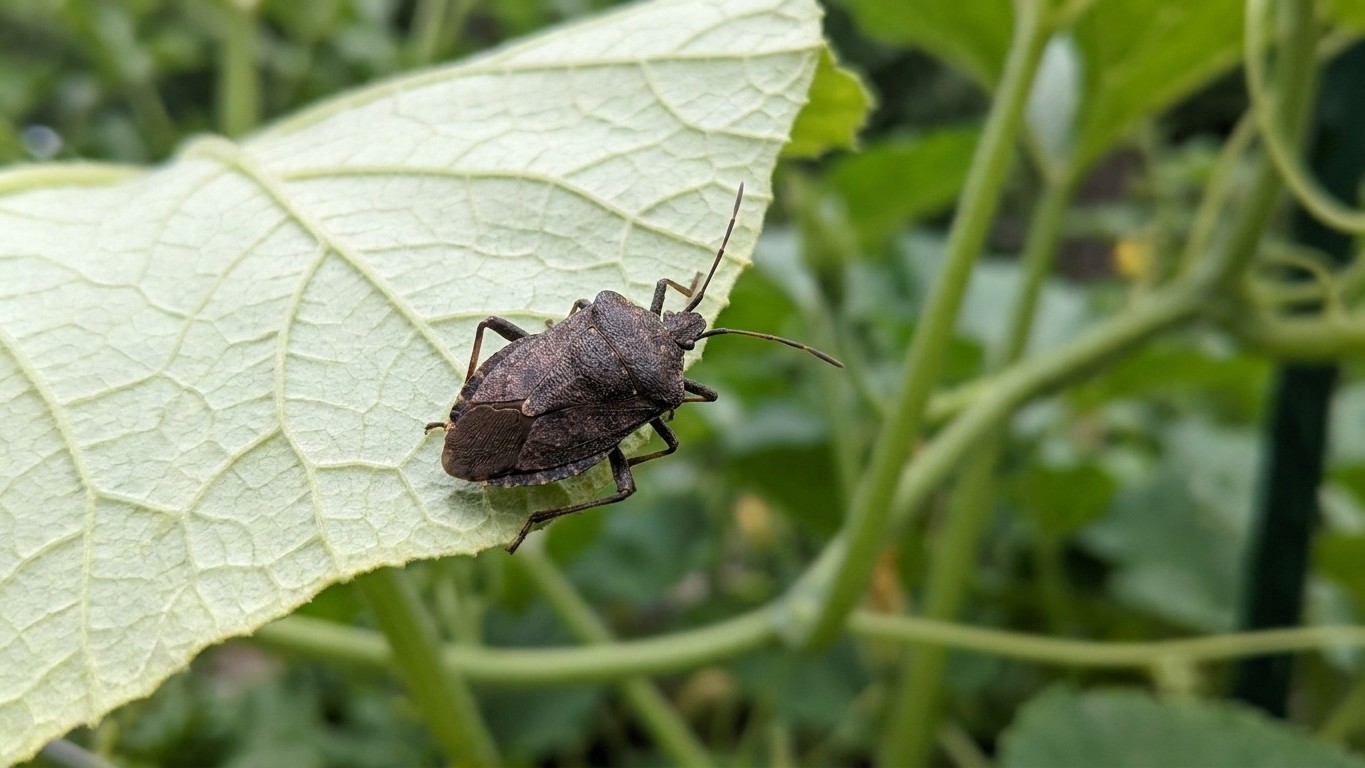

Squash bugs, often called squash beetles by home gardeners, show up in Delaware gardens from June onward, with pressure building through July and August. The window isn’t a single date: soil warmth, not the calendar, decides when they arrive, and University of Delaware Cooperative Extension tracks their activity as part of a broader cucurbit pest cycle.
The weeks to watch

Squash bugs become active starting in June, according to University of Delaware Cooperative Extension, and July and August are the months when cucurbit pests in general make their presence known most strongly in the mid-Atlantic. That’s the plain answer: if your squash or pumpkin vines are up and running by early summer, this is the stretch to start checking leaf undersides.
What the extension does and doesn’t specify
University of Delaware Cooperative Extension doesn’t publish a generation count for squash bugs the way it does for some other cucurbit and vegetable pests. Colorado potato beetle gets two generations in the area, harlequin bug runs two or three generations in the mid-Atlantic, and Mexican bean beetle produces one generation but keeps laying eggs all summer. Squash bugs, by contrast, are simply described as “active from June” onward, without a stated number of generations. That’s not an oversight to second-guess. It means the practical takeaway is continuous vigilance from early summer through the end of the season, rather than watching for a second wave at a specific later date.
Peak pressure
The July and August peak applies across the cucurbit pest complex, squash bugs included. That’s also when vines are typically at their most vulnerable, since a heavy population hitting an already-stressed plant in midsummer heat does more visible damage than the same number of insects on a vigorous spring plant.
Reading the calendar from your last frost

Delaware’s last spring frost falls between April 3 and April 14, based on NOAA’s 1991-2020 climate normals for the reference weather station near Wilmington. That’s a range, not a promise, and NOAA itself cautions that suburban and rural gardens often see frost linger one to two weeks longer than an airport station shows, more at higher elevation. Check your own county extension office for a localized estimate before you trust this one.
Squash bugs don’t check a calendar. They respond to soil and air warming up enough to support cucurbit growth and their own reproduction, so a cold, wet spring pushes their activity later, and an early warm-up pulls it forward. Here’s the arithmetic a gardener can redo with their own dates:
- Start from your last frost date. In Delaware’s reference area, that’s April 3 to April 14.
- Add roughly seven to nine weeks. That lands somewhere around late May to early June, matching University of Delaware Cooperative Extension’s stated activity start for squash bugs.
That gap is also roughly when row covers earn their keep. Put them on at transplant, and plan to remove them once female flowers open, since cucurbits need pollinators to set fruit and a cover left on too long defeats its own purpose.
What it attacks, and what the damage looks like

Most gardeners notice the plant before they notice the insect. Vines wilt suddenly, often starting with a single runner even while the rest of the plant looks fine, and leaves develop yellow speckling that spreads into brown, ragged patches. Left unchecked, entire vines collapse and dry out within days, a pattern distinct from simple drought stress because watering doesn’t reverse it.
Squash bugs feed on cucurbit crops specifically. In Delaware gardens, that means:
- Summer and winter squash
- Pumpkins
- Cucumbers
- Melons
- Gourds
Both nymphs and adults do the damage, using piercing-sucking mouthparts to draw sap from stems and leaves. That matters for what a gardener can still do about it: because the insect feeds externally on foliage and stems rather than boring inside the plant, physical removal and exclusion methods stay effective at any stage, unlike pests that tunnel into a stem where only the plant’s own defenses (or removing the affected vine) can help.
How Delaware sits in this pest’s range

This site currently documents squash bug activity in one territory: Delaware. That single-territory count reflects the site’s own coverage so far, not a statement about how widespread the insect actually is biologically, since squash bugs range across most of the continental United States wherever cucurbits are grown. What it does mean practically is that there’s no neighboring territory’s published data on this site yet to compare timing against, so the University of Delaware Cooperative Extension fact sheet stands as the reference point for this state rather than one data set among several.
For Delaware gardeners, that translates into relying on the state’s own cooperative extension guidance rather than assuming a nearby state’s published window lines up exactly, since even modest differences in spring warm-up between neighboring counties can shift when squash bugs actually show up on a given vine.
What actually works against it

Cheapest and easiest measures first, since squash bugs stay exposed on plant surfaces throughout their life cycle rather than hiding inside stems:
- Time the planting. Slightly delaying transplant until soil has warmed reduces the overlap between vulnerable young plants and early-season adults emerging from overwintering sites.
- Use row covers early. A physical barrier keeps adults from reaching young plants to lay eggs. It only works before flowering starts, since covers have to come off once pollinators are needed to set fruit.
- Hand-pick eggs, nymphs, and adults. Squash bug eggs are laid in tidy clusters on leaf undersides and are easy to crush by hand. This stays useful all season because the insect never moves inside the plant, though it becomes impractical once a population has already exploded across many vines.
- Rotate cucurbit crops each year. Adults overwinter in garden debris and nearby structures close to where they fed the previous season; moving squash and pumpkins to a different bed breaks that continuity.
- Clear plant debris in fall. Removing old vines and leaf litter eliminates the sheltered spots adults use to survive winter, reducing the following year’s starting population.
Some gardeners also spread wood ash or diatomaceous earth around plant bases as a home remedy. Reports of results are mixed, and no controlled trial establishes how well either actually reduces squash bug numbers, so treat them as optional add-ons rather than a substitute for the measures above.
Common questions
Do squash bugs and squash beetles refer to the same insect?
In casual garden conversation, yes. The pest University of Delaware Cooperative Extension tracks on cucurbits and commonly called a “squash beetle” by gardeners is the squash bug, active from June onward in the region.
Can a wilting vine recover once squash bugs have fed on it?
A vine with mild speckling can often push out new growth once the insects are removed, but a runner that has fully collapsed and dried usually won’t recover; cutting it out prevents the damage from spreading to healthy parts of the plant.
Is one generation of squash bugs a season, or several?
University of Delaware Cooperative Extension doesn’t publish a specific generation count for squash bugs, unlike some other cucurbit pests it tracks. Practically, that means treating the entire June-through-August stretch as an active period rather than expecting distinct waves.