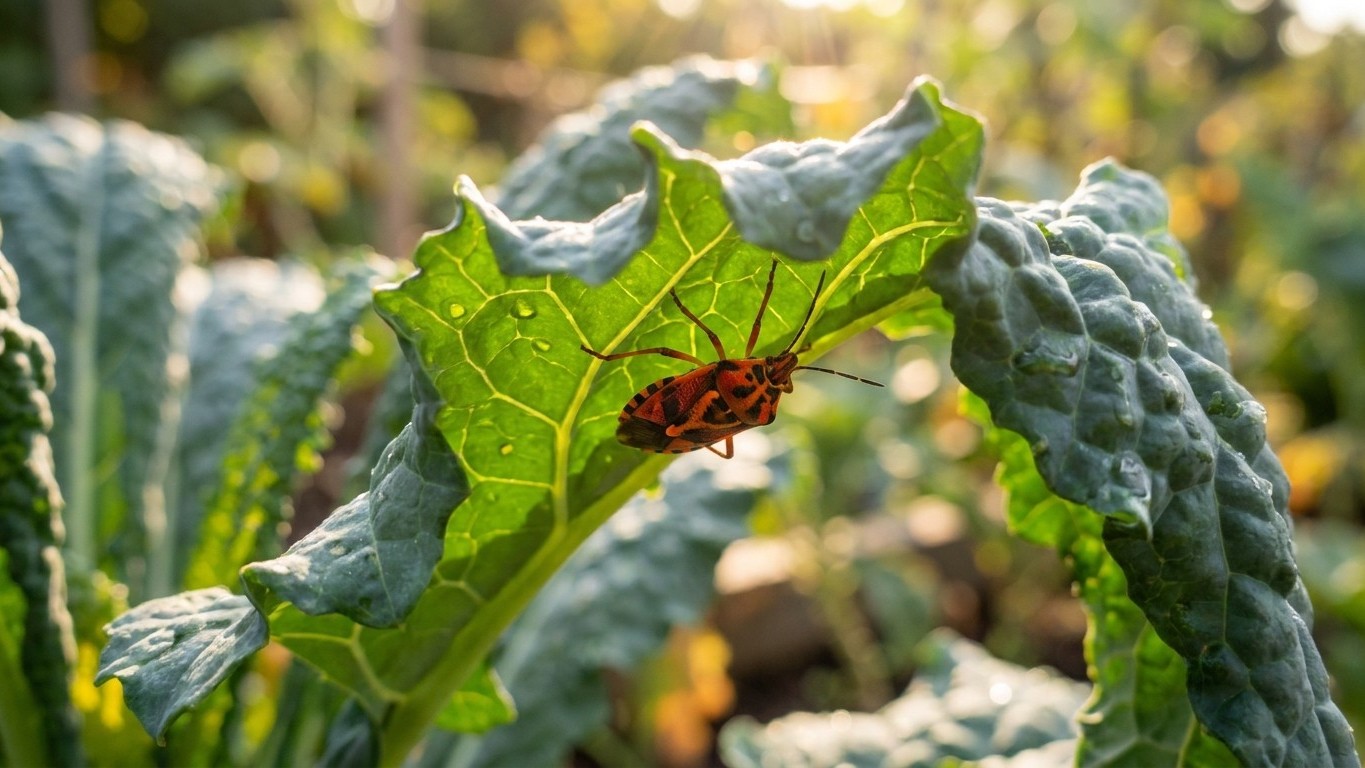

Harlequin bugs show up in Delaware gardens as soon as soil temperatures climb past 60°F, typically in mid-to-late April, and stick around through the first hard frost in October or November. Between those two dates, expect two to three overlapping generations feeding on anything in the cabbage family. The good news: this pest is easy to spot, slow to fly away, and vulnerable to a handful of low-effort control tactics if you catch it early.
Identifying the Harlequin Bug in Delaware Gardens

Murgantia histrionica, the harlequin bug’s scientific name, is a shield-shaped stink bug relative that’s impossible to miss once you know what you’re looking for. Adults run about 3/8 inch long, flat-backed, and marked with bold orange, red, and black splotches arranged almost like a stained-glass window. That coloring isn’t camouflage. It’s a warning signal, the insect equivalent of a hazard sign, telling birds and other predators that it tastes bad thanks to compounds it absorbs from the cruciferous plants it eats.
Eggs are just as distinctive. Females lay them in tidy double rows on the undersides of leaves, and each barrel-shaped egg is striped in black and white, resembling a tiny keg. A single female can lay a dozen or more eggs at a time and repeat that process every few days through the warm months, which explains how a small problem in May turns into a full-blown infestation by July.
Nymphs go through five molts before reaching adulthood, and at each stage they look like smaller, rounder, less colorful versions of the adult, usually black with orange or yellow markings. Because nymphs cluster together on the same leaf where they hatched, one leaf can hold dozens of feeding insects at once, which is often the first sign homeowners notice.
Seasonal Timeline: When Harlequin Bugs Appear in Delaware
Delaware sits in USDA hardiness zones 7a and 7b along most of the state, with a small stretch of 6b in the north. That places local harlequin bug activity roughly a month behind the Gulf Coast states where the insect is a year-round nuisance, but well ahead of New England, where cold winters limit survival.
Overwintering adults tuck themselves into plant debris, mulch, or the base of old cabbage and broccoli stalks left in the garden over winter. Once daytime temperatures consistently reach the 60s, they emerge, mate, and begin laying eggs on any young cruciferous seedlings available. This first wave usually appears from mid-April through May in Sussex, Kent, and New Castle counties alike, though coastal areas tend to warm a few days earlier than inland spots.
A second generation follows in June and July, coinciding with the peak growing season for summer brassicas like kale and collards. Population numbers usually spike hardest in August, when Delaware’s humid summer heat accelerates the insect’s life cycle to as little as three to four weeks from egg to adult. A partial third generation can appear in September before falling temperatures slow reproduction and send adults searching for winter shelter again.
What Attracts Harlequin Bugs and Which Plants Are at Risk
This pest has a narrow but stubborn diet. It feeds almost exclusively on plants in the mustard family, which covers most of the vegetables gardeners plant in spring and fall rotations. The primary targets include:
- Cabbage and Brussels sprouts
- Broccoli and cauliflower
- Kale, collards, and mustard greens
- Radish and turnip tops
- Wild mustard, shepherd’s purse, and other weedy relatives growing along fence lines
That last item matters more than most gardeners realize. Harlequin bugs don’t disappear when a garden bed is empty between plantings. They simply shift to weedy mustard-family plants growing in ditches, field edges, or neglected corners of the yard, then move back onto cultivated crops as soon as new seedlings go in the ground. A patch of wild mustard left unmanaged near a Delaware vegetable garden functions as a breeding reservoir all season long.
Feeding damage looks like irregular white or yellow blotches on leaves, followed by wilting, browning, and eventual leaf collapse in heavy infestations. Both nymphs and adults pierce plant tissue and suck out fluids, which starves the leaf of chlorophyll in patches rather than chewing visible holes the way caterpillars do. Young transplants are especially vulnerable since a cluster of nymphs can kill a small seedling within days.
Proven Ways to Stop Harlequin Bug Damage
Cultural and Physical Controls
Hand removal works surprisingly well against this insect because it moves slowly and doesn’t fly readily when disturbed. Checking the undersides of leaves every few days during spring and early summer, then dropping any eggs, nymphs, or adults into a bucket of soapy water, keeps populations from building to damaging levels in a home garden. It’s tedious, but it’s also free and immediate.
Floating row covers placed over seedlings right after transplanting block adult bugs from laying eggs in the first place. This matters most during the April-May emergence window when overwintered adults are actively searching for host plants. Covers need to come off before flowering crops need pollination, but for leafy brassicas grown for their foliage, they can often stay on for the entire harvest window.
Trap cropping offers another angle. Planting a small sacrificial patch of mustard greens or turnips a few weeks before the main crop draws early-season adults to a concentrated area, where they’re far easier to hand-pick or treat than if they’d spread across an entire bed. Fall cleanup matters just as much as spring prevention. Removing and destroying old brassica stalks, fallen leaves, and nearby weedy mustard plants before winter eliminates the shelter overwintering adults depend on, which directly reduces next spring’s emergence numbers.
Biological and Chemical Options
Natural predators including birds, spined soldier bugs, and some parasitic wasps will feed on harlequin bug eggs and nymphs, though none of them provide complete control on their own given the pest’s rapid reproduction rate. Encouraging general garden biodiversity, rather than relying on a single predator species, gives these natural checks the best chance to matter.
For infestations that outpace hand removal, insecticidal soap or horticultural oil sprayed directly on nymph clusters offers a lower-impact option that’s less disruptive to pollinators than broad-spectrum insecticides. Coverage matters more than concentration here; nymphs need direct contact with the spray to be affected, so thorough application to leaf undersides is worth the extra few minutes.
Pyrethrin-based products provide faster knockdown for heavier adult populations, but they’re broad-spectrum and will also harm beneficial insects working the same plants. Applying in early morning or evening, when pollinators are less active, reduces that collateral damage. Any pesticide use should follow label instructions exactly, particularly regarding pre-harvest intervals on edible crops, since brassicas are often harvested within days of a spray application.
Reducing Next Year’s Infestation Risk
Rotating brassica crops to a different part of the garden each season disrupts the pest’s ability to find host plants immediately upon emergence, buying valuable time before populations build. Combining rotation with the fall debris cleanup mentioned earlier tends to produce the biggest year-over-year drop in harlequin bug pressure, since it attacks both the food source and the winter shelter at once.
Gardeners dealing with recurring, severe infestations despite these steps may be dealing with a well-established weedy mustard population nearby that’s acting as a constant source of new bugs. Walking the property line and clearing wild mustard, pepperweed, or shepherd’s purse before they flower and seed each spring removes that hidden reservoir, and it’s often the single change that finally brings a stubborn harlequin bug problem under control.
Related guides
- Harlequin bug in Maryland: When It Shows Up and What Stops It
- Harlequin bug in Kansas: When It Shows Up and What Stops It
- Harlequin bug in Oklahoma: When It Shows Up and What Stops It
- Harlequin bug in Colorado: When It Shows Up and What Stops It
- Harlequin bug in Tennessee: When It Shows Up and What Stops It