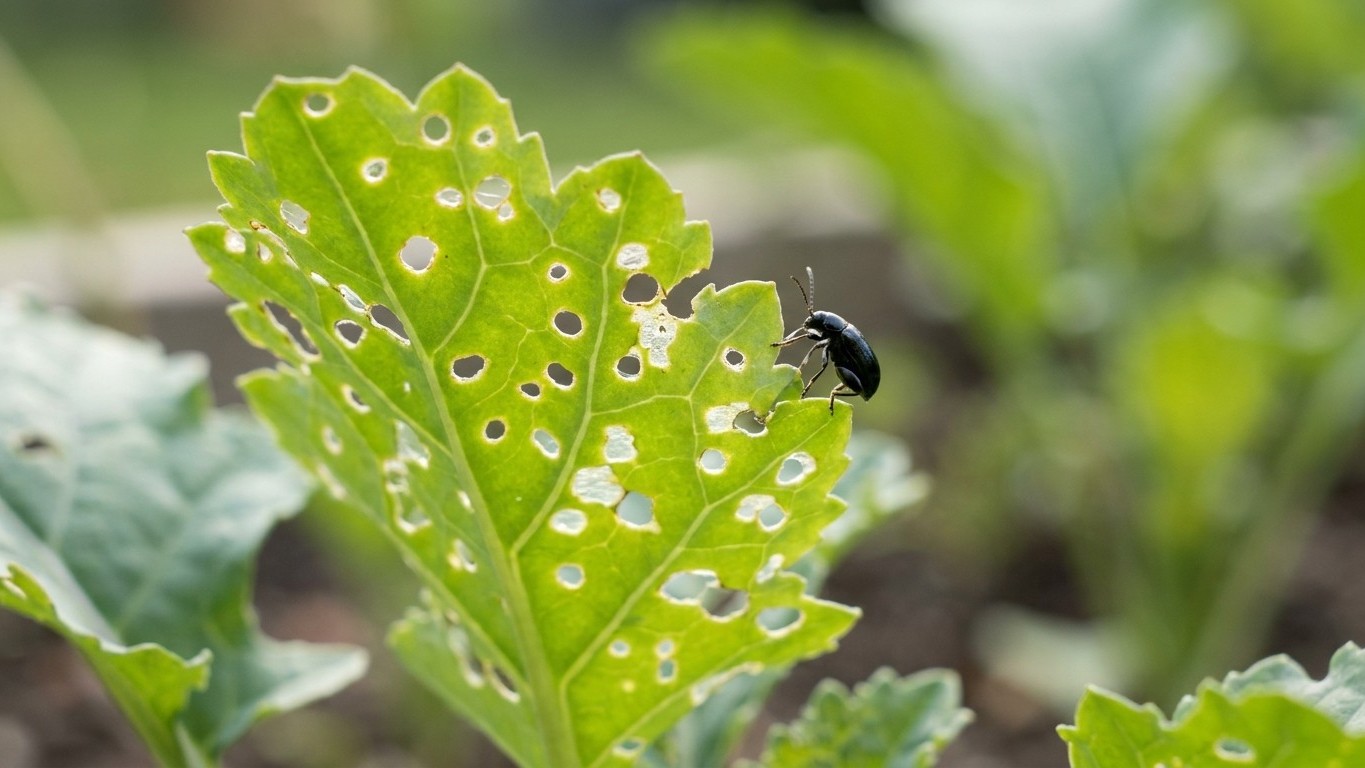

Flea beetles show up in Texas as soon as soil temperatures climb into the 50s Fahrenheit, which in most of the state means late winter through early spring, with a second wave possible in fall. Row covers installed at transplant, quick crop rotation, and removing garden debris where adults overwinter are what actually reduce damage.
The weeks to watch

Flea beetle adults become active once soil warms into the 50s Fahrenheit, and in Texas that typically lines up with late winter into early spring across the southern half of the state, later further north. Texas A&M AgriLife Extension and other state extension offices don’t publish a single statewide flea beetle emergence window the way they do for some fruit pests, so the timing below follows the general biology of the insect rather than a fixed calendar date for Texas specifically.
First flight: overwintering adults
Adult flea beetles spend winter in leaf litter, weedy field edges, and garden debris. They emerge as soon as the soil warms enough to end dormancy, then move onto the nearest tender seedlings, which in a home garden usually means whatever was just transplanted. This is the flight that does the most visible damage, because young seedlings have little leaf area to spare.
Second flight: the fall generation
Depending on the species and how warm the season runs, a second generation can appear in late summer into fall, feeding on fall brassicas, spinach, and late tomato plantings. This second wave tends to be lighter than the spring one, but it’s the reason fall gardens sometimes show the same pinholed leaves people remember from April.
Reading the calendar from your last frost

Flea beetles don’t check a calendar. They respond to soil temperature, so the actual date they show up shifts with however early or late spring runs in a given year. The most useful anchor a Texas gardener has isn’t a pest date at all, it’s the average last spring frost, because that’s the date most transplanting schedules are already built around.
For the Houston area, NOAA’s 30-year Climate Normals put the last spring freeze window between February 4 and March 1, based on data from Bush Intercontinental Airport (IAH). That’s a Gulf Coast number, not a statewide one. Texas spans four separate USDA hardiness zones, and the Panhandle can see its last freeze two or more months later than Houston. Even within Houston, Hobby Airport tends to run about two weeks milder than IAH. Treat any date below as a normal, not a promise.
- Start from your local last-frost normal (for Houston/IAH, that’s the February 4 to March 1 window).
- Expect flea beetle feeding to appear on transplants within roughly one to three weeks after they go in the ground, once soil temperatures are warm enough for adults to be active.
That arithmetic means covers should go on at transplant, not after damage appears, and can usually come off once plants are established enough to outgrow light feeding, or before flowering if the crop needs pollinators.
What it attacks, and what the damage looks like

Most gardeners notice the damage before they ever spot the insect. Leaves show a scatter of small, round holes, often described as looking like they were hit with buckshot or a hole punch, concentrated on young, tender growth. Seedlings can look stunted or wilted even when the leaf damage seems minor, because the real problem is sometimes happening underground.
Adult flea beetles chew the visible pinholes in leaves. Larvae, where the species has a root-feeding stage, work below the soil line on roots and tubers, and that’s the damage a gardener rarely sees until harvest, when potatoes or radishes come up scarred or tunneled. Knowing which stage is active matters, because leaf-feeding adults can still be slowed by covers and timing, while root-feeding larvae are already out of reach by the time symptoms show above ground.
Crops most commonly affected in Texas gardens include:
- Eggplant
- Potato
- Tomato and other nightshades
- Cabbage, broccoli, and other brassicas
- Radish and other root vegetables
- Spinach and other leafy greens
How Texas sits in this pest’s range

Flea beetles as a group are widespread pests found across most of the continental United States, not a species confined to one region. In a state as large as Texas, that widespread range doesn’t mean the insect behaves the same way everywhere, it means presence is a given and timing is what actually shifts from place to place. A Panhandle garden and a Gulf Coast garden both deal with flea beetles, but on schedules that can be months apart because the soil-warming trigger arrives at very different times.
That gap matters more in Texas than in most states, since the state crosses four USDA hardiness zones. A planting or cover schedule built around Houston-area soil temperatures will be badly out of sync for a garden in the Panhandle or the High Plains, where the growing season starts later and compresses faster. Local extension offices are the better source for a zone-specific window than any single statewide figure, since no single set of dates covers a state this size accurately.
What actually works against it

- Time transplanting to avoid peak emergence. Waiting a week or two past the earliest safe planting date, when practical, lets seedlings size up before the heaviest adult activity. Bigger plants tolerate leaf damage better than fragile new transplants.
- Row covers at transplant, not after damage appears. A floating row cover works as a physical barrier, keeping adults off the plant entirely. It has to go on the day of transplanting and stay sealed at the edges. It stops helping once beetles are already established on the plant, or once the crop needs pollinator access for flowering.
- Crop rotation. Moving related crops (nightshades, brassicas) to a different bed each year disrupts the shortcut adults take from overwintering sites straight to a familiar host plant. It doesn’t stop beetles from flying in from elsewhere, but it reduces the easy, concentrated buildup that happens when the same crop grows in the same spot year after year.
- Clearing garden debris in fall. Removing old plant litter and weedy cover reduces overwintering sites for adults. This works on next year’s population, not on beetles already active this season.
- Sticky traps for monitoring. Yellow sticky cards help a gardener catch early activity and time other measures, though they capture a modest share of the population rather than controlling it outright.
- Dusting with diatomaceous earth or plain flour. Many gardeners use these as a dry barrier on leaves. Results in home settings are inconsistent, and formal trials on flour dusting specifically are limited, so treat it as a low-cost option to try rather than a proven fix.
None of these measures reach larvae already tunneling inside roots or stems. Once feeding has moved below ground, the practical options for that season are limited to harvesting what’s salvageable and adjusting rotation and debris cleanup for next year.
Common questions
Do flea beetles survive Texas winters?
Adults overwinter in leaf litter, weedy edges, and garden debris across most of the state, which is why fall cleanup is one of the few measures that affects next year’s population rather than this year’s.
Can flea beetles kill an established plant?
Adult leaf feeding rarely kills a mature plant on its own, but it can stunt or kill young seedlings, and root-feeding larvae can cause enough underground damage to affect yield on crops like potatoes and radishes even when the plant survives.
Does the last frost date tell me exactly when flea beetles will appear?
No. The frost date is a normal drawn from 30 years of data, not a guarantee for any single year, and flea beetle activity depends on soil warming, which can run earlier or later than that normal depending on the season.