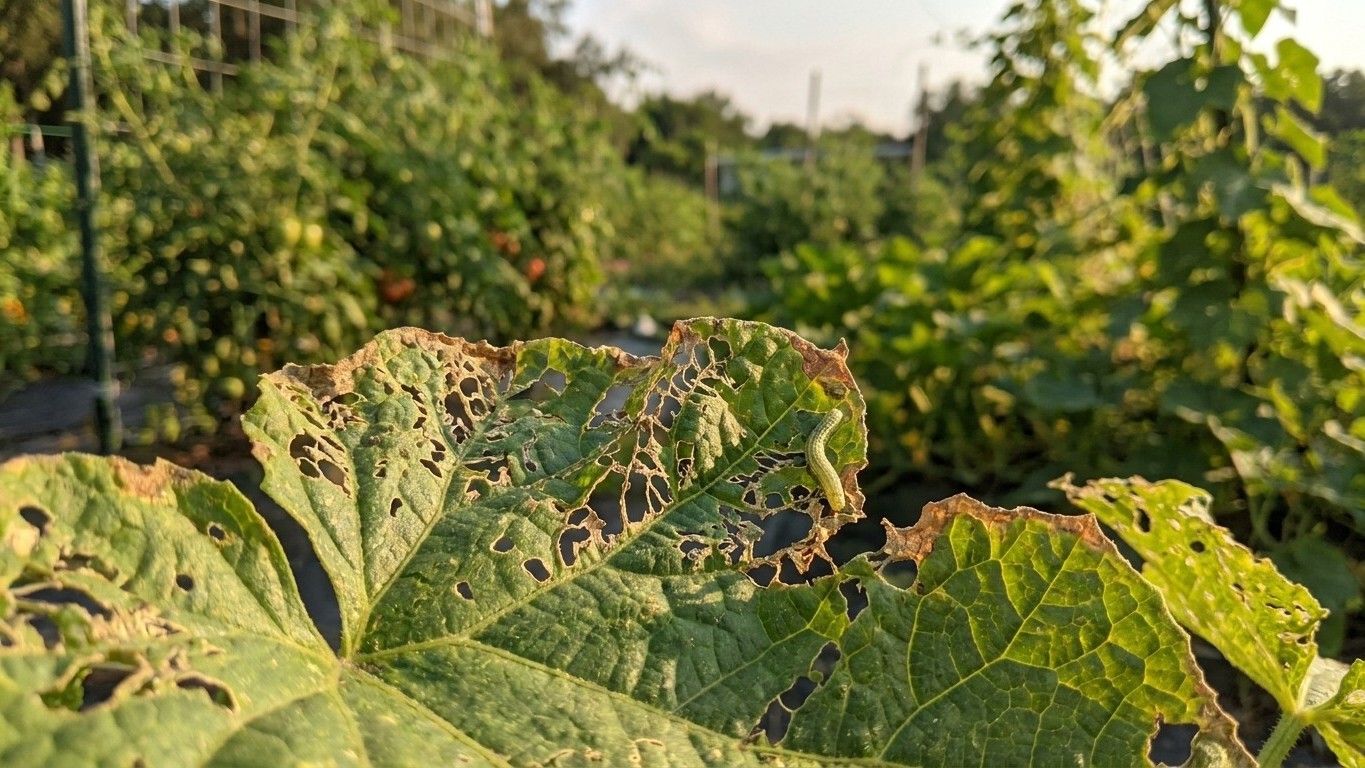

Melonworm shows up in Texas gardens during the warm months, typically from midsummer into fall, riding in on adult moths that can’t survive a hard freeze anywhere in the state. It doesn’t overwinter reliably outside the far southern tip of Texas, so most gardeners deal with it as a summer arrival rather than a spring one, and the Gulf Coast usually sees it before inland areas do.
The weeks to watch

Melonworm activity in Texas ramps up as cucurbit vines mature, generally from June through the first fall cold snap. The state’s extension services don’t publish a specific egg-lay or flight window for melonworm the way they do for some other pests, so the best guide here is the general life cycle pattern documented for the species across the Gulf South, applied to local planting dates.
Early season, low pressure
In the weeks right after cucurbit transplants go in, moth pressure tends to be light. Populations are still building from wherever they overwintered farther south, and vines are often too young to attract heavy egg-laying. Damage at this stage, if any, is usually minor and easy to miss.
Midsummer through fall, peak pressure
By the time vines are running and flowering, typically July through September in most of Texas, melonworm populations have usually caught up. This is when multiple overlapping generations can be active at once, since the insect’s short life cycle lets it produce several broods in a single warm season. Pressure generally eases only once temperatures drop enough to slow both moth activity and plant growth.
Reading the calendar from your last frost

Melonworm doesn’t answer to a frost date the way some pests do. It answers to when your cucurbit vines are in the ground and warm enough to grow, which is downstream of your last frost but not tied to it directly. In the Houston area, the last spring frost typically falls between February 4 and March 1 (32°F freeze probability, station USW00012960 at IAH). That date tells you when it’s safe to transplant, not when the moths will arrive.
- Start with your local last frost date. For Houston, that’s the February 4 to March 1 window; other parts of Texas run weeks to months later or earlier depending on the zone.
- Count forward from your actual transplant date, not the frost date itself. Extension guidance in warm-humid regions generally places first melonworm feeding around the point vines begin to run and flower, roughly three to five weeks after transplanting, give or take how fast the season warms.
An early, mild spring can push that window earlier; a cool, wet start can delay it. Either way, the frost date is a starting point for planning, not a guarantee of when damage begins.
What it attacks, and what the damage looks like

Most gardeners notice melonworm damage before they ever see the caterpillar itself. Leaves develop a lacy, skeletonized look where only the veins remain, vines can wilt in patches even with adequate water, and rolled or webbed leaves near the growing tips are a common early sign. On fruit, look for small entry holes, often near the stem end, sometimes with a bit of frass or webbing around the opening.
The larval stage does essentially all the damage. Adult moths lay eggs on leaves and vines, but it’s the caterpillars that feed on foliage and bore into fruit, which matters for timing any response, since once larvae have tunneled into a stem or fruit, surface treatments no longer reach them.
Crops most commonly affected include:
- Cantaloupe and other muskmelons
- Cucumber
- Summer and winter squash
- Pumpkin
- Watermelon, though it’s usually attacked less heavily than the others
How Texas sits in this pest’s range

Texas spans four USDA hardiness zones, and that spread matters more for melonworm than for pests that overwinter locally. The species survives freezing winters only in the far southern tip of Texas and similar frost-free pockets, then reinfests the rest of the state each year as moths move north with the warm season. That means presence isn’t really in question for most of Texas during summer and fall; what varies is timing and how many generations build up before frost shuts things down.
The Gulf Coast, including the Houston area used for the frost data above, sits at the milder end of that spread. Warmer winters and a longer frost-free stretch there generally mean earlier arrival and more generations in a season compared with the Panhandle or North Texas, where a much later spring and earlier fall freeze compress the window melonworm has to work with. Even within the Houston area, sites near Hobby Airport run about two weeks milder than the IAH station used here, which shifts the practical planting calendar without changing which pests eventually show up.
What actually works against it

- Time plantings to beat peak pressure. Getting an early crop in as soon as the local frost date allows means harvest can wrap up before midsummer populations peak, sidestepping the worst of the pressure rather than fighting it head-on.
- Use row covers while vines are young. A floating row cover physically blocks adult moths from reaching leaves to lay eggs. It has to come off once plants start flowering, since cucurbits need pollinator access, which is also roughly when melonworm pressure starts climbing.
- Hand-pick eggs and young larvae. Checking the undersides of leaves and the rolled, webbed leaf tips where young caterpillars hide, then removing and destroying what’s found, is slow but genuinely reduces numbers if done consistently and early.
- Rotate cucurbit plantings. Moving squash, melons, and cucumbers to a different part of the yard each season makes it harder for local pupae to find a host plant right away, though it won’t stop moths flying in from elsewhere.
- Clear plant debris after harvest. Removing old vines and fallen fruit takes away pupation sites, which matters most for any pest stage that might otherwise overwinter in a milder pocket of the yard.
All of these lose their usefulness once larvae are already inside a stem or a fruit. At that point the caterpillar is physically shielded from anything applied to the surface, and the only real option is removing and destroying the affected plant material before the larva completes its cycle.
Common questions
Does melonworm survive Texas winters? Only in the far southern tip of the state and similar frost-free areas. Everywhere else, populations die back with hard freezes and rebuild each year as moths move in from milder regions.
Is melonworm the same as pickleworm? No, though they’re closely related cucurbit pests with overlapping ranges and similar life cycles. Pickleworm tends to favor fruit boring more heavily, while melonworm does more visible leaf feeding, but both can show up on the same plants in the same season.
Can melonworm damage watermelon as much as cucumbers? Generally not. Watermelon is usually listed as a lower-preference host compared with cantaloupe, cucumber, and squash, so damage there tends to be lighter even in a heavy year.