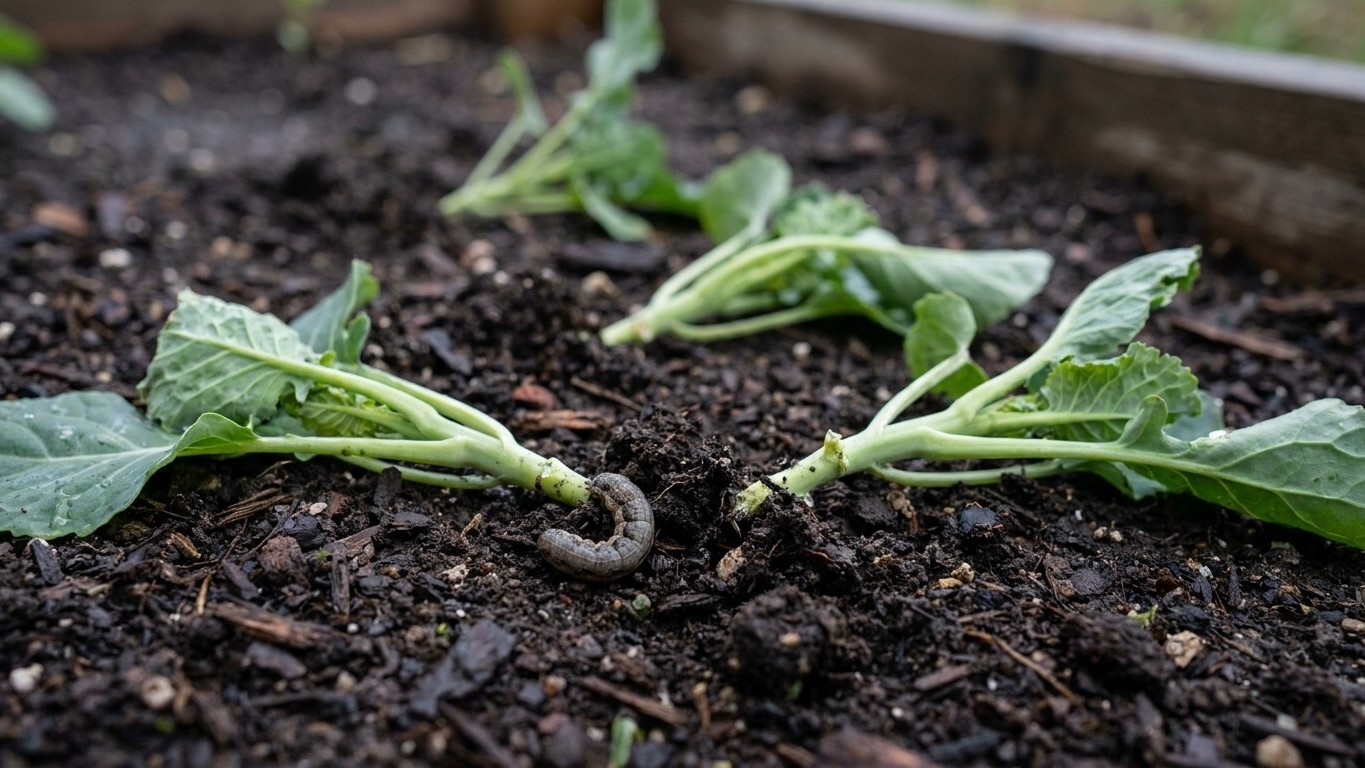

Cutworms show up in Washington gardens as soon as soil temperatures climb into the 50s, which in the mild, marine-influenced west side of the state usually lines up with transplant season in April and May. There’s no single “cutworm day” on the calendar. The insect answers to soil warmth and moisture, not a date, and the state’s split climate (wet coastal lowlands versus dry eastern plateau) means two gardens 200 miles apart can see damage weeks apart.
The weeks to watch

Cutworms become active whenever overwintering larvae in the soil warm enough to resume feeding, and that’s the plain answer for gardeners who just want to know when to start checking stems. Washington’s cooperative extension offices don’t publish a specific flight or hatch window for cutworms the way they sometimes do for codling moth or apple maggot, so the timing below follows the general pattern documented for this pest across temperate climates rather than a state-specific date.
First generation, early spring
Larvae that overwintered in soil or plant debris resume feeding once ground temperatures hold in the low-to-mid 50s Fahrenheit. In a typical western Washington spring, that overlaps with the weeks gardeners are setting out cold-tolerant transplants like cabbage and broccoli, which is exactly when the first cut stems tend to appear.
Second generation, some species only
Not every cutworm species produces a second brood. Black cutworm and variegated cutworm, both common in vegetable gardens, can cycle through two or more generations in a single growing season if summer stays warm enough. That second wave shows up in mid-to-late summer and tends to target later plantings of beans, corn, and fall greens rather than spring transplants.
Reading the calendar from your last frost

Western Washington’s last spring frost, based on NOAA’s 30-year climate normals for the Seattle station, falls somewhere between February 27 and March 18. That’s a range, not a promise, and it applies to the mild maritime side of the state. Eastern Washington, beyond the Cascades, is high desert with a shorter, colder season, so this window doesn’t transfer east of the mountains.
A mild frost date doesn’t mean an early planting date. Cold, wet soil and short daylight hold spring transplants back for weeks after the last freeze, and cutworms are patient: they simply wait for the soil to warm on its own schedule.
- Start from your local last frost window (late February to mid-March in western Washington).
- Add roughly three to five weeks for soil to warm enough for both transplanting and cutworm activity to overlap, which is why damage often clusters in April and May rather than right after the frost date itself.
That arithmetic gives another range, not a single day, so the practical move is to have stem protection in place by the time transplants go in the ground, not to wait for a symptom to appear first.
What it attacks, and what the damage looks like

Most gardeners meet this pest through the damage, not the insect. A seedling that stood upright the evening before is found toppled at dawn, its stem severed cleanly at or just below the soil line, the rest of the plant otherwise untouched. On older plants, the damage shifts to ragged, irregular holes chewed into leaves near the ground, sometimes climbing several inches up the stalk on softer-stemmed crops. The larval stage does essentially all the damage: cutworm caterpillars feed at night and curl into the top inch or two of soil by day, which is why daytime inspection so often turns up nothing.
Crops most commonly affected in Washington vegetable gardens include:
- Tomato and pepper transplants, especially in the first two weeks after planting
- Cabbage, broccoli, and other brassica seedlings
- Corn seedlings, where a single larva can down several stalks in a night
- Beans and lettuce started directly from seed
- Young sunflowers and some ornamental seedlings
Because the larvae do the cutting and the adult moths lay eggs but cause no direct damage, any treatment aimed at the moth stage does nothing for a plant that’s already been cut. Timing protection to the larval feeding window is what matters.
How Washington sits in this pest’s range

Cutworms are a widespread pest group found across nearly every U.S. state with a vegetable-growing season, and Washington is no exception. The difference between one territory and another is almost entirely timing, not presence: a gardener in Georgia and a gardener in Washington are dealing with the same insect family, just weeks or months apart on the calendar.
Within Washington itself, the more meaningful split isn’t a border with another state, it’s the Cascade Range. Western Washington’s mild, wet winters let overwintering larvae survive in higher numbers, while the shorter, colder season east of the mountains compresses the whole cycle into a narrower summer window.
| Criteria | Western Washington | Eastern Washington |
|---|---|---|
| Climate type | Marine, mild winters | High desert, cold winters |
| Last frost window | Late Feb to mid-March (Seattle area) | Later, often into April or May |
| Season length for cutworm activity | Longer, overlapping spring and summer | Shorter, more compressed to summer |
No published data ranks Washington’s cutworm pressure against neighboring states, so the honest takeaway is that this is a common, well-distributed pest here rather than a regional outlier.
What actually works against it

- Stem collars at transplant time. A cardboard tube, cut can, or foil wrapped around the base of the stem and pushed an inch into the soil blocks the larva from reaching the stem at ground level. This is the cheapest and most reliable single step, and it only works if it’s in place before the larva finds the plant.
- Fall tillage and debris cleanup. Turning the soil in fall exposes overwintering larvae to cold and to birds, reducing the population that survives to spring. Leaving weeds and old plant matter through winter gives larvae both shelter and food.
- Hand-picking at night. Since larvae feed after dark and curl into the top inch of soil by day, a flashlight check around damaged plants at night, followed by scratching the soil surface near the stem, often turns up the culprit directly.
- Crop rotation. Moving susceptible crops to a different bed each year prevents a local population from building up around the same plants season after season.
- Diatomaceous earth or coffee grounds as a barrier. Many gardeners scatter these around stems. Field trials on their effectiveness against cutworms are inconclusive, and neither works once the material gets wet or is buried.
Once a larva has already cut a stem, none of these measures save the plant. The stem is severed at the base, and the only realistic option at that point is to remove the damaged seedling and replant with a collar already in place.
Common questions
Do cutworms come back every year in the same garden bed?
They can, especially if soil is left undisturbed over winter and the same crops are planted in the same spot. Fall tillage and rotating susceptible crops both reduce the odds of a repeat infestation in the same bed.
Are cutworms only a problem for new transplants?
Mostly, yes. Young, tender seedlings with soft stems are by far the most vulnerable. Established plants with woodier stems are rarely cut down, though leaf damage can still occur on some species.
Can I tell which cutworm species I have without seeing the moth?
Not reliably. Several species overlap in Washington gardens and look similar as larvae, dull gray or brown caterpillars that curl into a C-shape when disturbed. Since the treatment approach is the same across species, distinguishing them isn’t necessary for control.