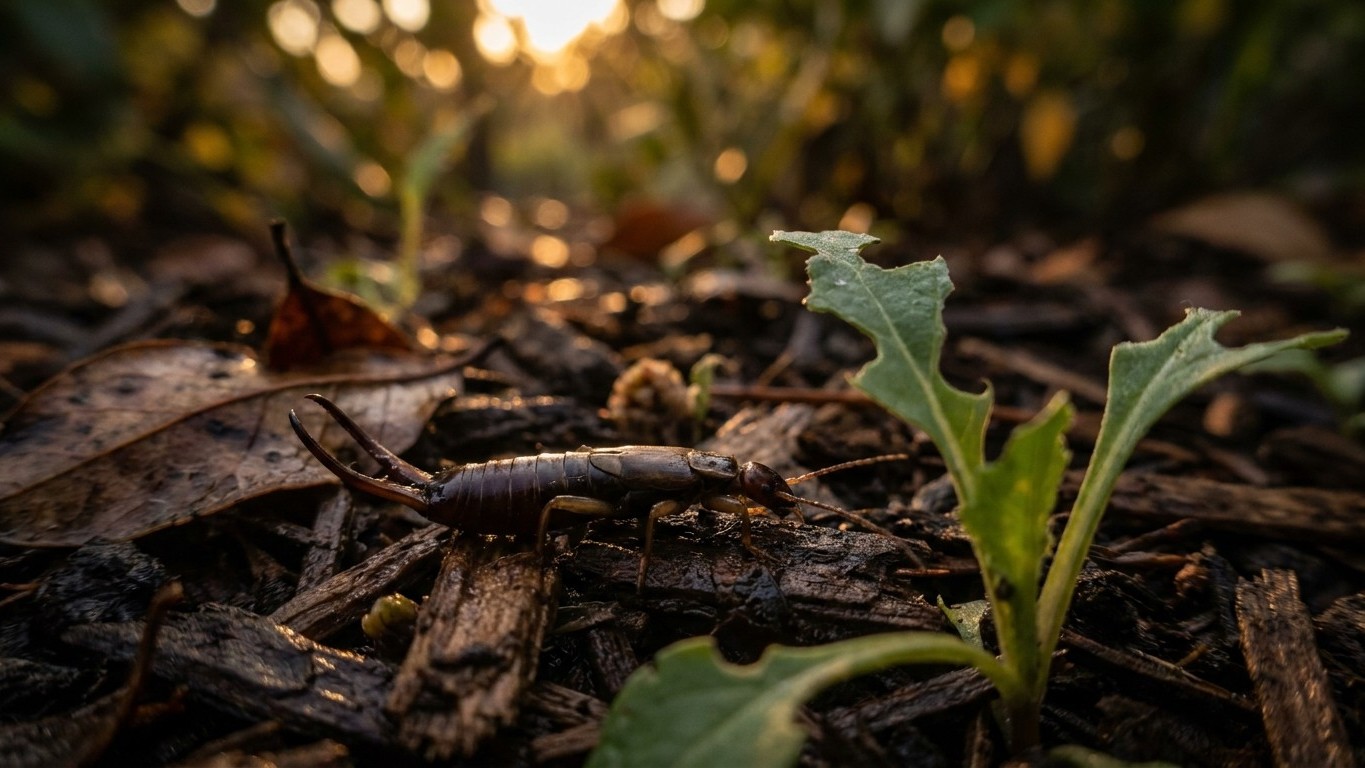

Earwigs show up across Washington as soon as spring soil holds steady warmth, usually active from April through the first hard fall cold snap. They feed at night and hide by day, so most gardeners notice the ragged holes in dahlias or lettuce before they ever spot the insect itself. The west side of the state, wetter and milder, carries heavier populations than the dry country east of the Cascades.
The weeks to watch

Earwigs become active outdoors once soil temperatures climb enough to rouse the adults that spent winter tucked a few inches underground. In most of Washington that means a slow ramp-up starting in April, with populations building through late spring and peaking during the warm, humid stretches of summer. The Washington State University Extension service does not publish a week-by-week emergence calendar for this species the way it does for some orchard pests, so the timing below reflects the general pattern documented for European earwig activity in Pacific Northwest climates rather than a fixed local schedule.
Spring emergence
Overwintered adults leave their soil chambers as nighttime temperatures stay consistently mild, typically through April. This is also when females that mated the previous fall begin laying eggs in shallow underground nests, often producing a second smaller batch a few weeks later if conditions stay favorable. Only one generation completes each year in this region, unlike pests that cycle through several broods by midsummer.
Summer activity peak
Nymphs hatch through late spring and grow through several molts over the summer, feeding alongside the adults. Damage to soft plant tissue is heaviest from June through August, when both nymphs and mature earwigs are foraging every night. Activity tapers as days shorten in September, and the population settles back underground for winter by the time the first real cold arrives.
Reading the calendar from your last frost

Earwigs respond to soil warmth and moisture, not to a date on a calendar, so a late or mild spring shifts their whole schedule. In western Washington, where the last spring frost falls somewhere between February 27 and March 18 according to NOAA climate normals for the region, that frost date is a useful anchor even though earwig activity lags well behind it. Cold, wet soil common to this climate holds back seedling growth for weeks past the last freeze, and earwigs wait for the same warming trend before they start foraging heavily.
- Start from your local last frost window (late February to mid-March on the west side).
- Add roughly six to eight weeks of soil warming before nighttime forager activity becomes noticeable on tender seedlings.
That arithmetic gives a range, not a single day, because both the frost window itself and the soil-warming lag vary year to year. A gardener who transplants lettuce or dahlias right around the frost date should expect the first sign of feeding sometime in that six-to-eight-week stretch, which is also the window to have any protective covers in place before removing them for pollinator access later in the season.
What it attacks, and what the damage looks like

The first sign is usually irregular, ragged holes chewed through leaf edges or flower petals, sometimes with the whole bloom looking shredded overnight. Seedlings can be clipped near the soil line before they ever get established, and sweet corn often shows chewed silk that interferes with pollination. Strawberries and other soft fruit near the ground get shallow surface gouges rather than clean bites. Because earwigs hide during daylight, the damage almost always appears before the insect is ever seen.
Both nymphs and adults cause this feeding damage, which matters for timing any response since knocking back an adult population in spring still leaves growing nymphs capable of damage through summer. Earwigs are also partly predatory, feeding on aphids and other soft-bodied insects, so their presence in a garden bed does not automatically mean crop damage is coming.
- Dahlias and zinnias
- Marigolds
- Lettuce and other tender seedlings
- Sweet corn silk
- Strawberries and other soft, low-growing fruit
How Washington sits in this pest’s range

The European earwig, the species behind nearly all home garden complaints in the state, is established across most of the United States, having spread from its original introduction more than a century ago. Washington sits well within that range, but the state’s split climate changes how the insect behaves more than whether it shows up at all. West of the Cascades, the mild, consistently damp conditions match earwig habitat almost perfectly, and populations there tend to build earlier in spring and stay active later into fall.
East of the mountains, the high desert climate common to central and eastern Washington runs drier and hits temperature extremes the moist-loving earwig handles poorly. Populations there are typically lighter and slower to build, and activity compresses into a shorter summer window tied to irrigation and any lingering soil moisture. A gardener in Spokane or the Tri-Cities is dealing with the same insect as one in Seattle or Olympia, just on a delayed, thinner version of the same seasonal pattern.
What actually works against it

- Clear hiding spots first. Boards, dense mulch piles, and debris against foundations give earwigs their daytime shelter. Removing that cover does not kill the population, but it forces them to relocate away from prized plants and cuts the number that survive to breed.
- Cut back excess moisture. Fixing leaky hose bibs and watering in the morning instead of the evening leaves less damp shelter overnight, which is exactly what earwigs seek out. This works as prevention, not as a cure for an existing heavy population.
- Set out simple traps. A loosely rolled sheet of damp newspaper, a corrugated cardboard tube, or a low-sided tuna can with a small amount of oil placed out at dusk draws earwigs in overnight. Shaking the trap into soapy water at dawn removes them directly, which matters most when numbers are already high.
- Hand-pick after dark. With a flashlight, earwigs are easy to spot foraging in the open on plants. This is slow but effective at low to moderate pest density, especially on high-value plants like dahlias.
- Cover young seedlings. A row cover or simple collar physically blocks access while plants are at their most vulnerable stage. It stops working once the cover comes off for pollination or once the plant is tough enough to shrug off minor feeding.
- Rotate planting locations and timing. Shifting tender crops away from known high-population beds reduces exposure, though it does nothing to eliminate earwigs living in mulch or debris elsewhere in the yard.
Diatomaceous earth around plant bases is a common addition to this list; it works by drying out the insect’s outer layer on contact, but rain and irrigation wash it away fast, so it needs frequent reapplication to matter outdoors. Beer traps are widely used too, though results reported by gardeners are inconsistent enough that no clear pattern has emerged for how well they actually draw earwigs away from plants.
Common questions
Do earwigs bite or sting?
The pincers on their rear end look intimidating, but they rarely break human skin and pose no real danger to people or pets. Any pinch is more startling than painful.
Are earwigs in Washington helpful or harmful in the garden?
Both, depending on what they’re near. They prey on aphids and other soft-bodied pests, but the same insect will happily chew through dahlia petals or seedling lettuce if given the chance.
What draws earwigs into a house?
Moisture and dark, tight gaps are the main pull, not food. Damp crawl spaces, leaky basement corners, and gaps around doors and foundation cracks give them the shelter they’re actually after.