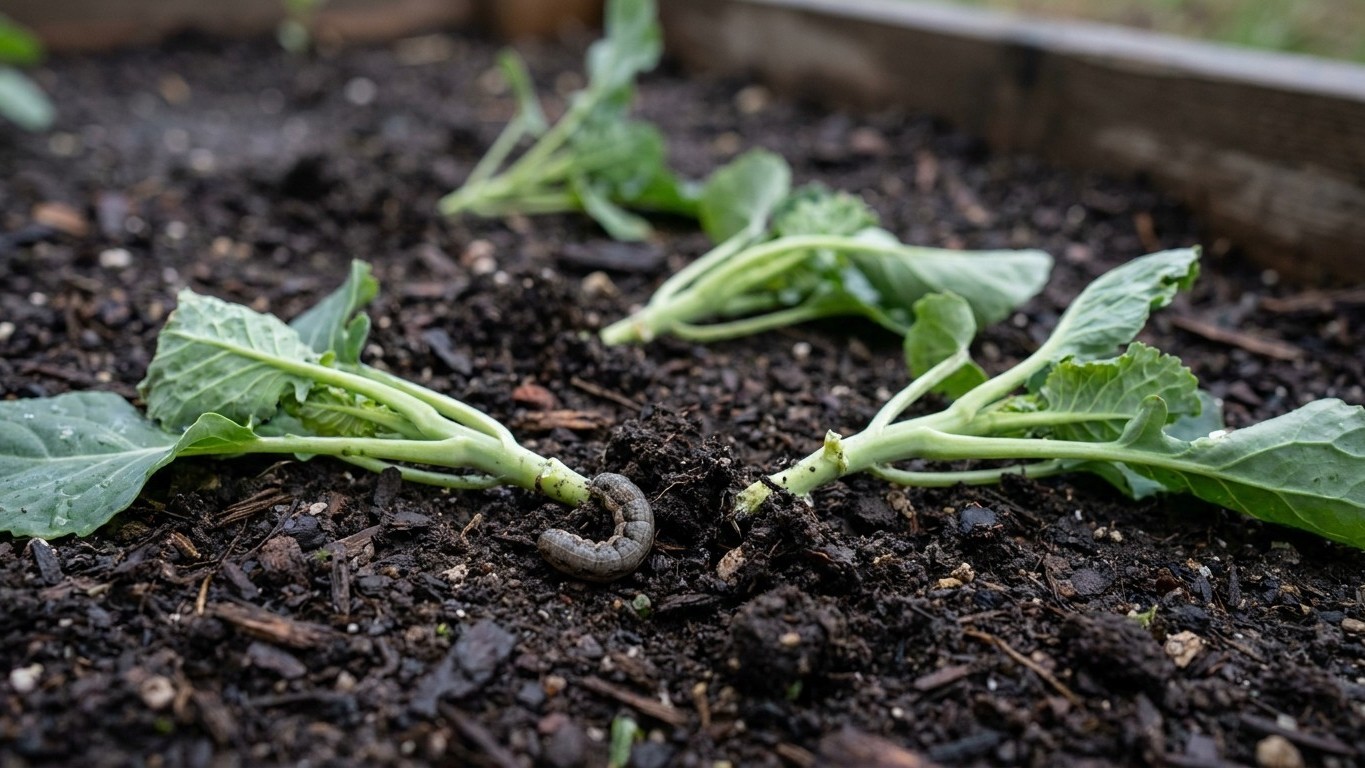

Cutworms show up in Wisconsin gardens in spring, right as transplants go into the ground, and they keep working through early summer while soil is still cool. The fix that actually works is a physical barrier around the stem, in place before you ever see a clipped seedling.
The weeks to watch

Cutworm damage in Wisconsin gardens clusters in the weeks immediately after transplanting, well before most other insect pests even register. That’s a different rhythm than the rest of the garden calendar. The University of Wisconsin-Madison Division of Extension’s guide to managing insects in the home vegetable garden frames the overall pest season as running April through September, but it doesn’t carve out a separate dated window for cutworms the way it does for a couple of other well-known offenders. It notes that squash plants start wilting from vine borer damage in late July, and that most corn pests don’t build up real numbers until mid-August. Cutworms simply aren’t given that same treatment in the local guidance, so the honest answer is that the extension service doesn’t publish a specific cutworm window for the state, and the general biology of the insect has to fill in the gap.
Spring cutting damage
Overwintering larvae resume feeding as soon as soil temperatures climb in spring, which puts them active right when gardeners are setting out young tomato, pepper, and cabbage transplants. This is the damage window that matters most for home gardeners, and it lines up with the early part of that April-to-September season rather than a fixed date.
Later moth flights
Some cutworm species produce adult moths again later in the season, but those flights don’t have a published local date either. For practical purposes, spring transplanting is the period worth planning around.
Reading the calendar from your last frost

Cutworms respond to soil warming, not to a page on a calendar, so the real trigger is however early or late spring arrives where you garden. The one date most Wisconsin gardeners already track is the last spring frost, and NOAA’s 1991-2020 climate normals put that window at April 16 to April 29 for the reference station used here. That’s a normal, built from thirty years of data, not a promise about this particular year.
- Start from your local last frost window, April 16 to April 29, and treat it as the earliest reasonable point to move tender transplants outdoors.
- Expect the first sign of cutworm damage, a seedling clipped off at the soil line, within the first couple of weeks after transplanting, while stems are still thin enough for a larva to sever in one night.
That means any physical barrier needs to be in place at transplanting itself, not added later once a plant has already gone missing. It can generally come off once the stem has thickened past the width a larva can wrap around and cut, usually once the plant is well established.
What it attacks, and what the damage looks like

The first sign is almost never the insect itself. It’s a seedling that was standing fine the evening before and is lying flat the next morning, severed cleanly at or just below the soil surface, sometimes with the top of the plant still green a few inches away. On slightly older or tougher-stemmed plants, the damage can look more like ragged notching near the base rather than a full topple. Either way, the culprit is almost always working at night and hiding in the soil by day, which is why gardeners rarely catch it in the act.
The damage is done by the larval stage, the caterpillar, not by the adult moth. That distinction matters for anyone trying to respond, because once a caterpillar has grown large enough to sever a stem, the plant above the cut is already gone. Nothing brings it back. Crops most commonly hit in Wisconsin home gardens include:
- Tomato and pepper transplants
- Cabbage, broccoli, and other cole crops
- Sweet corn seedlings
- Beans
- Young squash and cucumber plants
How Wisconsin sits in this pest’s range

Cutworms are treated as a routine part of the home vegetable garden pest lineup across the state, not a localized or edge-of-range concern. The University of Wisconsin-Madison Extension guide covers them alongside squash vine borer and corn-feeding insects as standard seasonal pressure for gardeners statewide, which points to a broadly established presence rather than a pest confined to one region or corner of Wisconsin. The published guidance here comes directly from the UW-Madison Division of Extension, not from a neighboring state’s data being borrowed to fill a gap, so there’s no cross-border substitution to flag in this case.
What isn’t available is any ranking of how Wisconsin compares to other states in severity, or a documented year-over-year trend in cutworm pressure. The source material simply doesn’t offer that kind of comparative data, so the accurate statement is that cutworms are a recognized, statewide garden pest here, with timing tied to local soil warming rather than to any distinct regional pattern within Wisconsin itself.
What actually works against it

- Delay transplanting slightly, or size up your seedlings first. Thicker stems are harder for a young larva to sever in one night, so plants held a bit longer before setting out have a real head start.
- Put a stem collar around each transplant at planting time. A strip of cardboard, a paper cup with the bottom cut out, or a similar collar pushed an inch into the soil physically blocks a larva from reaching the stem. This only works if it goes in before damage starts; once a larva is already at the base of the plant, a collar added afterward does nothing.
- Hand-pick at night with a flashlight. Cutworm larvae typically curl into a C-shape in the top inch of soil right next to the stem during the day and come out to feed after dark, which makes an evening check the most direct way to catch them before they cause more damage.
- Till or turn the soil in early spring before planting. This exposes overwintering larvae near the surface to cold and to birds, reducing the population before transplants even go in. It’s a preventive step, not a cure once plants are already up.
- Clear garden debris and weeds in fall. Removing plant litter takes away the cover cutworms use to overwinter, which lowers the number of larvae active the following spring.
- Rotate crops where practical. Because adult moths fly in from elsewhere, rotation has a smaller effect on cutworms than it does on soil-dwelling pests with no wings, but it still limits local buildup over several seasons.
Sprinkling wood ash or diatomaceous earth around the base of plants shows up often in gardening advice as a cutworm deterrent, and plenty of gardeners use one or the other. Whether either one reliably stops cutworms specifically isn’t something the available trial data settles one way or the other, so it’s worth treating as a supplement to a physical collar rather than a replacement for one. Once larvae have grown large and are actively cutting stems, none of these measures reverse damage already done. At that stage, protecting the remaining, undamaged transplants is the only thing left to control.
Common questions
Do cutworms come back every year in the same garden bed?
They can, especially if garden debris and weeds are left in place over winter, since that’s where larvae shelter until soil warms in spring. Clearing debris in fall and turning soil in early spring both reduce, though don’t eliminate, the chance of a repeat problem in the same spot.
Can cutworms damage plants that are already several weeks old?
It’s less common. Once a stem has thickened past a certain point, it becomes harder for a larva to sever in one feeding session, which is why the highest-risk window is the first couple of weeks right after transplanting, not later in the season.
Is it worth checking for cutworms before I even see damage?
Yes, particularly around the local last frost window of April 16 to April 29, since that’s typically when transplants go in and larvae are already active in the soil. A quick nighttime check with a flashlight in the days right after planting can catch the problem before a seedling actually gets cut.