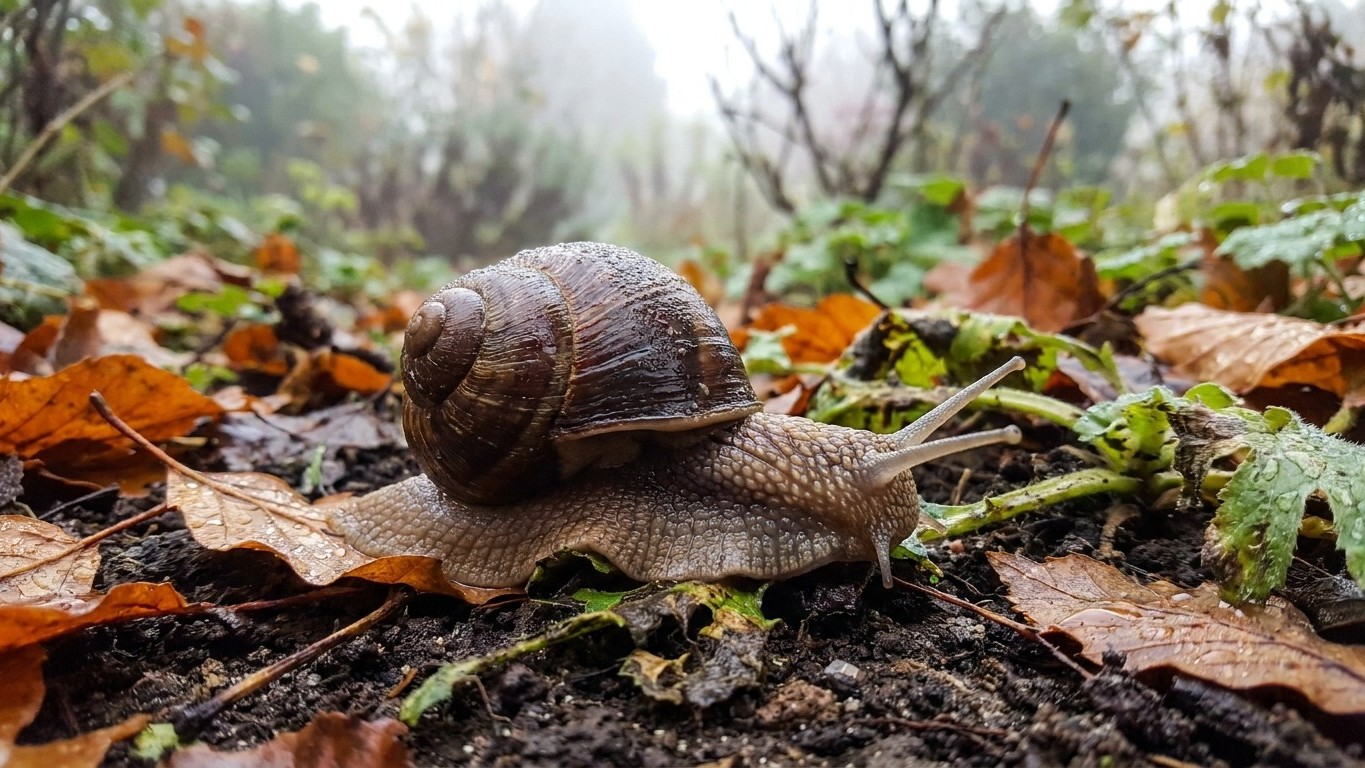

Brown garden snails show up in Oregon whenever nights stay above 50°F and the ground is moist, which lines up with the same two stretches Oregon State University Extension tracks for slugs: the fall rains of September and October, and the wetter days of early spring. There’s no separate published calendar for this snail, so gardeners use the mollusk pattern already documented for the state.
The weeks to watch

Oregon State University Extension does not publish a specific activity window for brown garden snail. Its pest calendar names slugs, aphids, and stink bugs by season, but the snail itself doesn’t get its own entry. Since brown garden snail is a mollusk with feeding habits close to slugs, nocturnal, temperature-driven, moisture-dependent, the general slug pattern from Oregon State University Extension is the best stand-in available for Oregon gardeners tracking this pest.
Fall activity window
Slugs, and by extension the brown garden snail, feed at night once temperatures climb above 50°F in moist conditions. Egg-laying starts when the rains begin, typically the end of September or early October. That timing matters because eggs laid in fall soil overwinter and hatch the following spring, which is why Oregon State University Extension flags September-October as one of the two control windows.
Spring reawakening
The second window is early spring, when overwintering adults and newly hatched juveniles both become active as soil warms and rain keeps the ground wet. This is the stretch when new transplants take the heaviest hits, since young snails and slugs alike gravitate toward the softest, most tender growth in the garden.
Reading the calendar from your last frost

Snails don’t check a calendar. They respond to soil moisture and nighttime temperature, so the same “early spring” window can land differently depending on how the season unfolds. Oregon’s last spring frost typically falls somewhere between March 6 and March 21, according to NOAA climate normals for the 1991-2020 period, but that’s a 30-to-70 percent freeze-probability band, not a guaranteed date, and it applies west of the Cascades. Central and eastern Oregon run on a shorter, drier high-desert calendar entirely.
Oregon State University Extension doesn’t publish a fixed number of weeks between transplanting and the first snail damage, so there’s no single figure to lean on. Instead, the useful arithmetic runs through soil warmth:
- Start from your local last-frost window (March 6-21 for most of western Oregon).
- Watch for the point after that when nighttime temperatures hold consistently above 50°F with damp soil, that’s the trigger for renewed feeding, and it’s the point when protective covers need to be in place before damage starts, not after.
An early, dry spring pushes that trigger later. A cool, wet one can bring it forward even before the average frost window closes.
What it attacks, and what the damage looks like

Most Oregon gardeners notice the damage before they ever spot the snail itself. Leaves show ragged, irregular holes, often concentrated low on the plant near the soil line, and a silvery, dried mucus trail usually marks the path the snail took to get there. Seedlings can be chewed down to bare stems overnight, which is often the first clue something is working the garden after dark rather than during the day.
Brown garden snails feed on a range of plants once they’re established in a bed:
- Lettuce and other leafy greens
- Strawberries, both fruit and foliage
- Seedlings and young transplants of nearly any tender crop
- Hostas and other soft-leaved ornamentals
- Bark and low foliage on young fruit trees in milder microclimates
Both juveniles and adults do the feeding damage, since this species doesn’t pass through a separate larval stage the way an insect would. That matters for control: there’s no window where the pest is “too young” to eat but also no window where a hand-picking or barrier approach stops working just because the snail has matured. What does change the equation is the egg stage, since eggs buried in moist soil are untouched by surface controls like barriers or traps.
How Oregon sits in this pest’s range

This pest profile is currently documented for one territory on this site, Oregon, so there’s no cross-state comparison to draw on here and no basis for ranking Oregon’s snail pressure against any neighboring state. What can be said comes from the same climate divide that shapes the frost-date data above: brown garden snails need sustained moisture and mild temperatures to stay active, which points toward the wetter, milder ground west of the Cascades, the Willamette Valley and coastal counties, as the more hospitable range within the state. The high desert of central and eastern Oregon runs drier and colder on a shorter season, conditions that work against a moisture-dependent mollusk regardless of what a statewide average might suggest.
That’s a reasonable extension of the same west-side-versus-high-desert split Oregon State University Extension already builds into its frost and planting guidance, not a documented snail-specific finding on its own.
What actually works against it

None of these require a trip to buy a pesticide, and they’re listed roughly cheapest and easiest first.
- Water in the morning instead of the evening. Snails are drawn out by nighttime moisture, so switching irrigation to morning hours dries the soil surface by dusk and removes part of what pulls them out to feed.
- Clear daytime hiding spots. Boards, dense ground cover, stacked pots, and thick mulch give snails a cool, damp place to shelter during the day. Thinning that debris removes the shelter they retreat to between feeding bouts.
- Hand-pick at night. Since brown garden snails feed after dark, a flashlight check an hour or two after sunset catches them in the act, especially useful during the two windows noted above when activity peaks.
- Time transplants and covers around the fall and spring windows. Getting seedlings past their most tender stage before the September-October window, or holding protective covers over new spring transplants until nighttime temperatures stabilize, avoids the period when young plants are most exposed.
- Barriers like copper tape, crushed eggshells, or diatomaceous earth. Many gardeners use these around beds and containers. Copper tape is often sold on the idea that it creates a reaction on contact with snail mucus, but that mechanism hasn’t been established, and trials on its field effectiveness don’t reach a clear conclusion. Eggshell and diatomaceous earth barriers lose whatever effect they have once they get wet, which is often exactly when snails are most active.
- Traps like shallow dishes of beer. Commonly used and easy to set out, though results reported by gardeners are inconsistent, and traps only remove the snails that wander into them, not the ones feeding elsewhere in the bed.
Once eggs are laid in moist soil, none of the above reach them. That’s the practical reason the fall window matters as much as spring: reducing the adult population before October egg-laying cuts down on what hatches out the following year, while spring measures mainly manage the damage already in progress.
Common questions
Are brown garden snails active during the day in Oregon?
Rarely under normal conditions. They feed at night once temperatures pass 50°F in moist soil, and spend daylight hours sheltered under debris, mulch, or dense foliage. Overcast, rainy days can bring some daytime activity, but the bulk of feeding happens after dark.
Does a hard frost kill brown garden snails in Oregon gardens?
A hard freeze can reduce activity and kill exposed individuals, but snails that reach shelter, under mulch, in soil cracks, or beneath debris, often survive mild Oregon winters, especially west of the Cascades where deep, sustained freezes are less common.
Do I need to treat for brown garden snails every year?
If the garden had snail damage the previous fall, checking again during both the September-October and early spring windows is worth the effort, since eggs laid one fall can hatch into a new population the following spring even if adult numbers looked low.