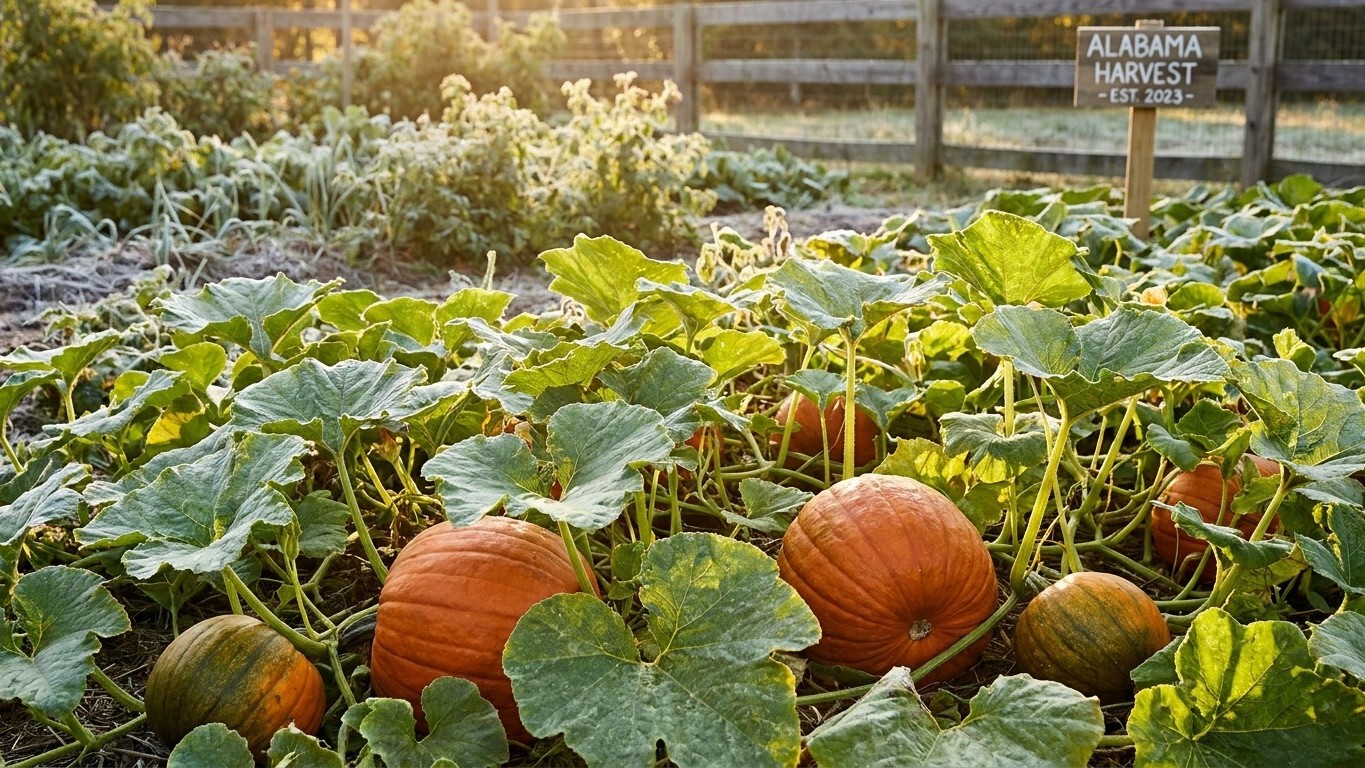

Most pumpkins planted on a normal spring schedule in West Virginia’s lower valleys will ripen before the first freeze. The math depends on when the flower opened, not when the seed went into the ground, and on how close a garden sits to the mountains. In the highlands, where frost lands weeks earlier than in the river valleys, a pumpkin that flowered too late can run out of time before its rind ever hardens.
The short answer
West Virginia’s first fall frost, according to NOAA’s 1991-2020 Climate Normals for the Charleston-area station, lands somewhere between October 18 and November 1 in a typical year. That’s a two-week spread, and it matters because pumpkins don’t ripen on a calendar date. They ripen on a clock that starts the day the flower opens, not the day the seed goes into the ground.
Utah State University Extension’s guidance is specific on this point: a pumpkin needs 45 to 55 days from flowering to reach a hard, colored rind ready for harvest. Run that clock backward from the fall frost window and a picture takes shape. If frost arrives on the early side of the window, October 18, and the fruit needs the full 55 days, the flower had to open by around August 24. If frost holds off until November 1 and the variety only needs 45 days, a flower opening as late as September 17 still has time to finish.
That’s the honest range: the latest a flower can open and still deliver a ripe pumpkin somewhere in this state runs from about August 24 to September 17, depending on elevation and where a particular vine falls in that 45-to-55-day spread.
The station behind the fall frost dates sits in the Kanawha River valley, which runs warmer and later into fall than the ridges and hollows that make up most of the state’s land area. Higher ground can see frost land closer to the earlier end of that window, sometimes before it, which pushes the safe flowering cutoff back toward late August rather than mid-September. A garden a few hundred feet higher in elevation doesn’t get to borrow the valley’s extra weeks.
None of this accounts for a fruit already set and coloring when frost threatens. A pumpkin that flowered early, set fruit, and finished hardening its rind can often ride out a light frost on the vine, since the skin has already done its job. It’s the late flowers, and the young green fruit still swelling, that carry the real risk. Harvest happens with the stem attached, and before frost reaches the fruit itself, no matter what the average date on a chart suggests.
When to sow here
Sowing date in West Virginia isn’t set by the last spring frost, even though that’s the number most gardeners reach for first. The frost window here runs April 9 to April 23, but soil temperature is a separate measurement, and it lags well behind the air. Pumpkin seed wants soil at 65 F, a threshold the ground doesn’t reach until it has had real time to absorb sun after the frost risk has already passed.
- Mark the last spring frost window (April 9 to April 23) as a starting reference, not a sowing date. Air can warm past freezing while the soil a few inches down is still cold from winter.
- Check soil temperature directly rather than counting days from frost. Pumpkin seed sown into cold, wet soil often rots or sits without germinating, which wastes more time than waiting a few extra days would.
- Use row covers to buy time. A row cover over the bed traps daytime heat and can effectively move the workable sowing date up by about two weeks, letting the soil reach 65 F sooner than it would sitting bare in open air.
- Work backward from the flowering cutoff. Since the safe window for a flower to open runs from roughly late August at the earliest to mid-September at the latest, sowing should happen early enough that the vine has time to grow, branch, and set blossoms well before that cutoff arrives.
- Adjust for elevation. Gardens above the river valleys should sow at the earlier edge of the workable window, since their local frost tends to arrive closer to the front of the October 18 to November 1 range rather than the back of it.
None of this replaces watching the actual soil, whether with a simple probe thermometer or by feel after a run of sunny days. A cold, late spring can push 65 F soil back by a week or more even within the same general frost window, and no fixed date substitutes for that check.
What goes wrong here
- A late flower that never colors. Blossoms that open after the safe cutoff, past mid-September in the valley or past late August at higher elevation, don’t have enough of the 45-to-55-day window left before frost. The fruit stays green and hard-shelled but never turns orange. The remedy is to pinch off new female blossoms once the calendar passes the local cutoff, so the plant channels energy into fruit that already has a chance of finishing rather than starting more that won’t.
- A fruit caught by frost while still swelling. A pumpkin that set late is often still green and soft-skinned when the first freeze hits, and frost damage to an unfinished rind means the fruit won’t store or ripen further afterward. Covering vines with blankets or tarps on a forecast frost night can buy a few extra days for a fruit that’s close to done. Beyond that, the source consulted for this guidance gives no storage temperature or ripening timeline for fruit pulled early, only that pumpkins should be kept where they will not freeze, so an unfinished fruit brought in ahead of frost isn’t guaranteed to color up on a shelf.
- A vine that dies back before the skin hardens. Foliage collapse from disease or insect pressure, including the same squash bugs and cucumber beetles covered on this site’s other West Virginia pages, can shut a vine down before the rind on an otherwise viable fruit has fully hardened. Once the vine is failing, propping the fruit up off damp soil and turning it toward open sun helps finish the hardening process even without leaf cover feeding it further.
Common questions
Can a green pumpkin picked ahead of frost still ripen indoors?
The guidance behind this page doesn’t publish a storage temperature or a keeping timeline for fruit pulled early, only that pumpkins should be kept somewhere they won’t freeze. A fruit that’s mostly colored may firm up further, but a truly green one pulled well before its time isn’t documented to finish ripening off the vine.
Does the Charleston area really freeze later than the rest of the state?
Yes. The river valley station used for the fall frost dates sits lower and warmer than the ridges and hollows that cover most of West Virginia, so higher ground should expect frost closer to the early end of the October 18 to November 1 window, or sometimes before it.
How many days after the last frost should I wait to sow?
There’s no fixed day count published here, because the target isn’t the frost date itself but 65 F soil, which arrives later than the frost passes. Checking soil temperature directly is more reliable than counting days from any frost date.
Is a slow-maturing variety riskier in higher elevations?
Yes, in the sense that any variety needing the full 55 days rather than 45 leaves less margin. Combined with an earlier local frost at higher elevation, that pushes the latest safe flowering date back toward late August rather than mid-September.