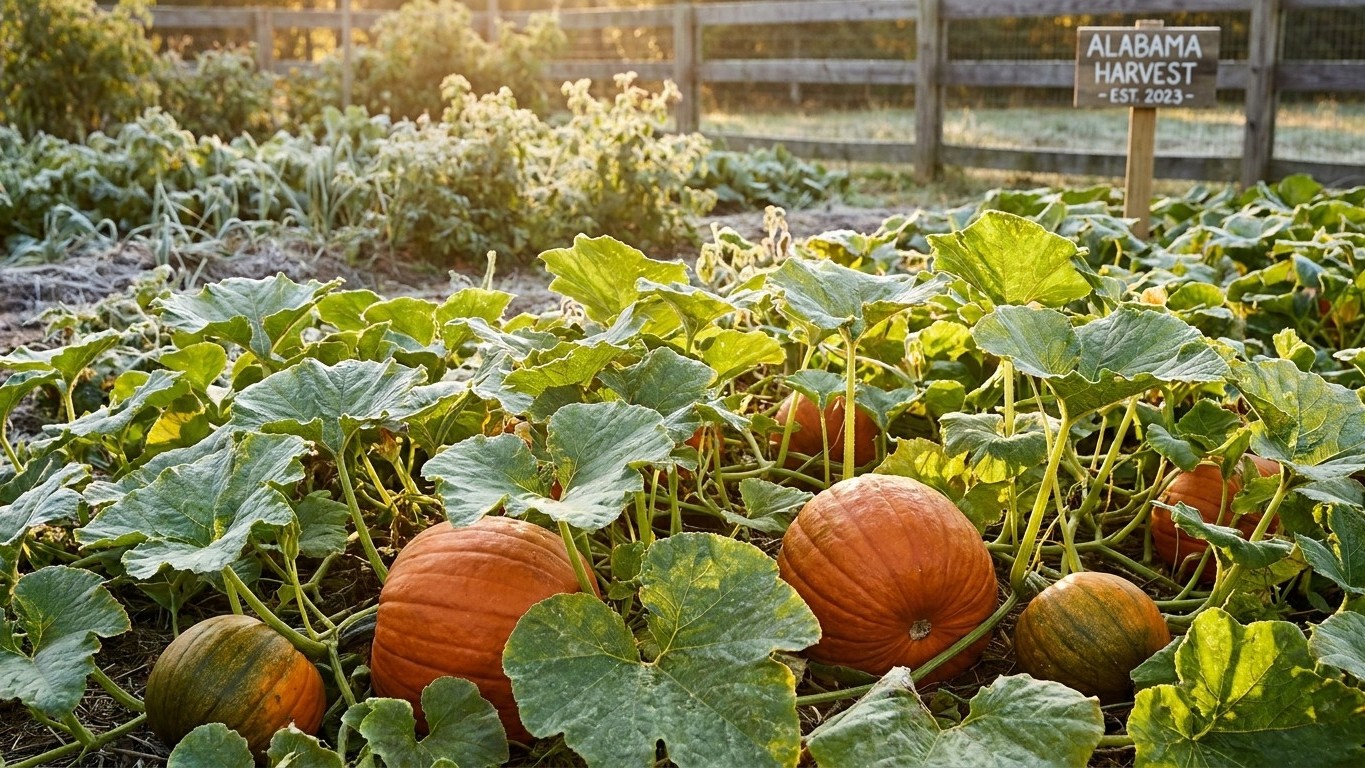

Most Wyoming pumpkin patches lose the race not because the fruit was planted too late, but because the flower that made it opened too late. Once nights start dropping toward freezing in late September, an unripe pumpkin doesn’t get a second chance to color up. Whether yours makes it depends on tracking bloom dates against the state’s frost window, not on the date you dropped seed in the ground.
The short answer
Wyoming’s first fall frost lands somewhere between September 24 and October 5, based on NOAA’s 30-year climate normals for the state’s benchmark station. That’s a twelve-day spread, and it’s the number every pumpkin grower in the state needs to work backward from, because pumpkins don’t ripen on a sowing schedule. They ripen on a flowering schedule.
Utah State University Extension puts pumpkin maturation at 45 to 55 days after the flower opens, not after the seed goes into the ground. Count backward from the frost window and a rough target for the last safe flowering date emerges: 55 days before September 24 lands around July 31, while 45 days before October 5 lands closer to August 21. That gives a working window of roughly late July through the third week of August for the last flower that still has a real shot at turning into a ripe, field-colored pumpkin before the first freeze.
Flowers that open after that stretch are racing a clock they’re likely to lose. A pumpkin fertilized in early September, for instance, would need until well past the earliest frost date just to log 45 days of development. The fruit might size up fine, but it stays green, and a green pumpkin cut from a frozen vine doesn’t finish ripening in the garage.
This is why the flowering date matters more than the planting date once the season is underway. Two vines seeded the same week can flower two or three weeks apart depending on soil warmth, sun exposure, and how much stress the plant caught early on. A grower who walks the patch and notes when the first female flowers actually open, rather than counting off a seed-packet number from the sow date, gets a far more honest read on whether a given fruit stands a chance.
Elevation complicates the math further. At around 6,000 feet, Wyoming gardens typically get roughly 130 frost-free days, but that average hides real variability: frost is possible in any month at the state’s higher elevations, and a grower at 7,000 feet or tucked into a low valley pocket may see that fall frost arrive earlier than the state average suggests. Treating September 24, the early end of the window, as the realistic planning date is the safer bet for anyone gardening above the valley floor.
When to sow here
Getting the sow date right is less about circling a day on the calendar and more about working through a short sequence, in order, without skipping the middle step.
- Let the last spring frost window pass. Wyoming’s last spring frost falls between May 7 and May 18. Seedlings or direct-sown seed exposed before that window closes risk a cold snap that stunts or kills young plants outright.
- Then wait for the soil, not the calendar. Pumpkin seed germinates reliably once soil reaches 65°F, and that mark is not the same thing as the last frost date. Soil warms far slower than air, especially at Wyoming’s elevation where nights stay cool well into late spring, so the 65°F threshold typically arrives noticeably later than the frost-free date itself, not on it.
- Use row covers to close the gap. A clear or black row cover over the bed traps daytime heat in the soil and can buy roughly two weeks on that warm-up timeline, letting a grower sow closer to the frost date instead of waiting out the full natural lag.
- Count forward 45 to 55 days from the first open flower, not from the sow date, to estimate a realistic ripening date, then check that estimate against the fall frost window described above before deciding whether a late-set fruit is worth carrying to harvest.
Skipping straight from “frost is over” to “seed goes in the ground” is the most common miscalculation in the sequence. The two dates feel close together on paper, but the soil doesn’t warm at the same pace as the air, and a seed sown into cold, damp soil often just sits and rots rather than germinating early. Testing the actual soil temperature with a simple thermometer, rather than trusting the frost date as a stand-in, removes the guesswork.
What goes wrong here
Wyoming’s compressed season creates a specific, repeatable set of failures rather than a random mix of bad luck. Knowing which one is unfolding usually points straight to the fix.
- A late flower that never colors. Fruit set from blooms that opened after mid-August often reaches full size but stays green or pale when frost arrives, because it never logged its full 45 to 55 days. The remedy is to track bloom dates through the season and, once late August arrives, prioritize water and nutrients on fruit already set from earlier flowers rather than letting the vine keep pushing new blossoms it can’t finish.
- A fruit caught by frost before harvest. Even fruit that’s mostly colored can be damaged if a hard freeze hits before it’s cut. Watching the forecast against the September 24 to October 5 window and harvesting a day or two early, with the stem left attached, protects fruit that’s close enough to done rather than leaving it exposed to a freeze overnight.
- A vine that dies back before the skin hardens. Stress from pests or disease can kill foliage weeks before the fruit is actually mature, cutting off the plant’s ability to finish hardening the rind. This site’s pages on squash bugs and cucumber beetles cover the pest pressure behind this failure in detail; catching an infestation early keeps the vine alive long enough for the fruit to properly cure on the plant.
Common questions
Can I still plant pumpkins in July in Wyoming?
A July sowing is very late relative to the arithmetic above, since it leaves almost no room for a flower to open, mature for 45 to 55 days, and still beat the September 24 to October 5 frost window. A July planting is realistic mainly for fast-maturing varieties and only with season-extension tools like row covers in play.
Do all pumpkin varieties ripen in the same number of days after flowering?
Utah State University Extension’s published figure is a 45 to 55 day range covering pumpkins broadly, and named varieties differ in size, color, and vine habit without a separate maturation number attached to each one in that source. Treat 45 to 55 days as the working range for planning rather than assuming every variety sits at the same point within it.
What if my pumpkin isn’t fully colored when frost hits?
Harvest with the stem attached before the frost arrives, and move the fruit somewhere it will not freeze. The source behind this figure doesn’t publish a storage temperature, humidity level, or keeping time, only that guidance to keep harvested fruit away from freezing conditions, so treat that as the extent of what’s confirmed here.
Does elevation change the frost date more than the state average suggests?
Yes. The 130 frost-free day average applies broadly around 6,000 feet, but frost is possible in any month at Wyoming’s higher elevations. Gardeners well above that baseline, or in low valley pockets that trap cold air, should plan around the earlier end of the September 24 to October 5 window rather than the later end.