
Wyoming pumpkin growers work with one of the tightest windows in the country: frost can arrive as early as May 18 in spring and as late as September 24 in fall. The math means flowers must open by late July or early August, and seeds go into soil that’s still cool well into June. Get either end wrong and the fruit never ripens.
The short answer
Start with the frost date that actually threatens your patch: first fall frost in Wyoming lands somewhere between September 24 and October 5, depending on the year and your local terrain. That window is the wall every pumpkin vine runs into. Everything about timing this crop comes from working backward from it.
Pumpkins need 45 to 55 days after flowering to reach maturity, according to Utah State University Extension. Not 45 to 55 days from the day you drop seed in the ground, and not from transplant either. The clock starts when the first female flower opens and gets pollinated. That distinction matters more here than almost anywhere else, because Wyoming’s frost-free season is short enough that a few days of confusion can cost you the whole crop.
Run the arithmetic from both ends of the frost window and both ends of the maturity window, and you get a safe flowering deadline of roughly July 31 to August 21. Subtract 55 days from the earliest possible frost date (September 24) and you land on July 31. Subtract 45 days from the latest possible frost date (October 5) and you land on August 21. That spread isn’t sloppiness on the calendar’s part, it’s the real uncertainty in both when frost hits and how fast your fruit finishes.
The practical takeaway: treat late July as your target, not mid-August. If your vine’s first flowers open by then, you’re working with the full 55-day cushion against even an early frost. Push flowering into mid-August and you’re betting on the later end of the frost window holding, plus a shorter 45-day finish. That’s a bet, not a plan.
Elevation changes this further. NOAA’s data comes from a single reporting station, and Wyoming gardens at 6,000 feet or higher can see frost in any month of the year, not just the September-to-October window the averages suggest. If you’re gardening at altitude, shift your target flowering date earlier still, and don’t assume a mild September means you’re clear.
None of this is about when you sow the seed. It’s about when the flower opens. A late-planted vine that flowers on time is fine. An early-planted vine that flowers late, because of a cool June or a slow start, is in trouble no matter what the seed packet calendar says.
When to sow here
Sowing date is where most of the confusion starts, because gardeners default to counting from last frost. That’s the wrong anchor. Pumpkins are sown when the soil itself reaches 65 F, and soil temperature lags well behind air temperature, sometimes by weeks, especially at Wyoming’s elevation where cold nights keep ground temperatures low long after the air has warmed during the day. Here’s how the sequence actually plays out:
- Last spring frost passes. Wyoming’s last spring frost falls between May 7 and May 18. This date tells you the air is done freezing. It tells you nothing about the soil.
- Soil keeps lagging. Bare soil in Wyoming typically needs several more weeks of sun and warm air before it holds steadily above 65 F at seed depth. That pushes direct sowing into a window well past the last frost date, not right on top of it.
- Row covers close the gap. Clear or fabric row covers trap daytime heat against the soil surface and can buy roughly two weeks, letting you sow earlier than bare, uncovered ground would allow. That head start matters in a season this short.
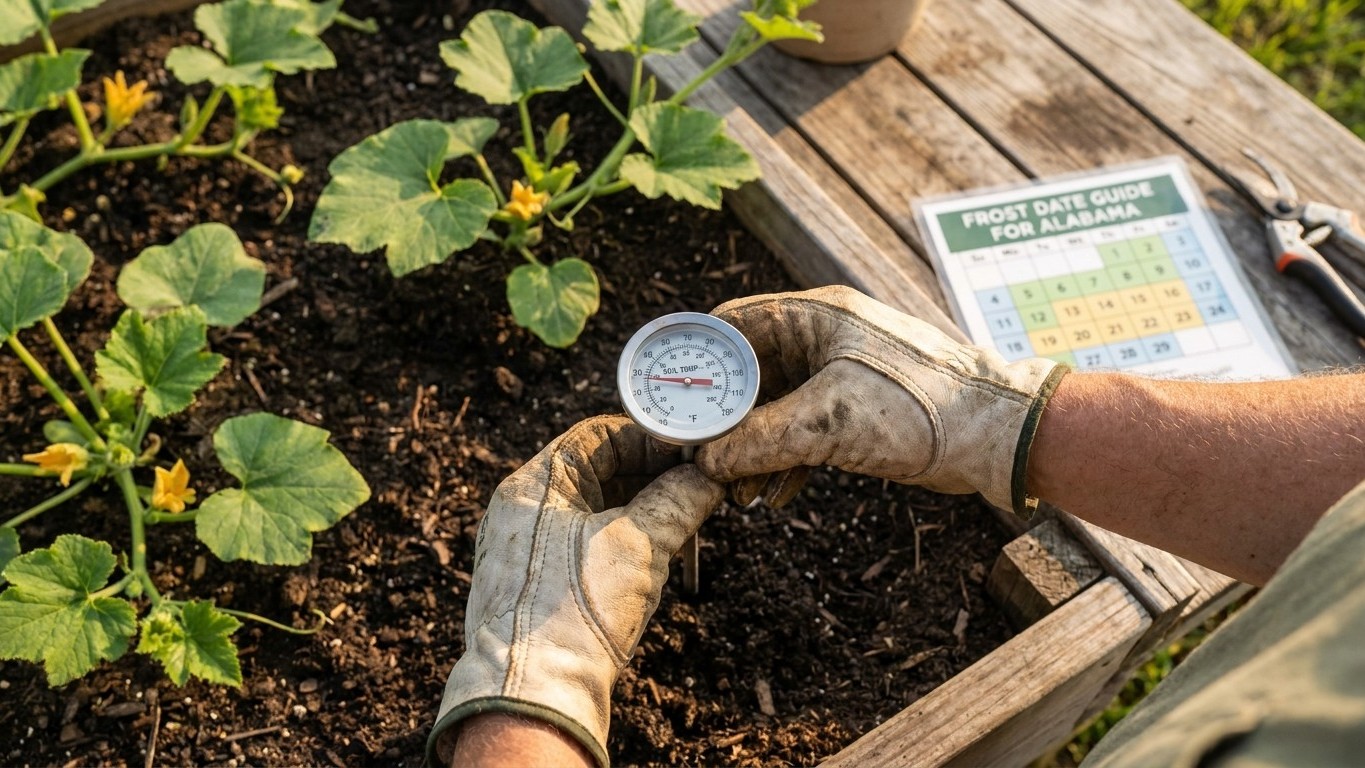
- Confirm with a thermometer, not a date. A simple soil thermometer pushed a couple inches down beats guessing. Sowing into 58 F soil because “it’s been two weeks since frost” is a common way pumpkin seed rots before it germinates.
- Back-check against your flowering deadline. Whatever sowing date gets your soil to 65 F, make sure the days between sowing and the July 31 to August 21 flowering target are enough for the vine to establish, grow, and set its first female flowers. If the arithmetic doesn’t leave enough runway, row covers or an earlier variety selection become necessary, not optional.
The two dates, last frost and 65 F soil, are not the same thing and shouldn’t be treated as interchangeable. Conflating them is the single most common timing mistake in a state where the season is already short on margin.
What goes wrong here
- A late flower that never colors. When the first female flower opens after mid-August, the fruit is racing a frost date that may only give it 34 to 40 days instead of the needed 45 to 55. The result is a pumpkin that stays green and hard-fleshed. Remedy: push sowing earlier using row covers, and if a vine is clearly flowering late in August, consider pinching new blossoms so the plant channels energy into fruit already set rather than starting a race it can’t win.
- A fruit caught by frost. Even a well-timed pumpkin can get caught if frost arrives at the early edge of the September 24 to October 5 window. Watch the forecast in mid-September and have old sheets or frost cloth ready to throw over vines on a cold, clear night. A single light frost on foliage won’t necessarily kill the fruit if you cover in time, but exposed fruit left out overnight in a hard freeze is a loss.
- A vine that dies back before the skin hardens. Powdery mildew, squash vine borer damage, or simple end-of-season decline can kill foliage while the fruit inside is still soft-skinned. A pumpkin needs its vine, or at least enough green leaf, to finish hardening its rind. Remedy: cut back on overhead watering late in the season to slow fungal spread, and once a vine is failing, harvest what’s there rather than hoping for more curing time you don’t have.
- Insect pressure compounding a short season. Squash bugs and cucumber beetles both weaken vines early, which delays flowering and pushes the whole timeline later into a season that has no room to spare. If you’re dealing with either, the state-specific pages on squash bugs in Wyoming and cucumber beetles in Wyoming cover identification and control in more depth.
Common questions
Can I still get pumpkins if my flowers open in late August?
It’s a tight fit. Late August flowering leaves roughly 45 days before the earliest possible frost date of September 24, which puts you right at the minimum maturity threshold. It’s not impossible, but a hard frost anytime before October 5 would cut it short. Row covers or frost cloth on cold nights buy some margin.
Does starting pumpkin seeds indoors help in Wyoming?
Utah State University Extension’s guidance centers on sowing once soil hits 65 F, which applies to direct seeding. Starting indoors and transplanting can shift the calendar, but transplants still need warm soil to thrive once set out, and pumpkin roots dislike disturbance. If you transplant, harden off carefully and don’t set plants out before soil warms.
How do I know when a pumpkin flower has actually been pollinated?
The maturity clock starts at flowering, but a flower that opens without pollination won’t set fruit at all. Look for a small swelling at the base of the female flower, behind the petals, within a few days of bloom. If nothing swells, that bloom didn’t set and doesn’t start your countdown.
Where should I store pumpkins after harvest?
Utah State University Extension’s guidance is limited on this point: it specifies storing pumpkins somewhere they won’t freeze, without giving a specific temperature, humidity level, or keeping duration. Harvest with the stem attached before frost, and keep fruit in a cool, dry, frost-free space until you’re ready to use it.