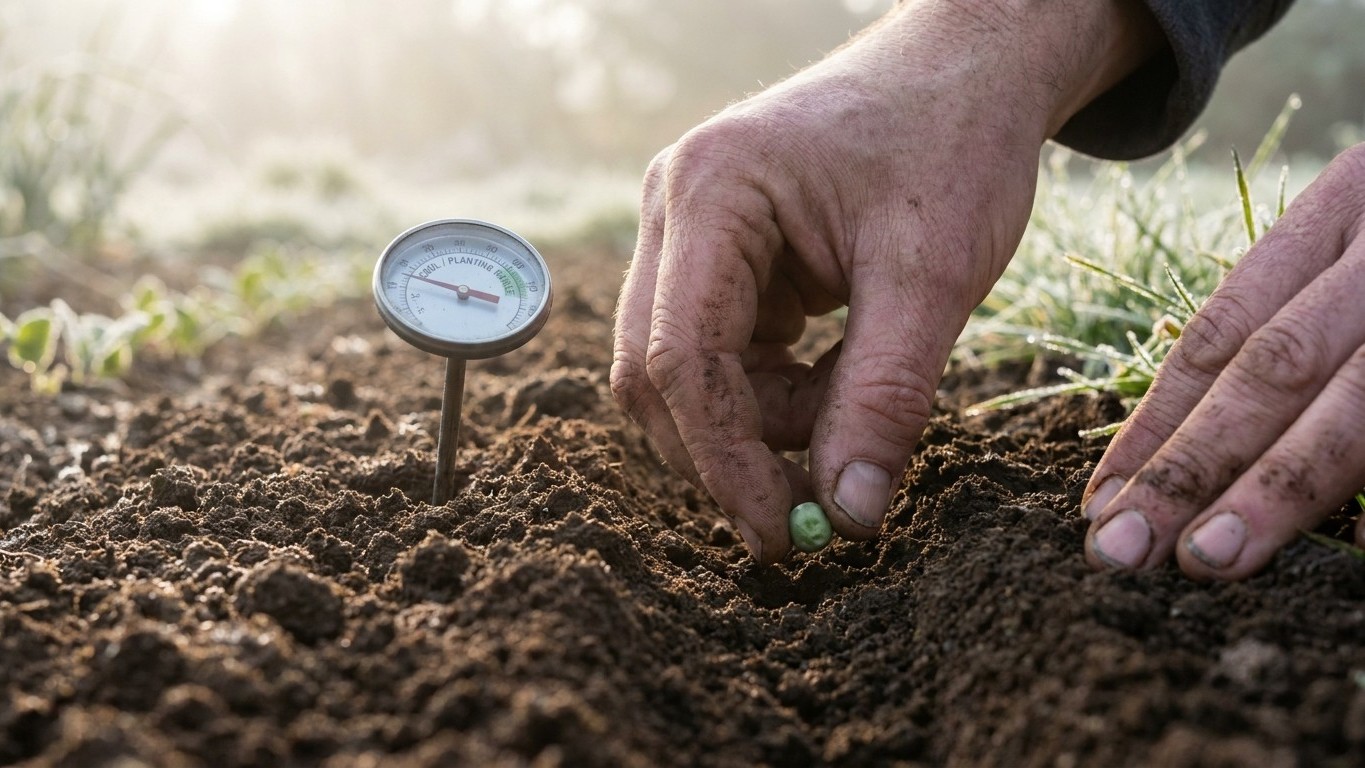

Sow peas the moment the soil can be worked, and four separate garden problems get solved by that one choice. Fusarium wilt needs soil above 70 F to take hold. Pea enation mosaic virus needs aphids to build up. Powdery mildew needs warm, humid air. The pea weevil needs pods sitting around long enough for larvae to burrow in. Early sowing removes the conditions all four depend on, according to Utah State University Extension’s guide, Peas in the Garden.
The short answer
Peas are direct-sown, not transplanted, and they tolerate frost better than almost anything else in the vegetable garden. That changes the whole question of timing. You’re not counting Weeks Before the last frost the way you would with tomatoes or peppers. You’re watching the soil itself. Utah State University Extension frames it plainly: plant early, so the crop develops before the soil reaches the temperature that favors disease.
The number that matters most is 70 F. That’s the soil temperature at which fusarium wilt becomes a real threat, showing up as downward-curling leaves, brittle stems, and a yellow-orange discoloration inside the vascular tissue when you slice a stem open. Below that threshold, the fungus struggles to establish itself in the first place. Sow early enough, and the crop matures and finishes producing before the soil ever climbs that high.
The same early sowing does something else at the same time. Aphids, which transmit pea enation mosaic virus, tend to build populations as the season warms. A crop that’s already up and growing before aphid numbers peak has a head start the virus can’t easily overcome. Utah State University Extension’s advice for susceptible varieties is exactly that: plant early to avoid aphids, not to avoid frost.
Powdery mildew follows a comparable pattern, though the mechanism is seasonal rather than tied to a single temperature threshold. Spring-planted peas run into far less mildew than the same varieties sown for an autumn crop, because the conditions mildew favors, warm days and humid nights, build up later in the season. A spring planting finishes its run before that window opens.
And the pea weevil, which lays eggs on young pods so larvae can burrow inside, is defeated less by soil temperature and more by simple timing. Early planting means early harvest, and early harvest means the pods are off the vine before weevil pressure builds. Four distinct problems. One decision. Sow as early as the soil allows, not by the calendar, but by whether the ground itself is ready.
What actually decides it

None of this works because peas are hardy in some vague, general sense. It works because each problem has a specific trigger, and early sowing removes that trigger before it ever appears. Understanding the mechanism explains why one decision can settle four unrelated-looking issues.
The soil-temperature clock
Fusarium wilt and root rot sit on opposite ends of the same thermometer. Wilt becomes a problem once soil temperatures exceed 70 F, favoring a fungus that thrives in warmth. Root rot and damping off run the other way: they favor soil that’s compacted or wet, and the guidance is to seed in spring when soil is below 65 F. Sowing early keeps the crop inside that window, cool enough to avoid the fungus that causes damping off, but the seed still needs to be in ground that drains rather than sits soggy. Compacted, waterlogged soil defeats the timing no matter how early you sow.
The insect calendar
Pea aphids form large colonies under leaves near new growth, and they’re the vector for pea enation mosaic virus. Their numbers build as the season progresses, so a crop sown early is further along, and less palatable to a fresh aphid population, by the time that buildup peaks. The pea weevil runs on a related but separate clock: females lay eggs on young pods, and the larvae need time inside the pod to develop. Early planting and harvest cuts that window short, pulling pods off the vine before the weevil’s larvae can finish burrowing in.
The mildew season
Powdery mildew doesn’t respond to a single temperature the way fusarium does. It responds to the general conditions of the season. Spring crops, planted and finished earlier, simply miss the warm, humid stretch that autumn plantings run straight into. The fungus isn’t defeated by cold soil at planting time; it’s outrun by a shorter growing window.
How to do it
- Check whether the soil is workable. That means it crumbles rather than sticks together in a wet clump when you squeeze a handful. Wet, compacted soil is the condition Utah State University Extension warns against, since it favors root rot and damping off regardless of how early in the season it is.
- Confirm the soil is below 65 F before seeding. This is the specific threshold given for avoiding root rot and damping off. Peas will germinate in cool soil that would leave most other vegetable seeds sitting dormant.
- Sow the seed directly in the garden. Peas are a direct-sown crop. There’s no transplant stage in the standard routine, though for a very early sowing some gardeners pre-sprout seed briefly indoors before moving it straight into the ground, a trick rather than a routine.
- Skip the fertilizer, especially nitrogen. Peas fix Their Own Nitrogen from the air. Extra nitrogen doesn’t help the crop and does help aphid populations grow, which works against the whole point of sowing early.
- Watch new growth for aphid colonies. If they appear, wash them off with a stream of water rather than waiting for the problem to spread to the pods.
- Harvest promptly once pods fill out. Letting pods linger on the vine gives the pea weevil more time to lay eggs and gives larvae more time to burrow in.
- Destroy infested plants after harvest. Removing them keeps aphids and any surviving pests from moving on to the next planting or a neighboring bed.
What Goes Wrong
- Waiting for warmer soil “to be safe.” This is the single most common mistake, and it undoes all four defenses at once. Soil above 70 F favors fusarium wilt, a later-maturing crop overlaps with peak aphid season, mildew has more time to build, and pods stay on the vine longer, giving the weevil its opening. The remedy is the same one covered above: sow as Soon as the Soil is workable and below 65 F, not once it feels comfortably warm.
- Over-fertilizing, especially with nitrogen. Because peas fix their own nitrogen, added fertilizer doesn’t boost yield the way it might with other crops. What it does do is increase aphid populations, which raises the risk of pea enation mosaic virus spreading through the planting. Skip the nitrogen and let the plant do its own work.
- Sowing into compacted or waterlogged soil. Even a well-timed sowing fails here, because damping off and root rot don’t care what the calendar says. The fix is to wait for soil that’s actually workable, not just early, and to avoid soil that stays wet after rain or irrigation.
- Letting aphid colonies go unchecked. Small colonies under the leaves near new growth can be washed off with a stream of water. Left alone, they spread pea enation mosaic virus, which shows up as mottled, crinkled, stunted leaves and badly distorted pods. Catching it early with a simple water spray is the entire remedy.
- Leaving pods on the vine past maturity. This is where the pea weevil does its damage, since females lay eggs on young pods and larvae burrow in over time. Harvesting promptly, rather than letting pods sit “just a little longer,” is the fix, and it pairs directly with early planting to shorten the whole exposure window.
Common questions
Can peas handle a late frost after sowing? Peas are frost-tolerant, which is part of why the sowing decision is based on soil condition rather than a frost date. The plant is built to handle cold snaps that would set back most other vegetables.
Does early sowing mean the harvest comes early too? Yes, and that’s part of the mechanism. An early-maturing crop finishes before soil temperatures climb past 70 F, before aphid populations peak, and before pods sit around long enough for weevil larvae to develop.
Is fertilizer ever appropriate for peas? Utah State University Extension’s guidance points the other way: peas fix their own nitrogen, and extra nitrogen both increases aphid numbers and doesn’t help the crop. The safer path is to avoid heavy fertilizing altogether.
What if the soil never seems workable early enough? Compacted or consistently wet soil is a separate problem from timing, and it needs to be addressed on its own, since even a well-timed sowing into poor soil still risks root rot and damping off.