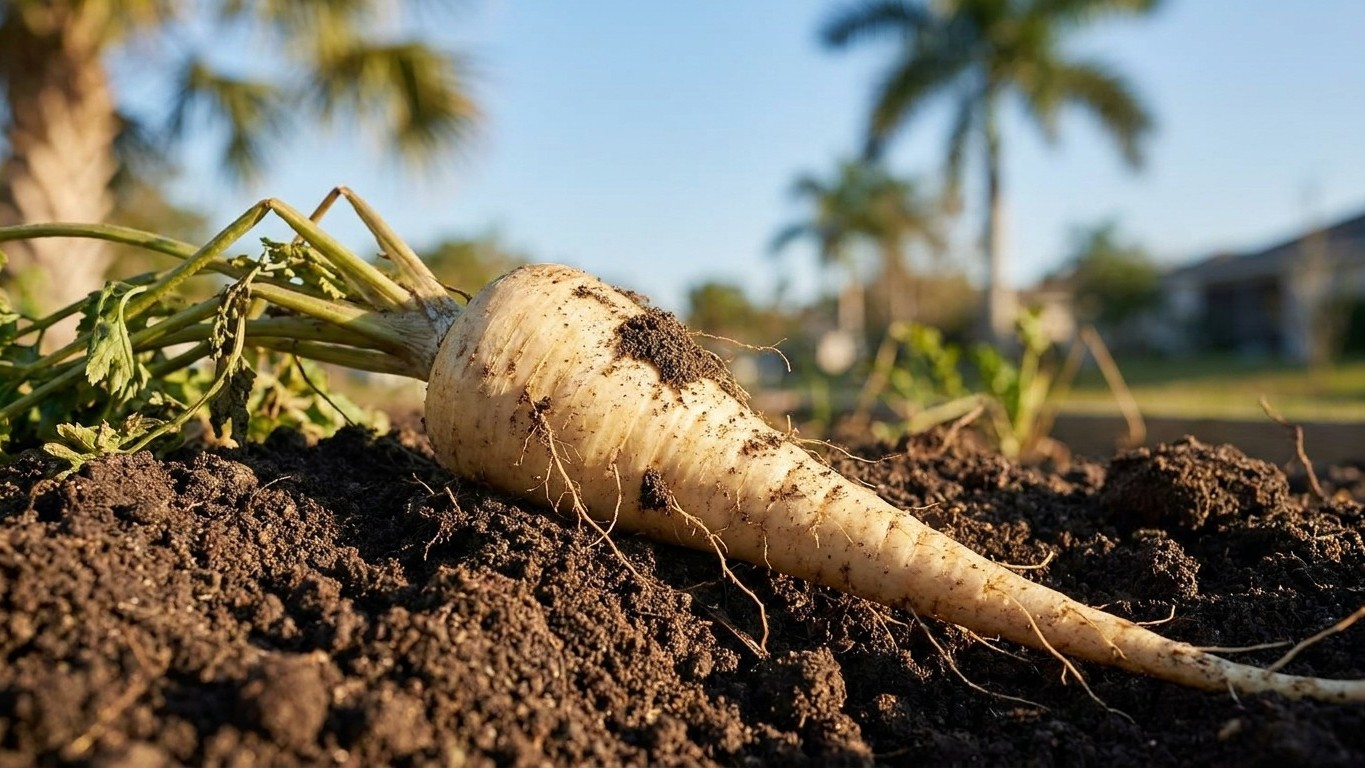

Four pests bite Alaska parsnip, and their timing follows the growing season more than the calendar. Root maggots hit first, in the weeks right after seeding. Cutworms follow as seedlings emerge. Aphids build through midsummer, and slugs turn up whenever the soil stays wet, often right as the crop nears its frost-sweetened finish.
Which pests attack parsnip in Alaska

UAF Cooperative Extension documents five insect and mollusk pests for this territory: Aphids, Cutworms, Root maggots, Slugs, and Spruce beetle. That is a short list, and it stays short here, no padding.
One of those five doesn’t belong in a parsnip bed. Spruce beetle is a bark beetle that tunnels under the bark of mature spruce trees, killing conifers across large stands of forest. It has nothing to do with root crops in a raised bed or a garden row, and if you see dead spruce trees on your property, that’s a separate problem for a separate part of the extension service, not something that touches your vegetables.
The four that matter for parsnip growers are Aphids, Cutworms, Root maggots, and Slugs. Aphids cluster on the undersides of parsnip leaves and along stems, sucking sap and sometimes leaving a sticky residue that draws sooty mold. Cutworms are the caterpillar stage of several moth species, and they work at night, severing young stems right at the soil line. Root maggots are fly larvae that tunnel into the taproot itself, the part of the plant you’re actually trying to eat, so their damage is the most costly of the group even when it’s the hardest to spot from above ground. Slugs graze on leaves and can scar exposed root shoulders, and they thrive in the cool, damp conditions that are common across much of this territory’s growing season.
None of these four is unique to parsnip. All four also attack carrots, cabbage family crops, lettuce, and other garden staples, which is part of why crop rotation and general garden sanitation come up repeatedly in the management section below. But for a parsnip bed specifically, these four are the ones documented here, and that’s the decisive list, not a broader one pulled from national pest guides that may not reflect what UAF Cooperative Extension has actually recorded in this state.
When each one shows up, and what it does first
Parsnip seed goes into the ground two to three weeks before the last frost, and germination itself takes 14 to 21 days, which matters because a bare-looking row at three weeks isn’t necessarily a pest problem, it may just be a slow-germinating seed doing what parsnip seed does. Root maggot flies lay their eggs at the base of young seedlings not long after that germination window closes, and the first sign is a seedling that wilts and dies for no visible reason above ground, because the damage is happening at the root, out of sight.
Cutworms show up on that same early timeline, often within the first few weeks after seedlings break the surface. Their signature is blunt: a stem clipped clean at soil level, with the top of the plant lying nearby, sometimes not even eaten, just severed and abandoned. That’s a different picture from root maggot damage, where the plant wilts but usually stays upright a while longer before it finally collapses.
Aphids arrive later, once the foliage has filled out enough to support a colony. Look for curled or yellowing leaves, and check the undersides and stem joints for small clustered insects, sometimes green, sometimes darker, often with ants tending them for the sugary honeydew they produce. This tends to build gradually through the growing season rather than appearing overnight.
Slugs are the wild card because they follow moisture, not a fixed point on the calendar. They can appear early if a spring is wet, or late in the season as the crop approaches its finish, and parsnip’s own timeline runs long. Parsnips need 100 to 120 days from seeding to mature, and the crop’s best flavor doesn’t arrive until it has sat through several weeks of frosty weather afterward, which means slugs get more opportunities across a longer window than a fast-maturing crop would ever give them. Their damage looks like ragged holes in leaves and irregular gouges on any root shoulder that pokes above the soil line, usually worse after rain or heavy watering, and worse overnight than during the day.
Telling the damage apart from everything else
Not everything that looks like pest damage is pest damage, and parsnip has a few quirks of its own that get blamed on insects when they’re really about soil or water.
A forked or split root is the most common misdiagnosis. It has two separate possible causes here: heavy or stony ground that deflects the taproot as it grows, and overwatering that encourages branching instead of a single straight root. Neither of those is a pest, and no insect on the documented list tunnels a fork into a root shape. If you pull a forked parsnip, look at the soil before you look for bugs.
| Symptom | Likely cause | What distinguishes it |
|---|---|---|
| Seedling wilts, stays upright | Root maggot | Pull gently; look for tunneling or larvae at the root, not just at soil surface |
| Stem clipped clean at soil line | Cutworm | Severed top often lies nearby, largely uneaten |
| Curled, yellowing leaves with clusters of insects | Aphids | Check undersides of leaves and stem joints; sticky residue is a tell |
| Ragged holes, worse after rain or overnight | Slugs | Slime trails on soil or leaves confirm it |
| Forked or split root | Heavy/stony soil or overwatering | No insect signs present; check soil texture and watering habits |
| Bare row weeks after sowing | Normal slow germination | Wait the full 14 to 21 days before assuming failure or pest loss |
Nutrient deficiency and dry stress can also mimic aphid damage, since both cause yellowing leaves. The difference is that a deficiency tends to spread evenly across the whole planting, while an insect problem usually starts in patches or on individual plants first. If you’re not sure which you’re looking at, that’s exactly the kind of judgment call worth taking to your local extension office rather than guessing from a photo online.
What Actually Works here, and what is a waste of time
On a season this short, timing beats almost anything you’d put in a sprayer. A floating row cover set over the bed right at seeding, before root maggot flies find the row, blocks egg-laying without touching a single chemical. Leave it on through the seedling stage and lift it once plants are established enough to shrug off minor foliage feeding.
Crop rotation helps against root maggots specifically, since the flies overwinter in soil where host crops grew the season before; moving parsnip and its relatives to a different bed each year interrupts that cycle. Clearing garden debris and mulch piles in fall reduces slug and cutworm overwintering sites, and hand-picking slugs in the evening, when they’re active, works better than any broadcast approach for a small home garden.
What tends not to work is treating for a pest you haven’t confirmed. Spraying for aphids when the real problem is a nutrient gap wastes time and money and does nothing for the yellowing leaves. Reaching for a broad insecticide at the first sign of any leaf damage also risks killing the aphids’ natural predators, which often keep small colonies in check on their own if left alone. And because this state’s approved products and application rules are specific to Alaska conditions and change over time, this isn’t the place to name one. Your local extension office knows what’s currently labeled and legal to use here, and that’s the call to make before buying anything.
Where to check this for your own county
The list above comes from UAF Cooperative Extension, and it’s a statewide record, not a house-by-house survey. What’s documented across the state doesn’t tell you what’s actually in your garden bed this season, and pest pressure inside Alaska varies by district, by microclimate, and even by which side of a hill a garden sits on.
The most useful next move is a call or visit to your local extension district office. They can confirm whether root maggots or another pest on this list has been active in your area recently, and they can look at a photo or a sample if you’re unsure what you’re seeing in the row. That local read is worth more than any statewide list, including this one, because it reflects what’s actually moving through gardens near you right now, not what’s been recorded somewhere across the broader territory.
Common questions
Do I need to worry about spruce beetle in my vegetable garden?
No. It attacks mature spruce trees, not root crops, and it’s an entirely separate issue from anything affecting a parsnip bed.
My parsnip row looks bare three weeks after sowing. Is that a pest?
Not necessarily. Parsnip germination takes 14 to 21 days, so a bare-looking row at that point may just still be germinating rather than showing pest loss.
Why did my parsnips fork instead of growing straight?
Forking comes from either heavy or stony soil deflecting the root, or from overwatering, not from any pest on the documented list for this territory.
When are parsnips actually ready to pull?
They need 100 to 120 days from seeding, and flavor improves after several weeks of frosty weather following that, so patience after the first frost pays off in sweetness.