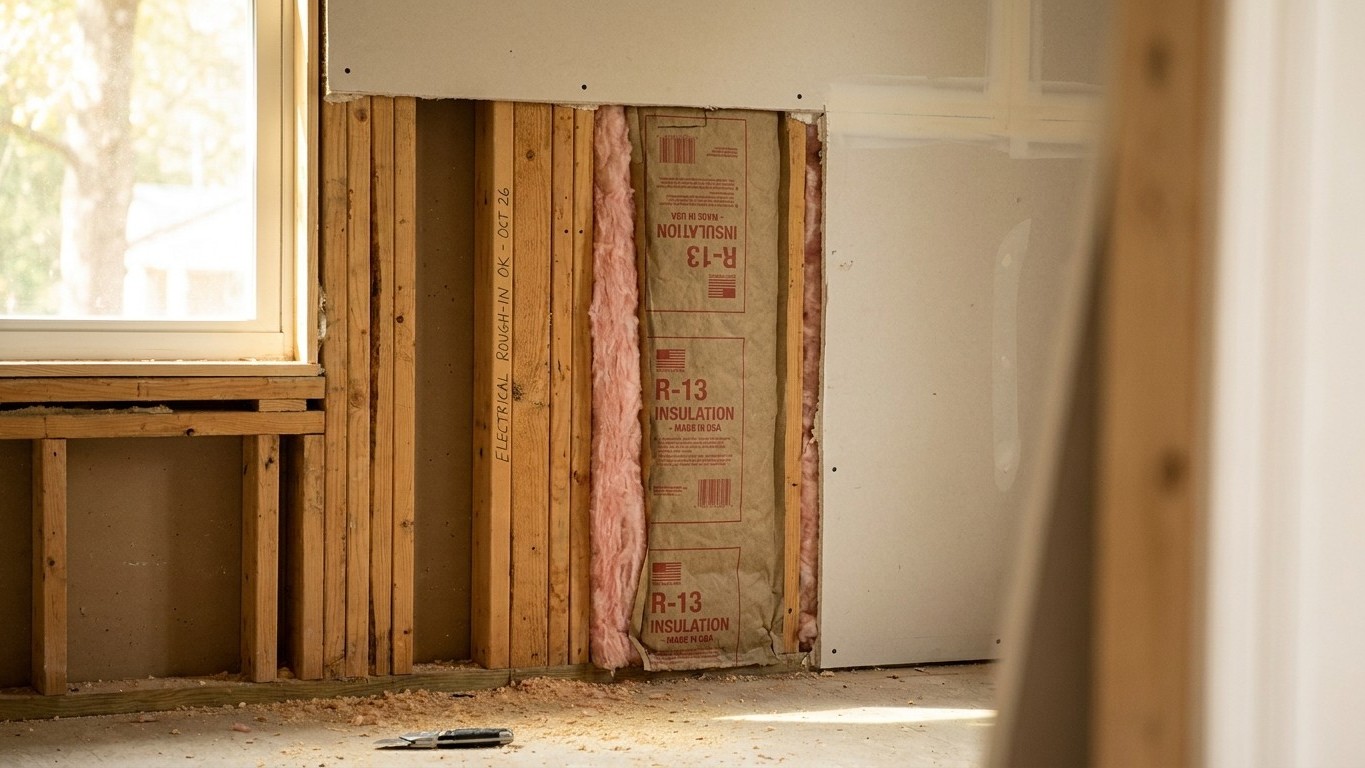

A wall in California may or may not need an interior vapor retarder, and the answer changes county by county. The state’s 58 counties fall into seven different IECC climate zones, and the 2021 International Residential Code exempts three of those zones from the requirement entirely. There is no single California rule.
What the code asks for in California

The 2021 International Residential Code, Section R702.7, says a vapor retarder of the class listed in Table R702.7(2) shall be provided on the interior side of frame walls. That’s the baseline rule, written for the country as a whole. It then carves out four exceptions, and the one that decides most of California’s fate reads: “A vapor retarder shall not be required in Climate Zones 1, 2 and 3.”
California doesn’t sit in one zone. It sits in seven. Of the state’s 58 counties, 25 fall in zone 3B, 14 in zone 3C, and 1 in zone 2B, that’s 40 counties where the exception applies and no interior vapor retarder is required by this section of the code. The remaining 18 counties fall into warmer-winter but still-cold-enough zones: 8 in zone 4B, 2 in zone 4C, 6 in zone 5B, and 2 in zone 6B. In those 18 counties, the base rule stands and a vapor retarder of the class specified by the table is required on the interior side of frame walls.
That’s a genuine split, not a rounding error. A house in a zone 3C county and a house in a zone 5B county two counties away can be built to opposite requirements, both correctly. Zone 4C deserves its own mention: it’s a marine moisture regime, and moisture-wise it behaves differently than the 4A and 4B zones it gets lumped with in some insulation tables. Treat it as its own case, not as a stand-in for the rest of zone 4.
None of this means a vapor retarder is banned in the exempt counties. “Not required” removes an obligation; it doesn’t prohibit the material. A builder in a zone 3B county can still choose to install one, though as the next section explains, doing so with the wrong class of material can cause exactly the problem the code is trying to prevent. This page won’t tell an individual reader what to put in their own wall. The class that applies to a given house depends on the zone that county sits in, and the code edition the local jurisdiction has actually adopted, not the model code text quoted above. That’s a question for the local building department, not for an article. A wall built with the wrong vapor control doesn’t announce the mistake. It rots quietly behind the drywall, and the owner usually finds out years later, when the damage is already structural.
Why the answer is the opposite in a warm climate
The reason California can’t have one answer comes down to which direction the water vapor is traveling, and that direction reverses with climate.
In a cold climate, the warm, moisture-laden air is inside the house. Heated indoor air holds vapor from cooking, showering, breathing, and it pushes toward the cold sheathing on the outside of the wall. An interior vapor retarder stops that vapor before it reaches the cold surface, where it would otherwise condense. That’s the logic behind the base IRC rule, and it’s sound logic for zones 4 through 8.
Flip the climate, and the physics flips with it. In a warm, humid climate, the moisture load comes from outside: hot, humid air pressing against an air-conditioned interior. Now the cool surface is on the inside of the wall, and if there’s an impermeable layer sitting there, that’s exactly where the vapor condenses. The U.S. Department of Energy’s Building America program describes what happens next in plain terms: “If the wall contains a vapor retarder on the interior side of the insulation, the water vapor will condense on this cool, impermeable surface,” resulting in “ruined insulation, mold, and structural rot of framing members.”
That’s not a hypothetical. It’s the reason the code writes different rules for different zones in the first place. It isn’t bureaucratic caution or a regional preference, it’s a direct response to which side of the wall the water is coming from. A material that protects a house in a zone 6B county can actively damage a house in a zone 3C county, and both builders would be following sound building science if they installed exactly opposite systems.
This is also why the exception for Climate Zones 1, 2 and 3 isn’t a loophole. It’s the code catching up with a mechanism that runs backward in warm, humid regions. Skipping the interior retarder there isn’t cutting a corner, it’s avoiding the setup the DOE describes.
The three classes, and why the word matters
Even where a vapor retarder is required, the code doesn’t ask for one generic product. It defines three classes by how much moisture they let pass, measured in perms. The lower the perm rating, the less vapor gets through.
| Class | Example materials | Perm rating |
|---|---|---|
| Class I | Sheet polyethylene, nonperforated aluminum foil | 0.1 perm or less |
| Class II | Kraft-faced fiberglass batts, vapor retarder paint | Above 0.1 up to 1.0 perm |
| Class III | Latex or enamel paint | Above 1.0 up to 10.0 perm |
Polyethylene sheeting only qualifies as a vapor retarder because it’s Class I, at 0.1 perm or less, essentially sealing the wall on that side. Calling any plastic sheet “a vapor barrier” without naming the class skips the part that actually matters. The disagreement between a builder in a zone 3C county and one in a zone 5B county was never about whether to install a vapor retarder at all, it’s about which class, if any, belongs in that specific wall.
Here’s the detail most homeowners miss: ordinary latex or enamel paint qualifies as a Class III vapor retarder. Most walls in most houses already have one, applied with a roller, and nobody thought of it as a code component. Class III materials let considerably more moisture through than Class I or II, which is exactly why they’re the class that shows up in Table R702.7(2) for milder climates.
One more distinction worth keeping straight: a vapor retarder is not an air barrier. Controlling vapor diffusion through a material and stopping bulk air movement through gaps and cracks are two separate jobs. Some products do both, a well-sealed sheet of polyethylene can serve as either, but the code treats them as different requirements, and a wall can meet one without meeting the other.
Where the rule stops
Section R702.7 lists exceptions where the base rule doesn’t apply at all, regardless of climate zone:
- Basement walls
- The below-grade portion of any wall
- Construction where accumulation, condensation, or freezing of moisture will not damage the materials
- Climate Zones 1, 2 and 3 (covered above)
The basement exception is the one most homeowners actually run into, usually while finishing a basement they thought would be a simple weekend project. A poured concrete foundation wall holds groundwater moisture for the life of the house, releasing it slowly, for years, through the concrete itself. That assembly needs to be able to dry toward the interior. Sealing it behind an impermeable interior sheet traps that moisture against the concrete and the framing next to it, setting up the same condensation problem described in the section above, just triggered by a different moisture source. For the specifics of how that assembly should be built, this site covers it separately in the basement wall vapor barrier guide.
The third exception, construction where moisture accumulation won’t damage the materials, is narrower than it sounds and depends on the specific assembly, not on a general judgment call about a house being “well-ventilated” or “dry.” It’s evaluated case by case, not applied broadly.
Who actually decides, in California
None of the figures above substitute for a call to the local building department. The 2021 IRC text quoted in this article is a model code. States and provinces adopt model codes on their own schedule, sometimes with amendments, sometimes years behind the edition currently being published. The code that governs a given wall in California is whatever edition and amendment set that county or city has actually adopted, not the national model code by itself.
That gap matters more in a state built across seven climate zones than it would in a state that sits entirely in one. A single statewide answer simply doesn’t exist here, and a builder who assumes their neighbor’s rule applies to their own county is guessing.
The climate itself gives a sense of why this question carries real weight for a lot of California even where the winters feel mild. At Los Angeles International Airport, the National Weather Service’s 1991–2020 climate normals put the annual heating demand at about 1,214 heating degree days, against roughly 720 cooling degree days at the same station. Degree days measure demand, not a temperature reading, they add up, for every day of the year, how far the average temperature sat below 65°F. A figure like 1,214 describes a heating season that shows up on the utility bill without ever feeling brutal, which is part of why the vapor-drive direction in a coastal zone 3C county can look so different from a mountain county running colder in zone 6B.
Whichever county a reader’s wall sits in, the reliable next step is the same: call the local building department, ask which code edition and climate zone apply to that address, and build to that answer rather than to a national average. A wall assembled with the wrong vapor control for its zone won’t show a warning sign at the time it’s closed up. The framing finds out first, quietly, and the owner finds out years later.