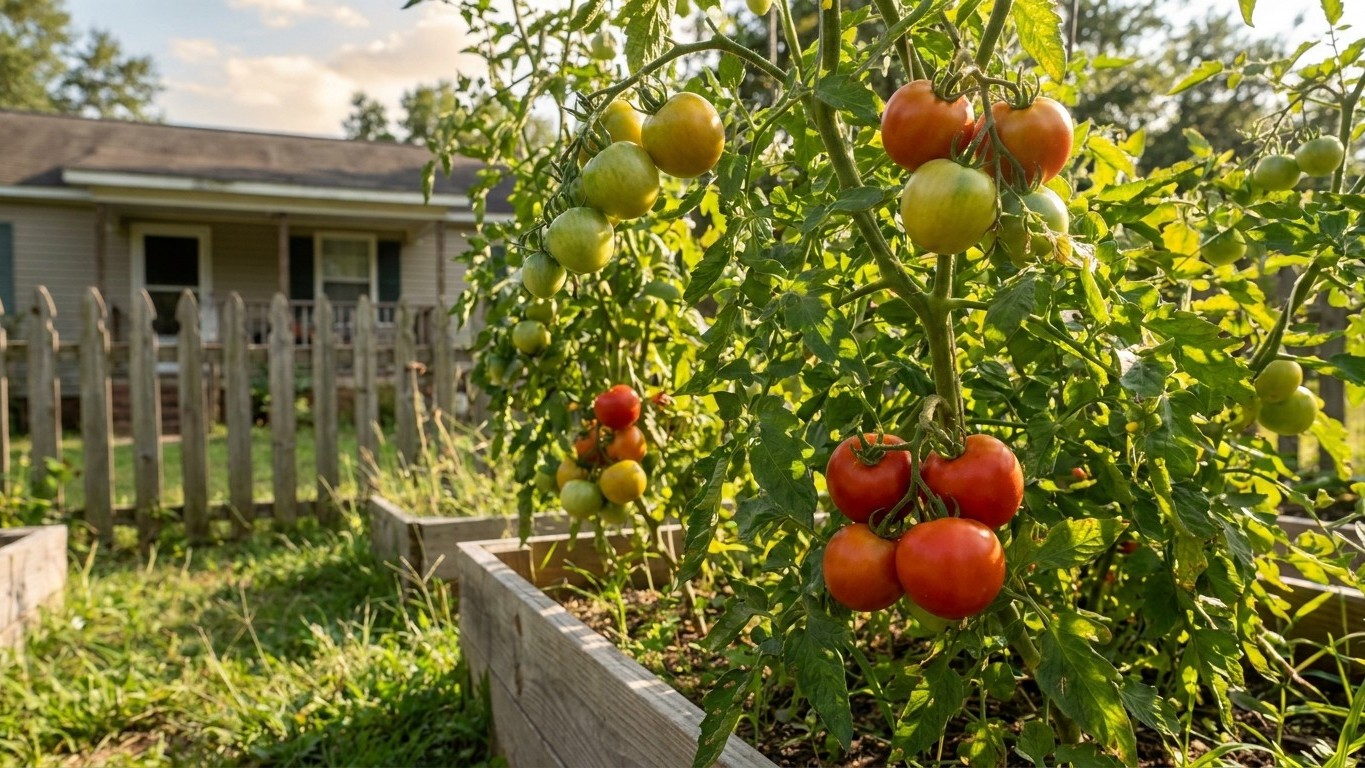

In most of Arizona, picking time isn’t set by frost at all. It’s set by heat. Low-desert growers pull tomatoes the moment they color up, often well before the calendar suggests, because triple-digit days shut down ripening and can ruin fruit left hanging. Flagstaff and other high-country spots follow a more familiar pattern, where an actual freeze ends the season.
When to Pick Tomatoes in Arizona
The state splits into two very different growing realities, and the mechanism behind each one changes what “time to pick” even means. In the low desert, represented by the Phoenix station used for federal climate records, a hard freeze is rare enough that it barely factors into the decision. NOAA’s climate normals for that station, built from 1991-2020 records, list a 365-day frost-free season. Looking at daily records from the same station, a 32F reading showed up in only 6 of 30 recent springs, arriving anywhere from late December to mid-January when it happened at all. That’s not a pattern reliable enough to plan around, and it isn’t the thing pushing you outside to pick.
Heat is. Tomato plants stop setting new fruit once daytime temperatures climb into the mid-90s and nighttime lows stay warm, and existing fruit exposed to that kind of sun can scald, soften, or stall out half-ripe. In low-desert gardens, the practical picking rule is to get fruit off the vine as soon as it shows color, sometimes at the first blush rather than waiting for full red, because leaving it exposed through a heat spike does more harm than picking a shade early.
High country runs on a different clock
Flagstaff and similar elevations answer to frost the way most of the country does. The USDA Plant Hardiness Zone Map, built on average annual extreme minimum temperatures, spans zones 4b through 10b across the state, and that range alone tells you how little a single statewide date can mean. A gardener in the high country is watching for an actual hard freeze to close the season, while a gardener outside Phoenix is watching a thermometer climbing past 100F for the opposite reason.
| Factor | Low desert (Phoenix reference) | High country (e.g., Flagstaff) |
|---|---|---|
| Season-ending threat | Extreme heat, not frost | Hard freeze |
| Frost-free season | 365 days per NOAA normals | Freezes reliably, separate climate |
| USDA hardiness zone | Warmer end of the 4b-10b statewide range | Colder end of the range |
| Picking cue | First blush of color, before heat stress | Full color, watching for freeze warnings |
Because the range spans so many zones, a single “pick by this date” instruction never fits the whole state. For anything more specific to your elevation, the University of Arizona Cooperative Extension keeps county-level guidance that reflects local conditions better than a statewide average can.
What to do with the green ones
Heat doesn’t just threaten ripe fruit. It also strands a lot of green tomatoes on the vine when a plant simply stops functioning under sustained high temperatures. Rather than let them sit and risk sun damage or splitting, most low-desert gardeners strip the plant of anything showing even a hint of size and color change once a heat spike is forecast or once the plant’s overall vigor starts dropping.
Not every green tomato behaves the same way once picked, and sorting them matters more than people expect. A tomato that’s still hard and glossy, with no blush at all, is truly immature. It may never ripen properly and is better used green, in cooking applications suited to firm, tart fruit. A tomato that’s started to lighten in color, feels slightly less firm, or shows the faintest pink or yellow tint at the blossom end is what’s usually called “mature green.” That fruit has finished its growth and will ripen off the vine, given the right conditions, because the internal processes that turn a tomato red don’t require it to stay attached to the plant.
Sorting before storing
Separating those two categories at picking time saves a lot of frustration later. A quick way to sort a full basket:
- Firm, uniformly green, no color break: set aside for green cooking uses, not ripening
- Slight color change at the blossom end, fruit gives a little under gentle pressure: prime candidate for ripening indoors
- Any fruit with soft spots, cracks, or insect damage: use immediately, don’t attempt to store or ripen
That last category matters more in Arizona gardens than people assume, since fruit that’s been sitting in intense sun often has hidden soft spots from heat stress even when the skin still looks intact. Checking each tomato by feel, not just by sight, catches problems before they spread to the rest of a stored batch.
Ripening indoors, and how long they keep
A tomato ripens through ethylene gas, a natural plant hormone it produces itself once mature, and that process runs faster in warmth and slower in cool air. Indoor ripening works by giving mature green fruit the right temperature range and enough contained air to let that gas build up around it, rather than dispersing into an open kitchen.
Room temperature, somewhere between the mid-50s and low 70s Fahrenheit, tends to produce the best flavor and texture as fruit ripens. Warmer than that speeds up color change but often at the cost of the fruit turning soft before the taste catches up, which is a common complaint with tomatoes ripened too fast in a hot kitchen. Arizona’s typically low indoor humidity can accelerate moisture loss from the fruit’s skin, so tomatoes ripening on an open counter in a dry house may shrivel slightly faster than the same fruit would in a more humid climate.
Methods that actually work
A few approaches consistently produce good results:
- Single layer in a shallow box or tray, stems up, out of direct sun, checked every day or two
- Paper bag with the top loosely folded, which traps ethylene and speeds ripening by a few days compared to open air
- Wrapped individually in newspaper if you’re storing a large batch, which slows the process for fruit you want to stretch out over weeks rather than days
Avoid a sunny windowsill. Direct sun adds heat without adding anything useful to the ripening process, and it’s one of the more common mistakes people make thinking sunlight itself turns a tomato red. Color change comes from internal chemistry and temperature, not from light exposure.
How long a mature green tomato takes to ripen depends on how far along it already was at picking and the temperature it’s kept at, and that window varies enough by fruit and conditions that no single number applies across a whole batch. Checking fruit every day or two and pulling each one as it finishes is more reliable than trying to guess a fixed timeline for the whole tray.
What goes wrong here
The most common mistake in low-desert gardens is treating tomato season like it runs on a frost calendar borrowed from a cooler climate. Growers who wait for a “first frost” cue to start harvesting everything often lose a chunk of the crop weeks earlier, once sustained heat has already stalled ripening and started degrading fruit quality on the vine. The season effectively ends with heat, not cold, for most of the state’s population centers, and a planting or picking plan built around a freeze date simply doesn’t match what actually happens in a Phoenix-area yard.
Sunscald is the second recurring problem. Fruit that loses leaf cover, whether from pruning, wind, or heat-stressed foliage dropping, gets exposed to direct sun and develops pale, leathery patches that can turn into soft rot. Picking earlier rather than later, and keeping some canopy over developing fruit, cuts down on this significantly.
Blossom end rot shows up more in extreme heat too, driven by uneven water uptake rather than a soil deficiency in most cases, and it can hit fruit that otherwise looked fine right up until the dark, sunken spot appears at the base. Once that shows up, that particular tomato won’t recover, though it doesn’t mean the whole plant is affected.
Indoors, the dry air common across much of the state causes tomatoes to shrivel faster than ripening guides written for humid regions suggest, so fruit that looks perfect one day can look wrinkled within a week if left uncovered on an open counter. A loosely closed bag or box slows that moisture loss and keeps ripening fruit in better shape until it’s ready.
Common questions
Does Arizona ever get a real frost that ends tomato season?
In the low desert, rarely. NOAA daily records for the Phoenix-area station show a 32F reading in only 6 of 30 recent springs, and the station’s official frost-free season is listed as 365 days. In the high country, including places like Flagstaff, freezes happen reliably and do end the season the way they would in most other states.
Should I pick tomatoes before a heat wave hits?
Yes, if fruit is already showing color. A tomato that’s started to blush will finish ripening indoors, and pulling it before an extreme heat spell avoids sunscald and the soft, mealy texture that comes from fruit sitting on the vine through prolonged high temperatures.
Why did my green tomatoes never turn red indoors?
They were likely picked too immature. Fruit with no color break at all, still hard and uniformly green throughout, sometimes lacks the internal development needed to finish ripening off the vine. Fruit with even a slight blush at the blossom end has a much better chance of coloring up fully indoors.
Is the whole state on the same tomato calendar?
No. Arizona spans USDA hardiness zones 4b through 10b, a range wide enough that low-desert and high-country gardens operate on essentially opposite constraints, heat versus frost. For guidance specific to your elevation and county, the University of Arizona Cooperative Extension is a better resource than any single statewide date.