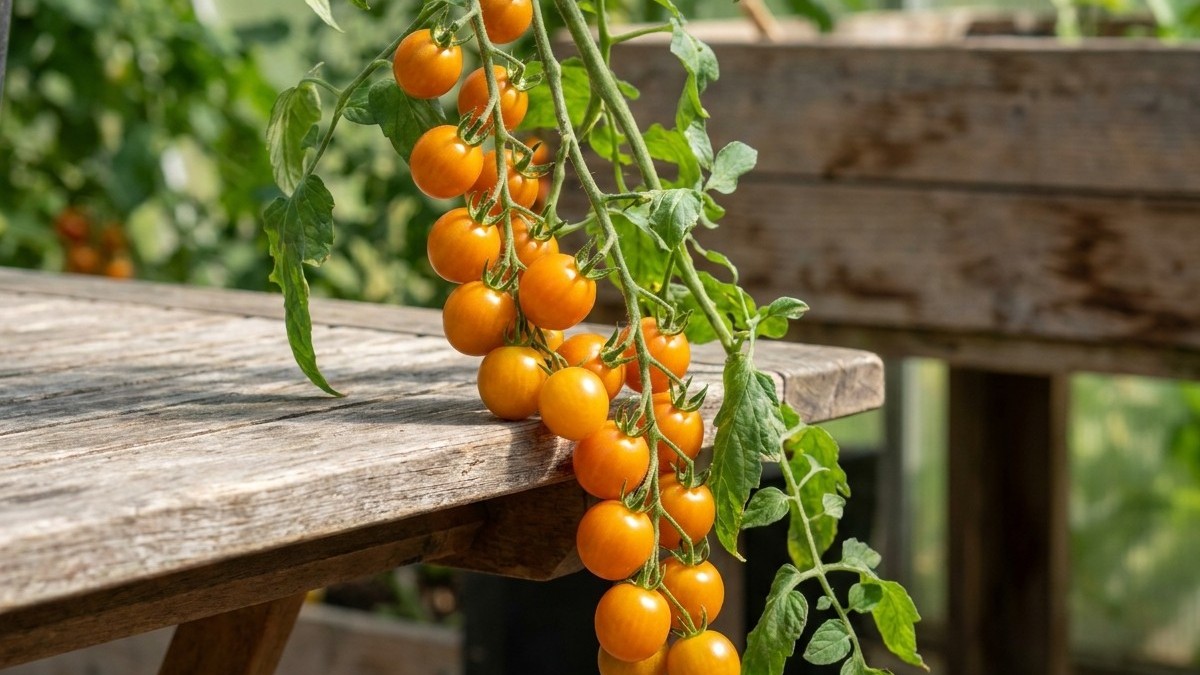

The short answer: pick most tomatoes when they’ve colored up and give slightly under a gentle squeeze, but let the calendar make the last call. In Connecticut, that calendar closes around the first fall frost, which lands between October 28 and November 10 near the coast and sooner inland. Everything still green on the vine when that date arrives comes inside, not into the compost.
When to Pick Tomatoes in Connecticut
Ripeness is a moving target early in the season and a countdown clock by October. Through July and August, you’re reading the fruit itself: full color for the variety, a slight softening at the blossom end, skin that’s glossy rather than dull. That part doesn’t change state to state. What does change is how much runway you have left once nights start cooling, and that’s a Connecticut-specific number.
The state sits in USDA Hardiness Zone 6a-7b, a classification built from one measurement, the average annual extreme minimum temperature, not from frost timing. It’s useful for deciding what perennials survive winter, less useful for deciding when to pull tomatoes off the vine. For that, the frost record matters more, and the reference station is Bridgeport, on Long Island Sound. There, NOAA’s 1991-2020 Climate Normals put the first fall freeze at 32°F somewhere between October 28 and November 10.
That’s the mild end of the state. Bridgeport sits right on the water, and the Sound acts like a giant radiator, holding heat into the fall. Move inland, up into the hills of Litchfield County or the higher ground around Torrington, and frost shows up earlier than that window, sometimes by a couple of weeks. Connecticut isn’t one climate. It’s a coastal strip, a river valley, and an upland interior, and a grower in Storrs is not working with the same calendar as one in Stamford.
Reading the plant, not just the date
Once nights start dipping into the 40s, ripening slows even if frost is still weeks off. Fruit that would have colored in five days in July might take ten in late September. That’s normal, not a sign of trouble. The practical move is to start picking at the “breaker” stage (the first blush of color showing at the blossom end) once cool nights set in, rather than waiting for full vine-ripened color that may never arrive before frost does.
For a planting-date and variety-specific breakdown of the growing season itself, the UConn Extension system publishes county-level guidance, and it’s worth checking against your own town rather than relying on a single statewide number.
What to do with the green ones
Frost warnings in Connecticut tend to arrive with a day or two of notice, and that’s the trigger for a full strip of the plant, not just the ripe fruit. Everything left on the vine, ripe, blushing, or green, gets picked before that first hard freeze, because a single frost event can turn a fruit to mush overnight even if the plant itself survives a light touch of cold.
Not all green tomatoes are equal, though, and sorting them on the spot saves a lot of disappointment three weeks later. There are really two categories:
- Mature green: full size for the variety, skin gone from matte to slightly glossy, sometimes with a pale whitish or yellowish cast at the blossom end. These will ripen off the vine, given time and reasonable warmth.
- Immature green: still small, skin flat and matte all over, no size gain expected even indoors. These rarely ripen well and are better used green than left to rot while waiting for color that isn’t coming.
The immature batch is where fried green tomatoes, green tomato relish, or a quick pickle earn their keep. It’s a fine use of fruit that would otherwise just take up counter space failing to ripen. The mature green batch is the one worth the patience of indoor ripening, covered in the next section.
One thing that trips people up: a frost-killed vine can still hold plenty of usable fruit. The leaves blacken and the stems go limp, but tomatoes that were picked before the freeze, or even ones still attached if the frost was light and brief, are often fine once inspected for soft spots. Check each fruit by hand rather than judging the whole harvest by how bad the plant looks.
Ripening indoors, and how long they keep
Mature green tomatoes ripen indoors through the same ethylene-driven process they’d go through on the vine, just slower and without direct sun, which isn’t actually required for the final color change. Warmth and time do the work, not a sunny windowsill, and a south-facing sill can actually overheat and soften fruit unevenly on one side.
A room around 65 to 70°F is the sweet spot. Cooler than that, ripening crawls; much warmer, and fruit tends to soften faster than it colors, which means mealy texture by the time it looks ready. A cardboard box, a paper bag, or a single layer in a shallow drawer all work, as long as air can move a little and fruit isn’t stacked three deep.
Speeding it up or slowing it down
Adding a ripe banana or apple to the box raises the ethylene concentration around the tomatoes and speeds the process, sometimes noticeably within a few days. That’s the standard trick, and it works because those fruits release more ethylene gas than a green tomato does on its own.
Wrapping each tomato individually in newspaper does the opposite: it slows ripening and extends storage, which is the better call if you’ve got more mature green fruit than you can use in a week. Check wrapped fruit every few days rather than forgetting about it, since one softening tomato in a wrapped batch can start affecting its neighbors if left too long.
How long they keep depends entirely on where they started. A tomato picked at the breaker stage might be fully ripe and best eaten within a week. A firm mature green one, wrapped and kept cool, can hold and slowly ripen over several weeks, which is how some households stretch a Connecticut tomato harvest well past that first frost date. Refrigeration stops the ripening process almost entirely and also flattens flavor and texture, so it’s a tool for fully ripe fruit you need to hold a few extra days, not for green ones you’re trying to bring along.
What goes wrong here
The most common mistake is timing the frost wrong because of where the forecast comes from. A number quoted for the coast doesn’t apply a county inland, and growers who plan around a single statewide frost date, rather than checking their own town, sometimes lose a full plant’s worth of fruit to an early frost they didn’t see coming. The Bridgeport-based window is a reasonable anchor for the shoreline; it is not a promise for Danbury or Winsted.
Picking too early creates its own problem. Fruit pulled while still fully green and hard, before any color break at all, often stalls out indoors and never ripens properly, staying rubbery and flavorless instead of softening into something worth eating. That’s part of why sorting mature green from immature green at harvest time matters more than grabbing everything indiscriminately.
On the other end, waiting too long outdoors has its own risk in Connecticut’s fall pattern: a heavy rain right before a frost event can cause splitting on fruit that absorbs water too fast after a dry stretch, and split tomatoes don’t store at all, ripe or green. They need to be used within a day or two or they rot.
Indoors, the failure mode is almost always too much warmth and too little airflow. Tomatoes crowded in a closed bag in a warm kitchen ripen unevenly, and once one fruit starts to break down, mold spreads to whatever it’s touching. Spreading fruit in a single layer, checking every few days, and pulling ripe ones out promptly solves most of it. The other quiet failure is skipping the sort altogether: mixing immature green fruit in with mature green fruit means checking the whole batch for weeks waiting on tomatoes that were never going to ripen in the first place.
Common questions
Can tomatoes still ripen after a light frost touches the plant?
Fruit still attached to a plant that took a brief, light frost can sometimes be fine if inspected fruit by fruit, but any tomato that feels soft, watery, or has visible dark patches should be used immediately or discarded, since it won’t hold in storage.
Should green tomatoes be washed before storing them to ripen?
It’s better to leave them dry and simply wipe off visible soil. Washing adds moisture that can encourage rot during the weeks some fruit spends ripening indoors.
Does putting green tomatoes in the refrigerator speed up ripening?
No. Cold temperatures slow or stop the ripening process almost entirely and also damage texture and flavor. Refrigeration is for fruit that’s already ripe and needs a few extra days before use, not for green tomatoes still working toward color.
Is the first fall frost date the same across all of Connecticut?
No. The October 28 to November 10 window comes from a coastal Bridgeport station on Long Island Sound, the mildest part of the state. Inland and northwestern Connecticut typically see frost arrive earlier in the fall, so growers there should treat that window as a late-side estimate, not a fixed date.