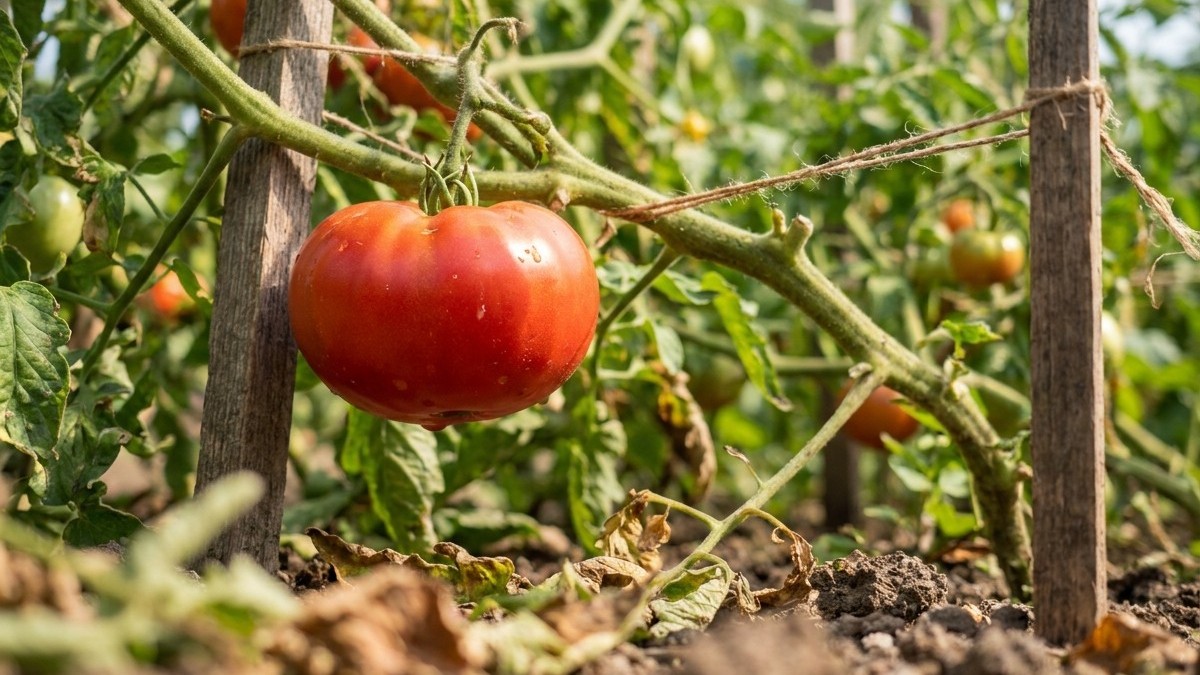

Color, not the calendar, decides when a Kansas tomato comes off the vine. Full-size fruit that has started to blush pink or red will finish ripening off the plant just fine, and pulling it early beats losing the whole crop to an overnight freeze. The harder call is what to do with everything still hard and green when that freeze is forecast, and how long those green tomatoes will actually hold once they’re inside.
When to Pick Tomatoes in Kansas
Tomatoes ripen in stages: mature green, then breaker (a faint star of color at the blossom end), then pink, light red, and finally full red. Flavor keeps developing at every stage after breaker, whether the fruit is attached to the plant or sitting on a kitchen counter. Once a tomato hits breaker stage, the plant has already done its job. Sugars and acids continue to shift inside the fruit itself, which is why waiting for dead-ripe, vine-picked tomatoes isn’t the only path to good flavor.
Through most of the growing season, that gives a gardener room to pick on their own schedule, morning or evening, whenever fruit looks close. The tighter window comes at the back end of the season, when the first fall freeze is closing in. NOAA’s 30-year climate averages put the first fall freeze at the long-term weather station used for these figures somewhere between October 23 and November 2. That’s a range, not a date, and it’s built from one airport-area station. Gardens outside town, especially in low spots or at higher elevation, commonly see that first freeze arrive one to two weeks earlier. A garden in a river-bottom hollow or a shaded north-facing yard can freeze while a spot ten miles away is still fine.
The spring side of the calendar matters less for harvest timing and more for how long the season runs in the first place. That same station data puts the last spring freeze between April 4 and April 18, and Kansas spans USDA Plant Hardiness Zone 5b through 7a, a range built entirely on average extreme winter minimum temperatures, nothing about summer heat or frost timing. Between a mid-April last freeze and a late-October first freeze, the growing window can run six months in a good year, less in a bad one, and it shifts depending on where in the state a garden sits.
The practical move is to stop treating any single date as gospel and start watching the actual forecast once nights start dropping into the 40s. When a hard freeze looks likely within a day or two, that’s the signal to strip the plants, not a specific date circled in September. Checking a local county extension office through K-State Research and Extension is the fastest way to get freeze timing tuned to an actual county rather than an airport average.
What to do with the green ones
Not every green tomato is the same tomato. Mature green fruit is full-size, has stopped growing, and often shows a slight waxy sheen and a pale, almost whitish-green color at the shoulders. That fruit will ripen off the vine. Immature green tomatoes, smaller, hard, still deep dark green all over, generally won’t ripen properly even indoors; they tend to shrivel or rot before they color up. Sorting the harvest into these two piles before a freeze saves a lot of wasted counter space later.
Small, immature green tomatoes are still worth keeping, just not for ripening. They’re the standard base for fried green tomatoes, green tomato relish, chow-chow, and green salsa. Their firmness and higher acidity actually work better in those recipes than a ripe tomato would; a ripe tomato turns to mush in a hot skillet in a way an underripe one doesn’t. Pickled green tomatoes, sliced or left whole if small, are another common use, and they’ll keep in the refrigerator for weeks once brined.
Sorting before a freeze
When a hard freeze is coming and there isn’t time to sort carefully, a reasonable shortcut is to divide the harvest by size and firmness rather than by exact color:
- Full-size fruit with any hint of pale color or blush: set aside to ripen indoors
- Full-size fruit still deep green but firm and glossy: likely mature enough to ripen, worth a try
- Small, hard, dark green fruit: better used cooked or pickled than saved for ripening
- Cracked, bruised, or insect-damaged fruit of any size: use or process right away, don’t try to store it
Frost-damaged tomatoes, ones that were actually touched by cold rather than just picked ahead of it, tend to go soft and develop a water-soaked look within a day or two. Those won’t ripen well and are best used immediately or discarded, since the cell damage from freezing changes both texture and flavor.
Ripening indoors, and how long they keep
Mature green tomatoes ripen indoors through the same ethylene-driven process that happens on the vine, just without sunlight, which isn’t actually required for ripening despite the common assumption. Warmth and airflow matter more. A single layer of tomatoes in a shallow box, spaced so they aren’t touching, set in a spot that stays around 65 to 75 degrees Fahrenheit out of direct sun, tends to color up steadily over the following one to a few weeks depending on how far along each fruit already was. Fruit that was already showing a blush moves faster than fruit that was still fully green.
The paper bag method speeds things along by trapping the ethylene gas the tomatoes themselves give off. Folding a few tomatoes into a paper bag, loosely closed, and checking every couple of days catches the ripe ones before they overripen. Adding a banana or apple to the bag adds extra ethylene and can shorten the process further, since both fruits are strong ethylene producers. The tradeoff is that a closed bag hides mold if a tomato starts to go bad, so a quick check-in is worth the small hassle.
Where not to put them
The refrigerator is the wrong place for green or half-ripe tomatoes. Temperatures below roughly 55 degrees Fahrenheit slow or stop the ripening process and can cause chilling injury, a breakdown that shows up as mealy texture and dulled flavor even after the tomato eventually turns red. Refrigeration makes sense only after a tomato is fully ripe and needs to hold a few extra days, not for tomatoes still working through the green-to-red process.
Checking the ripening box every couple of days and pulling anything that’s fully colored keeps the batch moving and stops one soft or moldy tomato from spreading trouble to its neighbors. Tomatoes that were healthy going into storage and are checked regularly can often be stretched out over several weeks this way, staggering harvest colors from a single end-of-season pull rather than losing the whole batch to one freeze.
What goes wrong here
The single biggest mistake is waiting for a specific date instead of watching the actual forecast. A gardener who circles a calendar date based on a state-wide average and ignores three straight nights in the 30s is going to lose fruit that could have been saved with a day’s notice. Freeze risk is a weather event, not a fixed appointment.
Picking too early causes its own problems. Immature green fruit, pulled before it reached full size, generally won’t ripen properly no matter how it’s stored; it just sits green, then shrivels or rots. That’s different from mature green fruit picked ahead of frost, which ripens fine. Confusing the two leads to a lot of tomatoes tossed in the trash that could have gone into a relish pot instead.
Storage temperature trips up a lot of otherwise careful gardeners. Tossing a box of green tomatoes into the refrigerator “to be safe” actually stalls ripening and can leave fruit mealy once it does color up. The opposite mistake, stacking tomatoes too deep in a warm box, traps humidity and speeds rot faster than it speeds ripening, since damaged or touching fruit spreads mold to whatever’s next to it.
Uneven watering in the final weeks before a freeze is another common issue, though it shows up as a growing-season problem rather than a harvest-timing one: fruit that cracks from a heavy rain after a dry spell is more prone to rot once picked and stored, so those cracked tomatoes are better used right away than saved for the ripening box.
Common questions
Can a green tomato ripen after a freeze has already touched it?
Once cold has actually damaged the fruit, rather than just threatened it ahead of time, the tissue tends to go soft and water-soaked within a day or two. Those tomatoes rarely ripen well and are best used right away rather than stored.
Does a tomato need sunlight to ripen indoors?
No. Ripening is driven by ethylene gas and warmth, not light. A shaded spot at room temperature works as well as a sunny windowsill, and direct sun can actually overheat and soften fruit unevenly.
Is it worth picking tomatoes before the exact freeze date?
Given that frost timing is a range built from one weather station, and that gardens outside town often freeze earlier than that range suggests, it’s safer to watch the short-term forecast in October and pick ahead of any night with a hard freeze warning rather than wait for a specific calendar date.
Why did my stored green tomatoes rot instead of ripening?
Usually one of three things: the fruit was immature rather than mature green and was never going to ripen, the tomatoes were stacked too deep and trapped moisture, or one damaged tomato in the batch spread mold to its neighbors before anyone noticed.