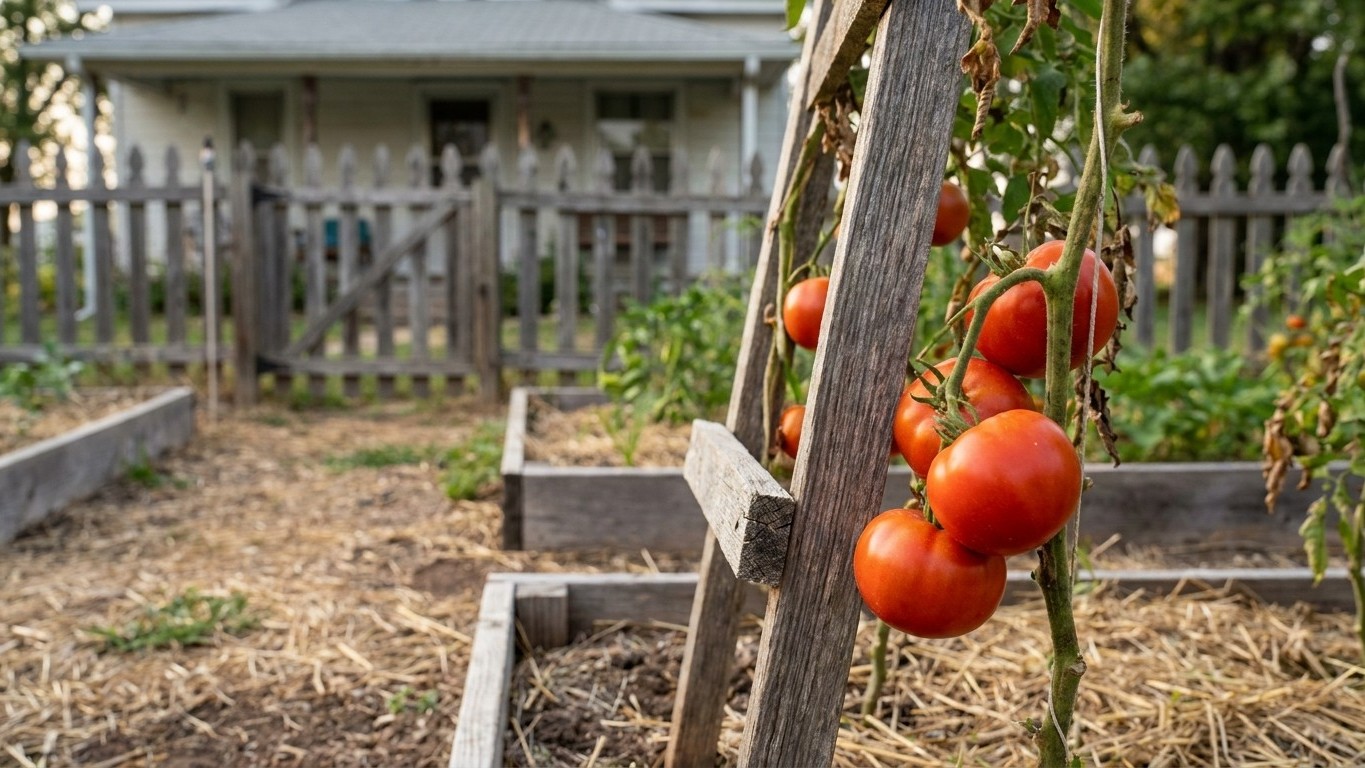

April 4 to April 18 is the window Wichita’s last spring freeze usually falls in, and that gap between the two dates is exactly the problem. Set tomatoes out too early and one of those years catches you; wait too long and you’ve given up weeks of a short growing season. Gardens north, west, or in low ground push that window later still. The dates only mean something once you count backward to seed-starting and match them against what you’re actually growing.
When to plant Tomatoes in Kansas

Wichita’s last spring freeze falls between April 4 and April 18, according to NOAA’s 1991-2020 climate normals from the National Centers for Environmental Information, based on the 30 to 70 percent probability band for a 32°F freeze at the Wichita airport station. Even at the back end of that window, there’s still meaningful frost risk more years than not. Gardens away from the airport, especially in low-lying spots or farther north and west in the state, often see their last frost run one to two weeks later than the Wichita figure. Treat the Wichita dates as a starting point, not a promise, and check your own county’s frost record with the state extension service before committing plants to the ground.
Starting seed indoors
Tomato seedlings need six to eight weeks under lights or on a bright windowsill before they’re sturdy enough to transplant. If you’re aiming to set plants out anywhere from the last week of April through the first two weeks of May, which gives the Wichita frost window some margin, count backward and you land on early to mid March as your seed-starting stretch. Gardeners farther north in the state, where frost lingers longer, should push that date back rather than starting early and holding leggy seedlings indoors past their prime. If starting seed isn’t appealing, buying transplants from a local nursery in April works just as well and still leaves enough season for every variety in this guide, including the 85-day Amish Paste.
Hardening off and transplanting
Seven to ten days before transplanting, begin hardening off seedlings: set them outside in a sheltered, shaded spot for an hour or two the first day, then add an hour daily while gradually introducing direct sun and wind. Skip this step and the shock of full sun and open air can stall a plant for two weeks even if it survives the change.
Don’t rush transplanting just because the calendar says the average frost date has passed. Soil that’s still cold sets tomato roots back for weeks even without a hard freeze touching the plant. Wait until nights are reliably mild and the soil has had a real chance to warm, and keep a sheet or row cover on hand in case a late cold snap sneaks in behind the average.
Soil and site preparation
Tomatoes need a minimum of six to eight hours of direct sun to set fruit well. Anything less and you get more vine than tomato by midsummer. Pick the sunniest, most open spot in the yard, away from the shade line of trees and fences as they leaf out through the season.
Sun, soil and drainage
Work compost into the bed several weeks before planting rather than the day of, so it has time to break down and integrate with the existing soil instead of sitting as a separate layer around the roots. Many Kansas gardens sit on heavy clay that drains slowly after a rain. If yours does, work a generous layer of compost or aged manure across the whole bed, not just the planting hole, and consider building the bed a few inches above grade so roots aren’t sitting in standing water after a downpour. Sandy soils in other parts of the state need the opposite fix: more organic matter to hold moisture and nutrients that would otherwise wash straight through. Raised beds also warm several days earlier in spring than ground-level soil, which helps if you’re trying to hit the early end of the transplant window.
Test your soil before the season starts rather than guessing at pH and fertility. The state extension service offers soil testing that tells you whether you need lime, sulfur or a specific nutrient before you spend money on a fertilizer that might not be the one your bed actually needs.
Spacing and rotation
Space plants 24 to 36 inches apart within the row and allow 3 to 4 feet between rows, more for sprawling indeterminate varieties that aren’t kept tightly staked. Crowded plants shade each other’s lower leaves, which slows drying after rain or watering and is one of the more common ways foliar disease gets a foothold in a home garden. Rotate tomatoes to a bed that hasn’t grown tomatoes, potatoes, peppers or eggplant for at least two to three years if space allows, since all four share several of the same soil-borne diseases.
Varieties that suit Kansas
Kansas summers run long and hot enough that days-to-maturity isn’t the tightest constraint here the way it is farther north. It matters most for cherry and paste types you want ripening before the worst of summer heat sets in. Two traits count for more in this climate than raw earliness: disease resistance, because warm, humid stretches favor fungal and soil-borne problems, and the ability to keep setting fruit through a hot spell, which favors earlier, smaller-fruited varieties over the largest beefsteaks.
Matching days to maturity to the season
Counting forward from a transplant date in the last week of April to the first two weeks of May, a 55-day cherry tomato like Sakura should start ripening from late June into early July, well ahead of the hottest part of summer when blossom drop becomes a problem. An 85-day paste tomato like Amish Paste, by contrast, won’t ripen until late July to mid-August from that same transplant window, which is still comfortably within a Kansas season but worth knowing if you’re timing a canning batch.
Disease resistance codes on the seed packet are worth reading closely. Fusarium wilt, verticillium wilt and root-knot nematodes are common enough in home gardens nationwide that resistant varieties earn the modest price premium over an unlisted variety with otherwise similar fruit.
Varieties by type
| Variety | Days to maturity | Type | Disease resistance | Best for |
|---|---|---|---|---|
| Sun Gold | 57 | Indeterminate | Tobacco Mosaic Virus, Fusarium race 1 | Snacking cherry, golden-orange fruit |
| Sakura | 55 | Indeterminate | Nematodes, Tomato Mosaic Virus, Fusarium races 1 & 2 | Earliest reliable cherry harvest |
| Supersweet 100 | 60 | Indeterminate | Verticillium wilt, Fusarium race 1 | Heavy cherry yields all season |
| Juliet | 60 | Indeterminate | Late & early blight | Grape tomatoes that hold up in wet years |
| Jasper | 60 | Indeterminate | Late blight, early blight | Salads, disease-pressure years |
| Amalfi | 68 | Determinate | Nematodes, late & early blight | Compact paste tomato for small beds |
| Big Beef Plus | 72 | Indeterminate | Nematodes, gray leaf spot, Tomato Mosaic Virus | Classic slicer with a strong disease package |
| Cherokee Purple | 72 | Indeterminate | None listed | Heirloom flavor, dusky pink-purple fruit |
| Granadero | 75 | Indeterminate | Nematodes, verticillium wilt, Tomato Mosaic Virus | Canning and paste, heavy yields |
| Tiren | 75 | Indeterminate | Verticillium wilt, Tomato Mosaic Virus, Fusarium race 1 | Large-fruited slicer |
| Celebrity Plus | 78 | Determinate | Nematodes, gray leaf spot, Tomato Mosaic Virus | Reliable all-purpose slicer |
| San Marzano II | 78 | Indeterminate | None listed | Traditional sauce tomato |
| Brandywine | 78 | Indeterminate | None listed | Heirloom flavor, pink beefsteak |
| Amish Paste | 85 | Indeterminate | None listed | Long-season paste for canning |
Gardeners in cooler states work with a tighter margin. Our guide to growing tomatoes in Michigan leans hard on the shortest-season cherry types just to get a harvest in before fall frost, a constraint Kansas gardeners have more room to work around. Here the harder call is usually disease resistance and heat tolerance rather than squeezing a variety into a short window.
None of these are institutional recommendations. They’re catalogue traits matched to the season length and disease pressure a Kansas garden is likely to see. Confirm current disease pressure and any local advisories with the state extension service directly.
What to plant alongside
Good neighbors
Basil is the classic tomato companion, and it earns the spot even though research on its effect on tomato pests is thin. It takes up little space, tolerates the same sun and water, and gives you a companion crop from the same bed without competing hard for nutrients. Marigolds, especially French marigold types, have real evidence behind them for suppressing root-knot nematodes in the soil, but only when grown as a dense planting around the roots, not scattered as a single plant for looks. Borage and other pollinator-draw plants nearby can help fruit set, since tomatoes are self-fertile but still benefit from the activity bees bring to a bed. Nasturtiums work as a trap crop for aphids, drawing them away from tomato foliage, though you’ll need to remove and dispose of heavily infested nasturtium plants rather than let them sit as a permanent aphid reservoir.
Keep these away
Keep tomatoes away from potatoes, peppers and eggplant in the rotation and ideally in the same season’s layout too. All four are nightshades that share early blight, late blight and several soil-borne wilts, so planting them side by side just concentrates the same pathogens in one part of the garden. It’s also worth planting corn well away from tomatoes rather than near them, since the corn earworm and the tomato fruitworm are the same insect, and a corn patch can build up a population that moves straight into tomato fruit once the corn dries down. Fennel is best kept out of the vegetable garden entirely, since it produces compounds that can slow the growth of tomatoes and several other vegetables nearby.
Skip folk pairings with no real backing, like planting carrots specifically for tomatoes. Carrots and tomatoes don’t compete much and won’t hurt each other, but there’s no evidence either improves the other’s yield or flavor, so place carrots where they fit your layout rather than by superstition.
Watering, feeding and support
Watering and mulch
Tomatoes want consistent moisture, roughly an inch or more of water a week between rain and irrigation, applied deeply and less often rather than a light sprinkle every day. Shallow, frequent watering trains roots to stay near the surface, which makes plants more vulnerable the next time a hot week arrives. Water at the base rather than overhead, ideally in the morning, so foliage dries before evening and spends less time wet, which cuts down on the fungal problems that thrive on damp leaves overnight.
Mulch heavily once the soil has warmed, with straw, shredded leaves or grass clippings a few inches deep. Mulch keeps soil moisture even between waterings, keeps soil-borne fungal spores from splashing onto lower leaves in a hard rain, and cuts down on the weeding that otherwise competes with tomato roots for water and nutrients.
Feeding and support
Feed at planting with a balanced fertilizer worked into the hole, then hold off on more nitrogen until the first fruit sets. Heavy nitrogen early produces a lush, dark green plant with plenty of leaves and few flowers, because the plant puts its energy into foliage instead of fruit. Once fruit is sizing on the lower trusses, a side-dress lower in nitrogen and higher in potassium supports fruit development without pushing more vine growth.
Support goes in at planting time, not after the plant has sprawled. Determinate varieties like Celebrity Plus and Amalfi stay compact enough for a standard cage. Indeterminate varieties, which make up most of the list above, including Cherokee Purple, Brandywine and the paste types, keep growing and setting fruit until frost and need a tall cage, a stake-and-tie system, or a trellis strong enough to hold a heavy, sprawling plant loaded with fruit by August.
Suckering, the practice of pinching out the small shoots that form where a leaf branch meets the main stem, is optional but useful on indeterminate varieties trained to a stake. Removing most suckers keeps the plant to one or two main stems, which improves airflow and makes fruit easier to find at harvest, at some cost to total yield since each removed sucker was a branch that would have carried its own flowers. Caged plants generally do fine left unsuckered.
Common problems

Blossom end rot shows up as a flat, leathery brown or black patch on the bottom of the fruit, opposite the stem. It’s caused by a local calcium shortage inside the fruit, usually triggered by uneven watering rather than an actual lack of calcium in the soil. The fix is consistent moisture and mulch, not a calcium spray, which rarely reaches the fruit in a usable form.
Cracking, either in rings around the top of the fruit or in splits radiating from the stem, comes from a fast growth spurt after a dry stretch, usually a heavy rain or deep watering after the plant has gone too long without any. Even watering through the season, especially as fruit sizes up, keeps this from happening as often.
Leaves that curl upward without discoloration are often just a heat response, not a disease. Curling paired with yellowing, mottling or a twisted, narrow new-growth pattern is more likely herbicide drift from a lawn treatment applied nearby, or a virus, and is worth investigating rather than dismissing as heat stress.
Wilts and soil-borne disease
Fusarium wilt and verticillium wilt both cause yellowing and wilting that often starts on one side of the plant or one branch at a time, eventually killing it. Both live in the soil for years and have no cure once a plant is infected. This is where resistance codes on seed packets matter most. Varieties bred with resistance to Fusarium wilt race 1, like Sun Gold, Sakura and Tiren, or to verticillium wilt, like Supersweet 100, Granadero and Tiren, hold up in soil where an unresistant variety would collapse by midsummer.
Pests to watch for
- Tomato hornworm: a large green caterpillar, several inches long, that strips whole branches of leaves overnight. Hand-pick in the evening when they’re most active.
- Aphids: small, soft-bodied insects clustered on new growth and the undersides of leaves. A strong water spray or insecticidal soap handles most infestations.
- Spider mites: nearly invisible to the eye but leave fine webbing and a stippled, dusty look on leaves, worse in hot, dry weather.
- Stink bugs: cause cloudy, pale blotches under the skin of ripening fruit where they’ve fed.
None of these pests are called out as unusually severe in Kansas specifically in the current NOAA or extension data, so treat this as the general watch list for any home tomato grower in a similar climate, and confirm what’s active locally with the state extension service if you see damage you can’t identify. Gardeners in similarly humid parts of the country, like our guide to growing tomatoes in Kentucky, deal with the same early blight and Septoria pressure that a wet Kansas summer can also bring on.
Pests that actually show up in Kansas
K-State Research and Extension’s S158 Pocket Guide to Common Pest Problems and MF3480 Insect and Mite Pests of Vegetable Gardens (Cloyd, 2020) track ten pests across the state’s vegetable gardens, but most of that list has nothing to do with tomatoes. Squash bug, squash vine borer, harlequin bug, striped cucumber beetle and spotted cucumber beetle all target squash, cucumbers and their relatives. Bagworm and pine sawyer beetle are tree pests, bagworm on junipers and arborvitae, pine sawyer on pines and other conifers. If you grow any of those alongside your tomatoes, they’re worth watching separately, but they won’t touch the tomato plants themselves.
Three from the state list do go after tomatoes directly. Colorado potato beetle shows up first as ragged, chewed-through leaf edges, often on young transplants in late spring. Look underneath the leaves for clusters of orange-yellow eggs and the humpbacked, dark-spotted red larvae doing the damage. Hand-picking adults and crushing egg clusters keeps small infestations in check, since the beetle has documented resistance to several insecticide classes in other states.
Blister beetle damage looks like sudden, severe defoliation, sometimes stripping a whole plant in a day, and the beetles feed in groups so an attack can go from a few chewed leaves to bare stems fast. Handle them with gloves, not bare hands. Their body fluid contains a compound that raises painful blisters on skin.
Grasshoppers chew ragged holes through leaves and can scar the surface of the fruit itself in bad years, and pressure builds through the season as populations grow, peaking in the heat of late summer. Floating row cover over young plants blocks them early, though it has to come off once the tomatoes start flowering and need pollinator access.
K-State’s extension splits garden pests by how they survive winter. Ones that overwinter as adults, like squash bug and striped cucumber beetle, tend to hit gardens early in spring. Ones that overwinter as eggs or pupae, including grasshoppers, build through summer instead. Bagworm eggs hatch in late April to early May, which is the narrow window when treatment on nearby junipers or arborvitae actually works.
Harvest and end of season
Pick tomatoes at the breaker stage or later, once the fruit shows its first blush of color rather than waiting for full color on the vine, especially if birds, splitting or an incoming storm are a concern. Fruit that’s reached breaker stage finishes ripening off the vine at room temperature with very little loss of flavor, since a tomato ripens from stored sugars and doesn’t need to stay attached to the plant to finish coloring up.
Never refrigerate a tomato you plan to eat fresh. Cold storage breaks down the compounds responsible for tomato flavor and turns the texture mealy, a change that doesn’t reverse once the fruit warms back up. Store ripe tomatoes on the counter out of direct sun and use them within a few days, or process extras into sauce or paste if a heavy flush comes in faster than you can eat it.
As frost approaches
NOAA’s Wichita normals cited earlier cover the spring freeze, but the same seasonal pattern runs in reverse each fall, and a first frost date exists for your specific location. Check it with NOAA or the state extension service before the season ends rather than guessing. When a hard frost is forecast, pick everything showing any color at all, plus the largest of the still-green fruit, and bring them inside. Green tomatoes at full size will often still ripen indoors over the following weeks if kept at room temperature and spaced out of contact with each other, though flavor never quite matches a vine-ripened fruit picked in season. Smaller, marble-sized green fruit rarely ripens well after a frost cuts the vine down, so plan on using those green rather than waiting on them, in a relish, a pickle, or fried.
Local help
For a planting date, soil test or disease diagnosis specific to your own county, contact the Kansas State Research and Extension service at ksre.k-state.edu, which runs local offices across the state with staff tracking conditions closer to home than a single airport weather station can. For more on adapting other crops to the state’s conditions county by county, browse our Kansas guides.
Where to Go Next
Getting tomatoes to actually produce in Kansas comes down to timing, picking the right varieties, and knowing what’s going to try to eat them. If you’re still figuring out when to put plants in the ground, counting back from your frost window walks through why April here punishes guesswork — set out too early and a late freeze blackens the plants overnight, wait too long and they’re flowering into July heat with fruit set stalling before fall.
Once your dates are sorted, the next question is what to plant. Tomato varieties that ripen in time covers the ones that finish with real room to spare even in a cool year, using Wichita’s actual last-spring and first-fall freeze windows to make the case.
And no matter when you plant or what variety you choose, something’s going to come looking for those plants. The pests that actually show up here runs through the short list of repeat offenders — cutworms and flea beetles right after transplanting, aphids and spider mites through the hot stretch, then hornworms and stink bugs once fruit starts ripening.
Common questions
Can I plant tomatoes in Kansas in March?
Not outdoors. NOAA’s 1991-2020 normals put Wichita’s last spring freeze between April 4 and April 18, and gardens away from the airport station often run later still. March is the right window for starting seed indoors, not for transplanting.
What do I do if a late frost hits after I’ve already transplanted?
Cover plants overnight with a sheet, frost cloth or overturned bucket, making sure the cover reaches the ground so it traps soil heat around the plant. Remove the cover the next morning once temperatures rise, since leaving it on in full sun can cook the plant instead.
My tomato plants are tall and leafy but not flowering. What’s wrong?
Too much nitrogen early in the season is the most common cause, pushing leaf and stem growth at the expense of flowers. Hold off on additional fertilizer until you see the first blossoms, and make sure the plant is getting at least six hours of direct sun, since shaded plants also flower poorly.
Is Kansas summer too hot for tomatoes to set fruit?
Extended heat waves can cause blossoms to drop before they set fruit, which is one reason to favor an earlier variety like Sakura or Juliet that ripens a crop before the hottest stretch of summer arrives. Fruit set usually resumes once temperatures moderate, so a plant that stalls in a heat wave often picks back up rather than being lost for the season.
Can I grow tomatoes in containers in Kansas?
Yes, and a determinate variety like Celebrity Plus or Amalfi suits a container better than a sprawling indeterminate one. Containers dry out faster than garden soil in wind and summer heat, so plan on checking soil moisture daily once temperatures climb, sometimes watering more than once a day in the hottest stretch.