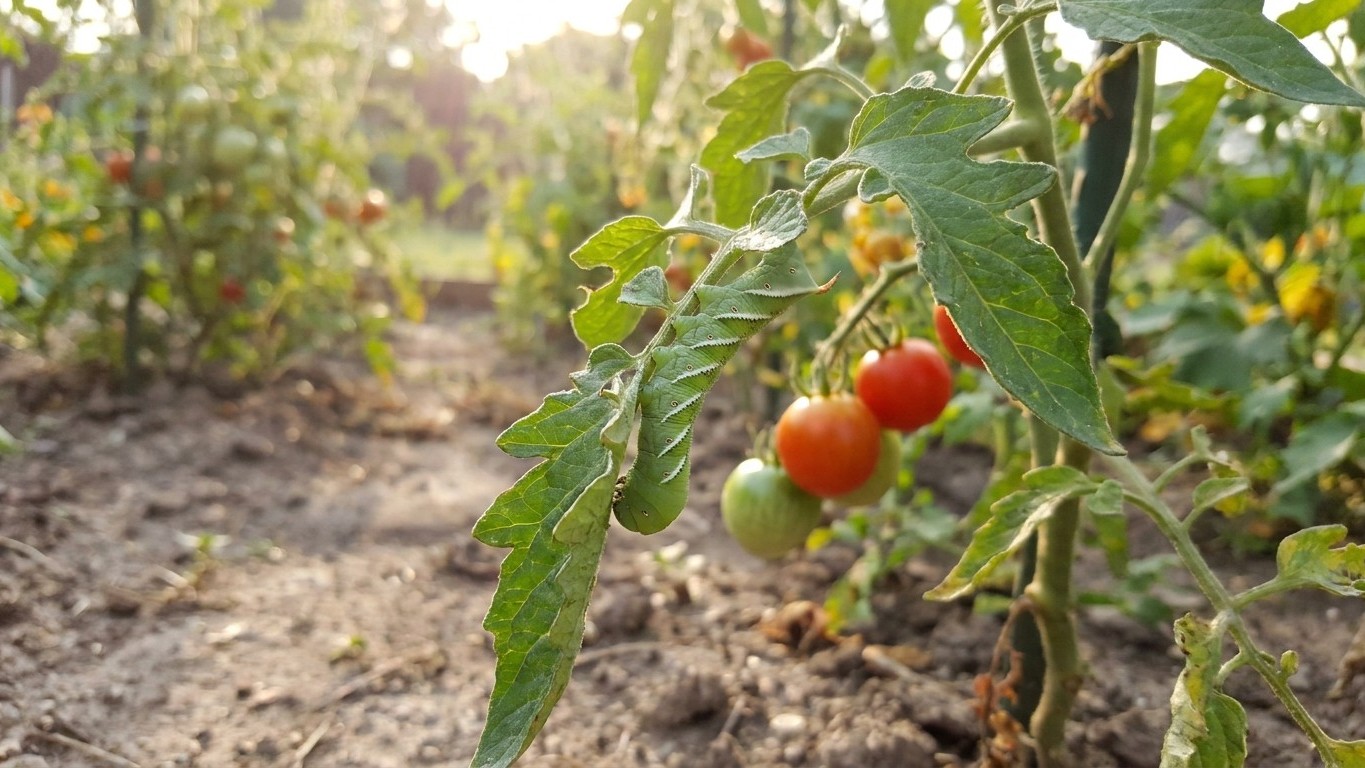

Kansas tomato growers deal with a fairly short list of repeat offenders: cutworms and flea beetles right after transplanting, aphids and spider mites through the hot months, tomato hornworms and stink bugs as fruit ripens. NOAA’s 1991-2020 climate normals put the last spring freeze at Wichita between April 4 and April 18, and pest pressure tracks that same warm-up closely. Walk your rows every few days from transplant through harvest, checking stems and leaf undersides, since catching any of these early is what actually saves the crop.
What this comes down to in Kansas

Six pests actually bother Kansas tomatoes, and which one you’re fighting right now depends on when it showed up. Fresh transplants get hit by cutworms and flea beetles, summer heat brings aphids and spider mites, and ripening fruit draws hornworms and stink bugs. Walk your rows every few days, check stems and the undersides of leaves, and match what you find there to that timeline before you decide what to do about it.
Cutworms
Cutworms are the pest most likely to kill a transplant outright before it ever gets going. They are plump, dull gray-brown to black caterpillars, an inch to two inches long, that curl into a tight C shape when you disturb the soil around them. They feed at night and sever young stems right at the soil line, so a transplant that looked fine at dusk can be lying flat by morning. A cardboard collar pushed an inch into the soil around each stem blocks them completely and costs nothing.
Flea Beetles
Flea beetles show up on seedlings within days of setting plants out, especially in a mild spring. They are tiny, shiny black beetles, some populations running more bronze, barely a sixteenth of an inch long, and they jump like fleas the moment you get close. Adults chew small round holes that leave a leaf looking like it took a shotgun blast. Established plants shrug this off, but a bed of fresh transplants can lose enough leaf area to stall. Floating row cover laid over the bed right after transplanting keeps the first generation off until the plants harden up.
Aphids
Aphids build up through late spring and into summer, faster in a stretch of mild, humid weather than in a hard dry one. They are soft, pear-shaped insects, a sixteenth to an eighth of an inch long, and color runs from green to yellow to black to pink depending on the species. Look for clusters on the undersides of leaves and on new growth tips rather than scattered single insects. Heavy infestations curl and yellow the foliage and coat it with sticky honeydew that then grows sooty mold. A strong jet of water knocks most colonies down, and insecticidal soap handles what is left without hurting the bees working the blossoms.
Spider Mites
Spider mites become a problem specifically during stretches of hot, dry weather, which Kansas summers provide reliably. They are barely visible without a hand lens, tan to reddish specks that gather on leaf undersides and spin a fine webbing you will notice before you notice the mites themselves. Damage shows as a stippled, bronzy yellowing across the leaf that gets mistaken for drought stress or early blight more often than it should. Since mites thrive on dust and dry foliage, a hard spray of water on the undersides of leaves every few days during a dry spell often keeps them from exploding into a full infestation.
Tomato Hornworms
Tomato hornworms arrive in mid to late summer and are the pest gardeners spot fastest once they see one, and the easiest to miss until then. The caterpillar is large, up to four inches long, bright green with white diagonal stripes down each side and a curved horn at the tail end, colored black or reddish. They are so well camouflaged among tomato foliage that the first sign is usually stripped stems and dark green droppings on the leaves below rather than the caterpillar itself. Hand-picking works fine at home garden scale, and Bacillus thuringiensis sprayed on foliage stops smaller larvae without harming much else in the yard.
Stink Bugs
Stink bugs move in as fruit starts to ripen, drawn to the sugars developing inside the tomatoes. Adults are shield-shaped, a half inch to three-quarters of an inch long, green or brown, and the immature nymphs are smaller, rounder, and often marked with red or black on a green body. Both stages pierce the fruit to feed, leaving hard, pale, cloudy spots under the skin that show up clearly when you slice the tomato even though the outside looks nearly normal. Keeping the area around the bed free of weeds where they overwinter, and picking adults off by hand into soapy water, keeps numbers down without spraying fruit that is close to picking.
Working it out for your own garden
Start with the damage, not the bug, since most of these pests are spotted by their marks long before anyone spots the insect itself.
- Transplants collapsed at the soil line: cutworms
- Round shotgun-pattern holes in young leaves: flea beetles
- Sticky, curling new growth: aphids
- Bronzed, stippled leaves in dry weather: spider mites
- Stripped branches and dark droppings on leaves: tomato hornworms
- Cloudy spots inside an otherwise good-looking fruit: stink bugs
Timing narrows it further. The frost window matters here because it sets when your transplants are most vulnerable to cutworms and flea beetles: NOAA’s 1991-2020 normals put Wichita’s last spring freeze between April 4 and April 18, so most Kansas gardeners are setting out transplants from around then into early May, right when both those pests are most active on tender new growth. Our Tomato Planting Dates in Kansas: Counting Back From Your Frost Window works out that transplant window in full if you have not settled on a date yet. Once plants are established and fruiting, roughly from late June onward for a fast cultivar, pest pressure shifts toward aphids, mites, hornworms and stink bugs instead.
Variety choice plays into this indirectly. It will not stop an insect from landing on the plant, but a cultivar with built-in resistance to root-knot nematodes, such as Celebrity Plus or Big Beef Plus, removes one soil-borne pest from the list before you have planted a single seed. Tomato Varieties That Ripen in Time in Kansas lists which named cultivars carry that resistance and which do not.
None of this replaces a look at the actual plant. Catching cutworm damage or the first aphid cluster within a day or two of it starting is the difference between pulling a few insects off by hand and losing a stand of transplants.
What changes across the state
The frost figures above come from the weather station at Wichita, and NOAA notes that gardens away from the airport, especially low-lying or rural spots, tend to see a later last frost in spring and an earlier first frost in fall, sometimes by a week or two. That shifts the whole pest calendar with it. A garden that gets its last frost later than Wichita’s April 4 to April 18 window is also transplanting later, which pushes the cutworm and flea beetle window back to match.
Kansas runs a real climate gradient from east to west, reflected in the state’s USDA hardiness range of zone 5b near the Nebraska line to zone 7a in the south. The western half of the state runs hotter and drier in summer, and that favors spider mites, which build up fastest in dusty, low-humidity conditions, and can worsen flea beetle pressure on young transplants since there is less rain to wash larvae off or drown them in the soil. The eastern third, with more humidity and heavier clay soils, tends to see aphid populations build faster and hold on longer into summer, since aphids do better in moderate, humid weather than in hard dry heat.
Elevation and local topography matter on a smaller scale too. A garden in a low spot that collects cold air will see frost linger longer in spring and arrive sooner in fall than one on a nearby slope, narrowing or widening the window when transplants are most exposed to cutworms. None of this changes which pests you are dealing with, since the same six show up statewide, but it changes how early in the season you need to start watching for them.
The mistakes this state punishes

The costliest mistake is transplanting into cold, wet soil right after a warm early stretch, then losing the plant to a lingering frost or watching it sit stalled while cutworms and flea beetles work it over. Kansas often throws a run of warm days in March that tempts an early planting, but NOAA’s frost normals for Wichita still put the last spring freeze as late as April 18 in some years, and a stalled, stressed transplant is exactly what these early pests prefer over a vigorous one. Wait for the window, not the forecast for next week.
Choosing a long-season cultivar without checking it against the local frost window is the second common error, and while that decision belongs more to growing tomatoes in Kansas generally than to this page, it interacts with pests directly. A plant still ripening fruit into a cool, wet September holds onto its foliage longer, giving late-season stink bugs and aphids more time on the plant. A cultivar that finishes and gets pulled by late summer sidesteps a chunk of that late pressure entirely.
The third mistake is treating every leaf problem as an insect problem. Bronzed, stippled leaves in a dry August are usually spider mites, but the same look can come from drought stress alone, and spraying a plant that just needs water does nothing but waste product and kill off the mites’ natural predators. Confirm you actually have a pest before you spray anything, by checking for the insect itself or its webbing rather than the leaf symptom alone.
The fourth is ignoring stink bugs until harvest, since their damage is invisible from the outside. Check a few ripe fruit by cutting into them partway through the season, rather than finding the cloudy spot underneath for the first time at the dinner table.
Checking this against your county
The frost window and the hardiness zone alike come from a single reference point near Wichita, and the rest of Kansas will vary from it by a meaningful margin in either direction. Before you settle on a pest schedule for your own garden, call your county extension office, part of the network run by Kansas State University’s Research and Extension service, and ask what they are seeing reported locally that season. K-State’s extension site publishes current pest alerts and identification guides that go well beyond what a single statewide page can responsibly claim. Local Master Gardener volunteers, reachable through the same county offices, often know which of these pests has been bad in your specific area for the past few seasons, which is worth more than any general figure.
Common questions
My transplant just fell over overnight, is that cutworms?
Almost certainly, if the stem is severed cleanly at or just below the soil line and the top of the plant is otherwise undamaged. Check the top inch of soil right around the base for a curled gray or black caterpillar. If the stem is chewed but not fully cut through, or the damage is higher up the plant, look at rabbits or grasshoppers instead, which cause similar-looking losses but need a different fix.
Will ladybugs actually get rid of my aphids?
They help, but a container of purchased ladybugs rarely solves an established infestation on its own, since most released ladybugs fly off within a day or two looking for a bigger food source than one tomato bed offers. Knock the colony down first with water or insecticidal soap, then let whatever ladybugs and lacewings are already living in the yard clean up what is left.
I found a hornworm covered in little white things, what do I do?
Leave it alone. Those white cases are the cocoons of a parasitic wasp that has already killed the hornworm from the inside, and the wasps that emerge will go on to attack other hornworms in the garden. Removing or killing a parasitized caterpillar throws away free pest control you already paid for with that one hornworm’s damage.
Is it too late to do anything once I find stink bug damage on ripening fruit?
For that fruit, yes. The cloudy spot under the skin is permanent, and the tomato is best used in cooking rather than eaten fresh, though it is not unsafe. For the rest of the crop, clearing weedy edges near the bed and picking off adult stink bugs by hand reduces the number of insects left to damage fruit still ripening.