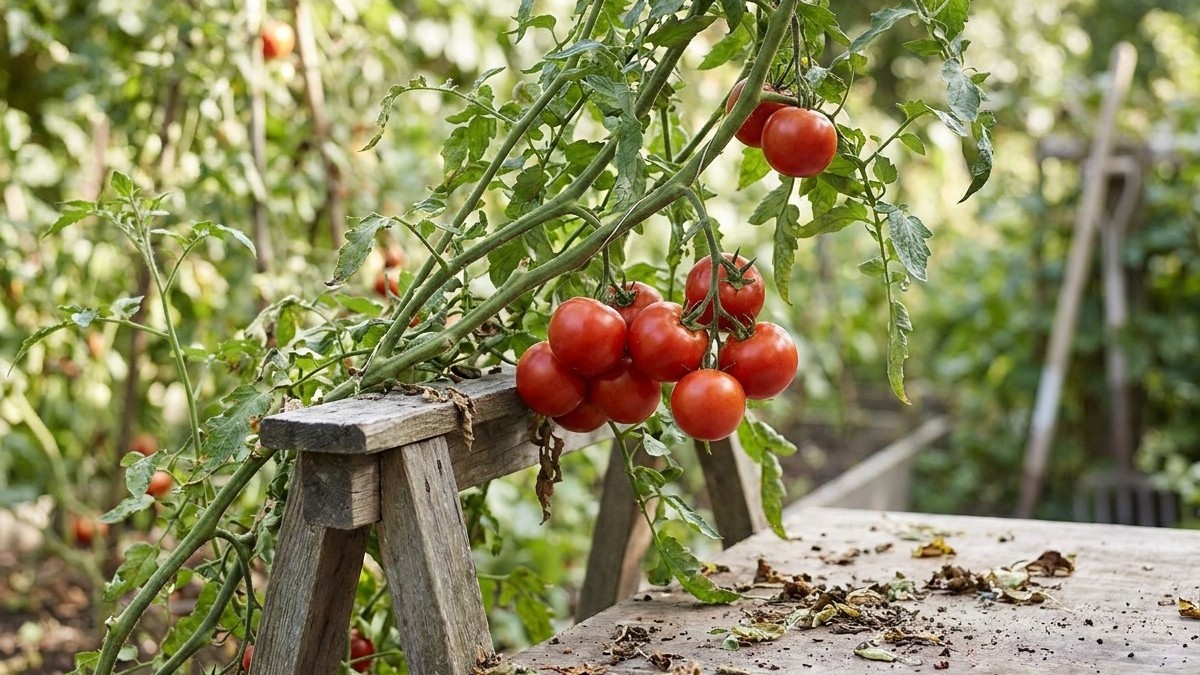

The short answer: pick tomatoes as soon as they show any blush of color, and pull everything left on the vine, green or not, the week before your area’s first fall frost. In Billings, that window runs October 1 to October 14. Waiting for full red on the vine is a luxury Montana’s short season rarely allows.
When to pick tomatoes in Montana
Most gardeners assume a tomato needs to ripen on the plant to taste right. That’s true in Georgia. It’s a gamble in Montana. The state’s growing window, bookended by a last spring frost of April 29 to May 10 and a first fall frost of October 1 to October 14 in Billings, gives plants roughly five months of frost-free growth in the mildest valleys, and considerably less in the mountains. Those dates come from NOAA’s 1991-2020 Climate Normals, and they mark the 30-70% probability band for a 32°F freeze, not a guaranteed date. Billings sits in USDA Plant Hardiness Zone 6a, but the state’s full range under that system runs from 3a to 6a. That zone number is built on one variable, the average annual extreme minimum winter temperature, so it says nothing about how long your summer growing season actually lasts. A mountain valley two hours from Billings can carry a colder zone number and a frost risk in almost any month of the year.
That gap between “zone number” and “actual frost date” is why timing the harvest matters more here than in milder states. The smart approach is to watch the calendar, not the calendar alone.
The color-break rule
A tomato that has started to change color, from solid green to a paler, slightly yellow-green with any hint of pink or red, has already triggered its own ripening chemistry. At that point, it will continue softening and coloring whether it’s attached to the plant or sitting on a kitchen counter. Picking at color break rather than waiting for full red on the vine does two things: it protects the fruit from an early frost that can hit before the calendar date, and it stops cracking, splitting, and rot that come from fruit sitting too long in cool, damp fall weather.
As the first fall frost approaches in your area, plan a full sweep of the plant. Every fruit larger than a golf ball, regardless of color, comes off. Fruit smaller than that rarely finishes ripening well indoors and is better used green (more on that below). This is not the moment to leave a few “for later.” Montana’s fall frost windows are ranges, not fixed dates, and a cold night can arrive on the early edge of that window without warning.
What to do with the green ones
A fully green tomato with no color break at all is a different situation than one that’s just starting to turn. The mature green fruit, meaning it has reached full size and the surface has that slightly waxy, dull sheen instead of a shiny, hard green, will still ripen off the vine. An immature green tomato, small, hard, and glossy, generally won’t ripen well no matter what you do with it.
Sorting the harvest into these two groups before deciding what to do with each one saves a lot of wasted counter space and disappointment. For the mature green fruit, ripening indoors is the standard path, covered in the next section. For the truly immature ones, cooking is the better use of your time.
Cooking uses for immature green tomatoes
- Fried green tomatoes, sliced and breaded, using the firmness of unripe fruit as an advantage rather than a flaw
- Green tomato salsa or chutney, where the tartness replaces some of the vinegar or lime a recipe would otherwise call for
- Pickled green tomatoes, packed whole or in wedges, using the same brine ratios as cucumber pickles
- Green tomato relish, cooked down with onion and spices for a condiment that keeps for months
These uses matter because a hard frost in Montana can arrive with almost no warning once the first fall frost window opens, and a plant can carry a surprising number of small, immature fruit that were never going to size up before that happens. Rather than composting a bucket of hard green tomatoes, cooking them into something shelf-stable turns a rushed, frost-driven harvest into actual food instead of a loss.
One distinction worth keeping straight: fried green tomatoes are traditionally made from firm, underripe fruit specifically because they hold their shape under heat. A tomato that’s already turning color will go soft and mushy in the pan. So the “use it green” and “ripen it indoors” piles genuinely need to stay separate from the start.
Ripening indoors, and how long they keep
Mature green tomatoes ripen indoors through the same ethylene-driven process that happens on the vine, just slower and without direct sun. Sunlight isn’t actually required, and in fact a sunny windowsill can cause uneven ripening and softening on the side facing the glass before the rest of the fruit catches up.
| Method | How it works | Approximate result |
|---|---|---|
| Single layer, stem side down, room temperature | Fruit ripens gradually as it ages, no added ethylene | Slower, more even color and texture |
| Paper bag with a ripe apple or banana | Ethylene released by the ripe fruit speeds up the process | Faster ripening, check every couple of days |
| Wrapped individually in newspaper, boxed | Traps each fruit’s own ethylene while limiting mold spread between them | Good for storing larger batches |
Whichever method you choose, check the fruit every couple of days and pull out anything showing soft spots or mold before it spreads to its neighbors. A single rotting tomato in a closed box can take down several others around it within a few days, which is the single biggest reason indoor ripening batches fail.
How long green tomatoes actually keep
Mature green tomatoes stored at cool room temperature, ideally somewhere in the mid-50s to low-60s Fahrenheit if you have a basement, mudroom, or unheated porch that stays above freezing, will ripen gradually over several weeks rather than all at once. Storing them cooler than that slows ripening further but risks chilling injury, which shows up as pitting and poor flavor once the fruit does turn. Storing them at typical kitchen counter warmth (around 70°F) speeds ripening but shortens how long the batch lasts before spoilage catches up with the slower fruit in the pile.
Staggering your check-ins, rather than dumping the whole harvest in one bin and forgetting it, is what actually stretches a big green-tomato harvest into weeks of usable, ripening fruit instead of a single race against mold.
What goes wrong here
The most common mistake isn’t picking too early. It’s picking too late because the calendar frost date felt like a hard deadline rather than a probability range. NOAA’s frost windows are built on decades of data showing when a 32°F freeze has a 30 to 70 percent chance of occurring, which means frost can legitimately show up on the early side of that window in some years. Treating October 14 as a safe cutoff in Billings, when the range actually starts October 1, has cost more than one Montana garden its entire late harvest overnight.
A second recurring problem is mixing immature and mature green tomatoes in the same ripening bin. The immature ones simply sit there, never coloring, slowly softening from decay rather than ripening, and eventually rot in place, and often take a few of their more promising neighbors down with them.
Mountain valleys create a third, quieter failure. Because the state’s hardiness zones span 3a to 6a, and because that USDA system measures only winter extreme minimums rather than growing-season length, a gardener working from a Billings-based frost calendar can be caught off guard by a valley two or three zones colder, where frost has been known to arrive well outside what a milder reference city would suggest.
- Waiting for full vine-ripening instead of picking at color break
- Treating a frost date range as a single guaranteed day
- Storing immature and mature green fruit together
- Assuming a mild valley’s frost pattern applies statewide
Local Montana State University Extension offices track county-level frost patterns that go beyond any single reference city, and they’re worth a call if your garden sits in a valley that consistently runs colder or warmer than the regional norm.
Common questions
Can a tomato ripen after a light frost has already touched it?
Fruit that’s only been lightly frosted, with no visible water-soaked or mushy patches, can sometimes still be brought inside and ripened, but check each one carefully first. Any fruit with soft, translucent, or darkened patches from frost damage should be used immediately or discarded rather than added to a ripening bin, since that damaged tissue breaks down fast and can spread mold to fruit around it.
Does putting a green tomato in the sun speed up ripening?
No, and it can actually cause uneven results. Ripening is driven by ethylene and age, not light. Direct sun on a windowsill tends to warm and soften one side of the fruit faster than the rest, leading to patchy color and texture rather than a faster, even ripen.
How do I know the difference between a mature and immature green tomato?
Mature green fruit has reached full size for its type and has a slightly duller, waxier surface than immature fruit, which is smaller, harder, and glossier. Cutting one open is the surest test: mature green tomatoes show developed seeds and gel-filled cavities, while immature ones have small, pale, underdeveloped seeds.
Is the Billings frost date the right one to use for the whole state?
No. Billings is one of Montana’s milder valleys, and its October 1 to October 14 first-frost window shouldn’t be applied to mountain valleys elsewhere in the state, which can see frost in almost any month. Check with your county’s Montana State University Extension office for a frost pattern closer to your specific location.