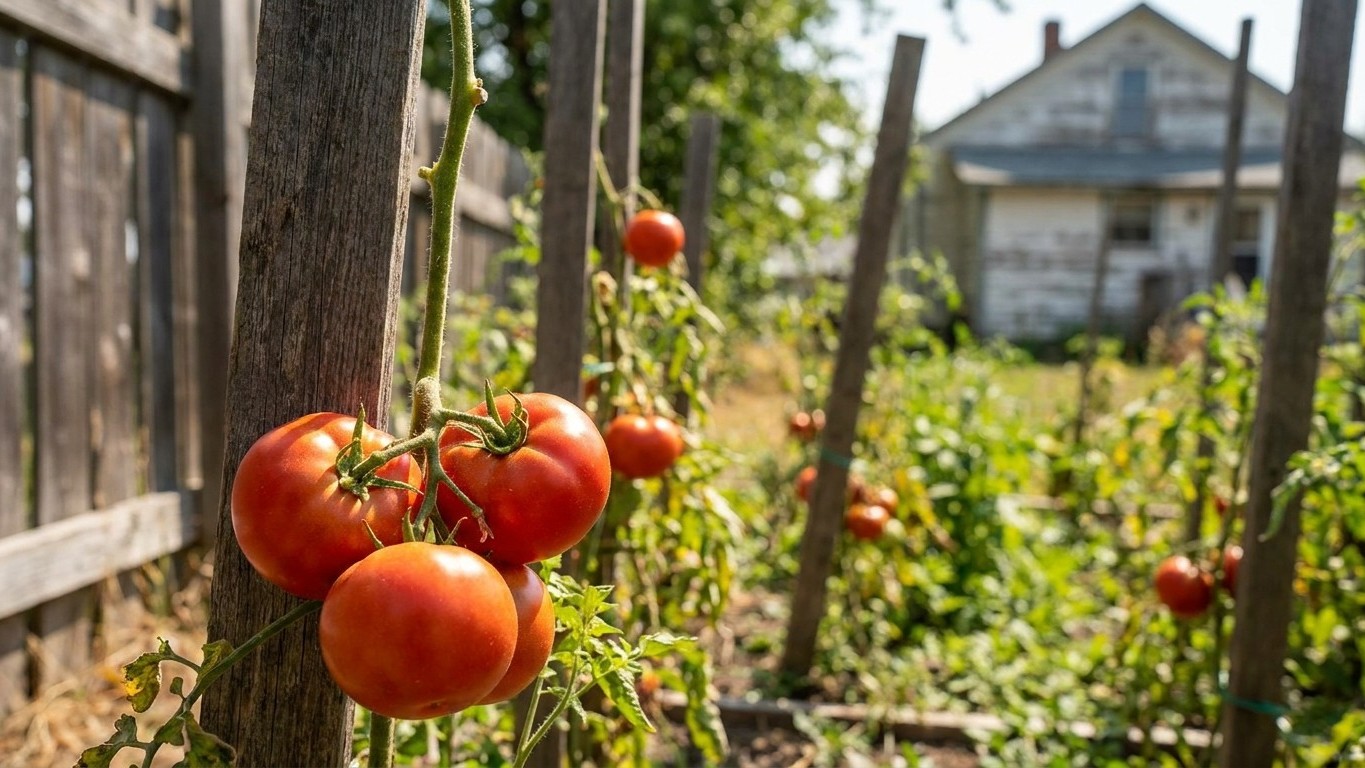

NOAA’s 1991-2020 climate normals put the last spring freeze at Billings in a band running April 29 to May 10, and that window is the anchor for every date in this article. Gardeners in the Billings area should hold off on setting tomatoes outside until after that band closes, and northern counties and mountain valleys need to add more cushion on top of it. Start seeds indoors now if you haven’t, and check a soil thermometer before you transplant rather than trusting the calendar alone.
When to plant Tomatoes in Montana

Billings’ last frost lands somewhere between April 29 and May 10 — a full window, not the single “Mother’s Day” date gardeners elsewhere plant by. That gap matters, because it’s built on a milder valley than most of the state. Push north to Great Falls or up into Bozoman’s higher elevation and that date slides later, sometimes by weeks, while mountain valleys can still freeze in June. Your county’s number, not Billings’, is the one to build a seed-starting schedule around.
Billings sits in one of Montana’s milder valleys. Gardeners in Bozeman, Missoula, Great Falls, or any higher-elevation or northern county should expect their own frost window to run later, sometimes considerably later, and should check county-level data through their local extension office rather than assume Billings’ dates apply to their yard. Mountain valleys across the state can see a freeze in almost any month, so a single warm week in May is not proof the danger has passed.
Counting back from transplant day
Most tomato varieties need six to eight weeks of indoor growth before they’re ready to go in the ground. Counting six to eight weeks back from the April 29 to May 10 Billings frost window lands seed-starting somewhere in early to late March, earlier in the range if you’re aiming for a head start and later if your setup runs cooler or your light is weaker. Sow into cell trays or small pots under a grow light kept close to the seedlings, since Montana’s early spring daylight isn’t strong enough on its own to keep tomato starts from getting leggy.
Roughly a week before you plan to transplant, start hardening off the seedlings: move them outside for a few hours a day in a sheltered, shaded spot, gradually increasing sun exposure and time outdoors over the following week. Skipping this step is the single most common reason home-started tomato transplants stall or scorch in their first days outside.
Once the frost window has passed, don’t rush the top edge of that range. In Billings, that means treating May 10 as the earliest reasonable transplant date rather than the average one, and many local gardeners wait another week or two beyond it for insurance, since the NOAA band only describes probability, not a hard cutoff. If a cold snap is forecast after you’ve already planted, keep row cover or old sheets on hand to throw over the bed for a night.
Soil and site preparation
Tomatoes want the sunniest spot in the yard. Six to eight hours of direct sun a day is the minimum for decent fruit set and ripening in a short growing season, and more is better. A south-facing bed against a wall or fence also picks up reflected heat, which helps in a state where cool nights can slow ripening even in mid-summer.
Work in a couple inches of finished compost across the bed a few weeks before planting, not on transplant day, so it has time to start integrating into the soil rather than sitting as a raw layer around the roots. Tomatoes tolerate a range of soil textures but good drainage is non-negotiable: standing water around the roots for more than a few hours invites root rot and encourages the soil-borne fungi behind wilt diseases. If your soil is heavy clay, raised beds or mounded rows solve most of the drainage problem without needing to rebuild the whole yard.
Spacing and bed layout
Space indeterminate varieties, the ones that keep growing and producing all season, about two to three feet apart in the row, with three to four feet between rows to leave room for staking and airflow. Determinate, bushier types can go slightly closer since they stop growing once they set their main flush of fruit. Crowded plants dry slower after rain or watering, and damp foliage sitting in still air is exactly what early blight and other leaf fungi need to take hold.
A soil test through your local extension office, done the fall or early spring before planting, tells you whether you actually need to adjust pH or add phosphorus and potassium, rather than guessing with a bag of all-purpose fertilizer. It’s a cheap step that saves money on amendments you may not need.
Varieties that suit Montana
In a state where the frost-free season is limited by a late spring frost window like Billings’ April 29 to May 10, the number that matters most on a seed packet is days to maturity, counted from transplant, not from seed. Catalogue figures are measured under controlled trial conditions and typically run a week or two off in either direction depending on the season’s actual heat, so treat them as a planning range rather than a promise.
Short and mid-season varieties give the most reliable results across most of Montana. Sun Gold (57 days from transplant) and Sakura (55 days from transplant) are both fast, indeterminate cherry types: Sun Gold carries high resistance to Tobacco Mosaic Virus and Fusarium wilt race 1, while Sakura adds intermediate nematode resistance and high resistance to Tomato Mosaic Virus and Fusarium wilt races 1 and 2. Juliet (60 days) and Jasper (60 days) are similarly quick, with Jasper carrying high resistance to late blight, useful in a wet year. Supersweet 100 (60 days) rounds out the cherry group with high resistance to verticillium wilt and fusarium race 1.
For slicers and paste tomatoes, the math gets tighter. Celebrity Plus (78 days, determinate) and Big Beef Plus (72 days, indeterminate) both carry high resistance to Tomato Mosaic Virus and Gray Leaf Spot plus intermediate nematode resistance, which makes them a safer bet than an unprotected variety of similar length. Amalfi (68 days, determinate) is a paste tomato with intermediate resistance to both early and late blight. Longer, 78-to-85-day varieties like San Marzano II, Brandywine, and Amish Paste are a real gamble against a Montana frost window unless you’re gaining extra weeks with wall-of-water cloches, black plastic mulch, or a high tunnel, so treat them as a project for an experienced grower rather than a first choice.
| Variety | Days to maturity | Type | Notable resistance | Best for |
|---|---|---|---|---|
| Sakura | 55 | Indeterminate | Nematodes (Int.), ToMV, Fusarium 1,2 (High) | Earliest reliable cherry crop |
| Sun Gold | 57 | Indeterminate | TMV, Fusarium 1 (High) | Sweet cherry tomatoes, containers |
| Jasper | 60 | Indeterminate | Late blight (High), Early blight (Int.) | Wet-season cherry crop |
| Amalfi | 68 | Determinate | Nematodes, Late blight, Early blight (Int.) | Compact paste tomato |
| Big Beef Plus | 72 | Indeterminate | Nematodes (Int.), Gray Leaf Spot, ToMV (High) | All-purpose slicer |
| Celebrity Plus | 78 | Determinate | Nematodes (Int.), Gray Leaf Spot, ToMV (High) | Compact plant, cage-friendly |
| San Marzano II | 78 | Indeterminate | None listed | Sauce and canning, warm sites only |
What to plant alongside
Basil and tomatoes are a reasonable pairing: basil doesn’t compete much for root space, tolerates the same watering rhythm, and some gardeners report fewer aphids nearby, though that pest-repellent effect is mostly anecdotal rather than tested. Onions and garlic planted at the bed edges take up little room and don’t share tomato diseases. Carrots, planted early and harvested before the tomato canopy closes in, use a different root depth and don’t compete heavily for the same nutrients.
Marigolds are commonly sold as a tomato companion for nematode suppression. The evidence for that is intermediate at best, tied mostly to French marigold roots releasing compounds that reduce certain nematode populations over a full season of interplanting, not a one-summer fix. Treat marigolds as a nice pollinator draw and a pretty border rather than a guaranteed pest solution.
What to keep away
Never plant tomatoes near potatoes. Both are nightshades, both host the same late blight and early blight fungi, and both are magnets for the Colorado potato beetle, so planting them side by side just gives shared diseases and pests a shorter distance to travel. Corn is a weaker but real risk too, since the corn earworm and the tomato fruitworm are the same insect, and a corn patch can build up a population that then moves into your tomatoes. Fennel is worth keeping well clear of any vegetable bed: it releases compounds that can slow the growth of many neighboring plants, tomatoes included. Cabbage-family crops aren’t diseased by tomatoes, but they’re heavy nutrient feeders on a similar timeline, so packing them into the same small bed just means both crops come up short.
Watering, feeding and support
Tomatoes want deep, infrequent watering rather than a quick daily sprinkle. Soaking the root zone thoroughly and then letting the top couple inches of soil dry out between waterings pushes roots deeper, which makes the plant more resilient during a hot dry stretch. Water at the soil line, not overhead, since wet foliage sitting overnight is what lets early blight and other fungal spores get a foothold. A soaker hose or drip line under a layer of mulch handles both jobs at once: it keeps water off the leaves and keeps soil moisture more even, which matters because uneven watering is the direct cause of both blossom end rot and fruit cracking.
Feeding through the season
A balanced fertilizer worked in at planting gets young plants established. Once the first flower clusters open, switch to something lower in nitrogen and higher in phosphorus and potassium: too much nitrogen at that stage produces a lush, leafy plant that’s slow to set fruit, which is a real risk in a season already short on ripening days. A side dressing every three to four weeks through midsummer keeps plants fed without overdoing the nitrogen.
Staking, caging and pruning
Determinate varieties like Celebrity Plus and Amalfi stay compact and do fine in a standard tomato cage. Indeterminate types, which is most of the list here, including Cherokee Purple, Brandywine, Big Beef Plus, San Marzano II, and the cherry varieties, keep growing and setting fruit until frost and need a sturdy stake or a tall, well-anchored cage to keep the vines off the ground. Pruning suckers on indeterminate plants down to one or two main stems redirects the plant’s energy into ripening the fruit already set rather than growing more foliage, which is worth the extra ten minutes a week in a state where the season doesn’t leave much slack for a plant that’s still putting out new growth in September.
Common problems

Most tomato trouble in a home garden traces back to watering or a soil-borne fungus rather than an exotic disease, so start with the boring answers before assuming the worst.
Blossom end rot
A flat, sunken, leathery patch on the bottom of the fruit, usually while the rest of the tomato still looks normal. It’s almost always a watering problem, not a calcium deficiency in the soil: calcium moves through the plant with water, and a plant that dries out and gets soaked on an irregular schedule can’t move enough calcium to the fruit even if the soil has plenty. Even, consistent watering and a good mulch layer fix most cases without adding any calcium product at all.
Fruit cracking
Concentric or radial splits in the skin, usually after a heavy rain or a big watering following a dry spell. The fruit swells faster than the skin can stretch. Consistent watering prevents most of it, and picking fruit as soon as it’s ripe rather than leaving it on the vine reduces the window for a crack to form.
Fusarium and verticillium wilt
Lower leaves yellow and wilt first, often on just one side of the plant, while the stem itself stays green rather than rotting. Both are soil-borne fungi that build up over years in the same bed and have no in-season cure. This is exactly where a resistant variety earns its keep: Sun Gold, Supersweet 100, Sakura, and Tiren all carry named resistance to Fusarium wilt race 1, and Sakura, Tiren, and Granadero add resistance to Verticillium wilt as well, which is worth checking against the disease history of your own bed before you choose what to plant next.
Leaf curl and poor fruit set
Leaflets rolling upward and inward while staying green and firm is usually a physiological response to heat, drought stress, or heavy pruning, not a virus, and it typically resolves once watering evens out. Poor fruit set, meaning flowers dropping without forming fruit, is common when night temperatures swing too cool for pollen to set properly, which is a more frequent problem in Montana’s cooler valleys than the heat-driven blossom drop growers deal with in hotter states like Nevada.
Common pests
- Aphids: tiny green or black insects clustered under young leaves, leave sticky honeydew behind that can grow sooty mold. A strong water spray or insecticidal soap knocks them back.
- Tomato hornworm: a thick green caterpillar with white stripes that can strip a plant of leaves in a couple of days. Hand-picking works fine since they’re large and easy to spot once you know to check the undersides of stems.
- Flea beetles: pinhead-sized black beetles that leave small round shot holes in leaves, worst on young transplants. Row cover over freshly set plants keeps them off until the plants toughen up.
- Cutworms: gray-brown larvae that sever seedlings right at the soil line overnight. A cardboard or foil collar pushed into the soil around each transplant’s stem stops them cold.
Wetter, milder climates like parts of Oregon deal with late blight pressure most of a season, which is why varieties like Jasper and Amalfi carrying blight resistance matter more there. Montana’s drier air keeps blight pressure lower most years, though a wet, cool stretch can still bring it on.
Pests that actually show up in Montana
Montana State University Extension’s Urban IPM Garden Pests fact sheet index lists five insects for home gardens, but only three of them actually go after tomatoes. Grasshoppers, brown marmorated stink bugs and thrips do real damage to this crop. Miller moths and social wasps are on the same list for other reasons: miller moths are a springtime nuisance around porch lights and windows rather than a plant feeder, and wasps show up late in the season as scavengers on already-split or overripe fruit more than as the cause of the damage itself.
Grasshoppers are the one to plan around, because they build all season before you see the worst of it. They overwinter as eggs in the soil, hatch mid-to-late spring, and the adults keep feeding into late summer and early fall, which means a small hopper problem in June can turn into ragged, chewed-through leaves and stripped stems by August. Once a garden is surrounded by dry grass or an empty lot, spraying rarely keeps up with a hopper population moving through in waves. A floating row cover or fine netting over young tomato plants during the spring hatch is the control that actually holds up, kept on until the plants are large enough to shrug off some leaf loss.
Brown marmorated stink bugs show up later, once fruit starts to ripen. The first sign is usually on the tomato itself: cloudy, slightly sunken blotches or hard pale patches under the skin where the insect fed, sometimes with a faint pinprick visible at the center. Handpicking adults into a jar of soapy water in the cool of the morning, when they move slowly, does more good than any spray timed after the damage is already showing.
Thrips work at the other end of the plant. Look for narrow silvery or bronze streaks on the upper leaf surface and faint scarring on young fruit, usually starting in early summer. They’re tiny enough that the damage is often the first clue you have them at all. Blue or yellow sticky traps hung near the plants catch enough adults to knock a population back, and an insecticidal soap applied to the undersides of leaves handles the rest without touching the fruit.
Harvest and end of season
Pick tomatoes once they’ve reached full color for the variety, whether that’s the deep red of Big Beef Plus, the near-black-purple of Cherokee Purple, or the gold of Sun Gold. Fruit that’s begun to color but isn’t fully ripe, sometimes called the breaker stage, will finish ripening off the vine at room temperature out of direct sun, which is a useful trick if a fruit gets knocked loose or the season is running out.
When the first frost is coming
For the first fall freeze, check current-season forecasts through NOAA or your county extension office rather than relying on an average date, since a single early cold snap can arrive well ahead of the typical range in any given year. Once a hard freeze is forecast, pick everything on the vine showing any color, including fruit that’s still green if it has started to lighten or blush, since a freeze ends ripening on the plant for good.
Green tomatoes picked before frost will still ripen indoors over several weeks if kept at room temperature, ideally wrapped individually in newspaper and checked every few days for any starting to rot. Fully ripe tomatoes keep best at room temperature for a few days, not in the refrigerator, since cold storage dulls both texture and flavor.
Local help
County-level frost dates, soil testing, and current disease and pest alerts are all things Montana State University Extension tracks more precisely than any statewide figure can, since Billings’ numbers don’t hold for Bozeman, Kalispell, or a mountain valley an hour away. Reach your local office through Montana State University Extension before locking in a planting date. For other crops in the same yard, our Montana guides cover planting windows across the state’s other vegetables too.
Where to Go From Here
Everything above is context; the details you actually need to act on live on three other pages. If you’re trying to pin down when to put transplants in the ground, start with the tomato planting dates guide, which works backward from Billings’ last spring freeze window of April 29 to May 10 to explain why Montana can’t be given one single planting date. Once timing is settled, the question becomes which plants can actually finish before the cold returns — that’s covered in the rundown of varieties that ripen in time, built around Billings’ first fall freeze landing between October 1 and October 14 and how to count backward from that using days-to-maturity numbers. And for the problems that show up once the plants are in the ground, the guide to Montana’s actual tomato pests narrows the list to what really matters here: cutworms and flea beetles right after transplant, aphids and Colorado potato beetle through early summer, then hornworm and spider mite as the season heats up.
Common questions
Can I just use the average last frost date instead of the range?
Not really. NOAA’s 1991-2020 normals give Billings a band from April 29 to May 10 because that’s the actual spread of when a 32°F freeze has a meaningful chance of happening, not a single predictable day. Treat the whole range as risk, with the later end safer, rather than picking one date out of it.
Do I need to buy disease-resistant varieties if my soil has never had tomato problems before?
Not necessarily, but it’s cheap insurance. Fusarium and verticillium wilt build up in soil over years of growing tomatoes or related crops in the same spot, so a garden with no history is lower risk, though resistant varieties like Sakura or Tiren cost nothing extra to grow and protect you if the fungus is already present without symptoms yet showing.
My seedlings are leggy and pale before I’ve even hardened them off. What went wrong?
Almost always insufficient light. A sunny windowsill in early spring in Montana isn’t strong or long enough on its own, and seedlings will stretch toward the weak light source and grow thin, pale stems. A grow light kept just a couple inches above the seedlings, run for most of the day, fixes it for the next batch.
Is it worth starting tomatoes from seed instead of buying transplants at the garden center?
It depends on what you want to grow. Garden centers rarely stock more than a handful of varieties, so starting from seed is the only way to grow specific cultivars like Sakura, Granadero, or Amish Paste that carry the disease resistance or days-to-maturity profile you’re after. If you just want a couple of reliable slicers, a nursery transplant saves the six to eight weeks of indoor care.
Can I grow tomatoes in containers if my soil is bad or my yard has no good sun?
Yes, and it solves the sun problem better than the soil one, since containers can be moved to chase the sunniest spot on a patio or deck. Choose a container of at least five gallons for a determinate variety like Celebrity Plus or Amalfi, use a quality potting mix rather than garden soil, and expect to water more often since containers dry out faster than an in-ground bed.