
In Nevada, apple harvest timing follows the fruit’s own signals, not a date on the calendar: firm flesh, seeds gone brown, and easy separation from the spur when you twist and lift. In the warm valleys around Las Vegas, that stage often arrives earlier than in Reno or Carson City, where cooler summers and elevation push ripening later. How long the fruit then keeps depends almost entirely on which variety you picked and how you store it afterward.
When apples are ready to pick in Nevada
Forget the month printed on a seed catalog. An apple tells you it’s ready through its own body: the background skin color shifts from green toward yellow or cream even on red varieties, the flesh gives slightly but doesn’t feel mushy, and the fruit releases from the branch with a gentle upward twist instead of a tug. Cut one open. If the seeds are still pale or white, wait. Brown, firm seeds mean the sugars have finished converting and the fruit is at or near peak.
Nevada is not one growing region, and treating it as one is where most timing mistakes start. Las Vegas sits in a low desert valley where nights stay mild well into the cold season. The reference data for that valley shows a mean daily minimum of 39.6°F during the coldest month, according to NOAA NCEI Climate Normals covering 1991 to 2020. That figure matters for two reasons: it tells you whether a tree survives the winter there at all (yes, easily, for nearly every apple variety), and it hints at how little sustained cold the valley delivers for chill accumulation, the separate mechanism that tells a tree when to break dormancy and flower on schedule.
Reno and Carson City, sitting at higher elevation with a harsher winter and a shorter frost-free season, run on an entirely different clock. Bloom lags behind Las Vegas by weeks, and so does harvest. There’s no single published date that covers both places, and no state-level number should be treated as if it did.
Reading the frost dates correctly
For the Las Vegas reference station, NOAA NCEI’s 1991-2020 freeze probability data puts the last spring frost between January 7 and February 1, and the first fall frost between December 8 and December 23. Those numbers describe an urban desert extreme, not the state. Reno, Carson City, and anywhere with meaningful elevation freeze months earlier in fall and thaw out months later in spring. If you’re picking apples anywhere outside the Las Vegas valley floor, don’t borrow these dates. Your county office of the University of Nevada Reno Extension tracks local frost timing and can tell you what actually applies where you’re standing.
Which ones keep, and which must be eaten
Storage life is a trait of the variety, and no amount of good technique changes that ceiling. Some apples were bred or selected over generations to hold their texture and flavor in a cold, humid space for months. Others start softening and losing crunch within a couple of weeks no matter what you do, and they’re better suited to fresh eating, sauce, or the dehydrator than to a shelf in the garage.
The Nevada complication: low chill means early flowering
Here’s where the mild-winter trade-off has to be named plainly instead of hedged. A low-chill apple variety needs relatively little accumulated winter cold to satisfy its dormancy requirement, which is exactly what makes it a workable choice in a valley like Las Vegas where the coldest month barely dips below 40°F on average. But satisfying that requirement early means the tree also breaks dormancy and flowers early. Early flowers sitting on a tree in January are exposed to whatever cold still shows up before the season’s last frost clears.
In the Las Vegas valley, that risk is at least partly offset by the same mild winter that demands low-chill varieties in the first place: the last spring frost there clears unusually early, so an early-flowering tree and an early-clearing frost window can land close together. That’s not a guarantee against a late cold snap, but it’s the trade to accept if you’re growing apples in that valley. Standard-chill varieties simply won’t flower reliably there. Outside the valley, where winters run colder and frost lingers longer into spring, standard-chill varieties avoid this problem entirely because they flower on the normal calendar those regions expect.
Sorting keepers from eat-now fruit
As a rough guide, dense, tart, thick-skinned apples tend to hold longest in cold storage, while soft-fleshed, early-season varieties are best used quickly:
- Long keepers: firm, tart types that were bred for cellar storage and hold texture for months in cold, humid conditions.
- Mid-range keepers: varieties that hold a few weeks to a couple of months under good cold storage before quality drops.
- Eat-soon varieties: many low-chill and early-season types, which soften quickly and are best eaten, cooked, or preserved within a short window of picking.
Match your storage ambitions to the variety before you plant, not after the fruit is already softening on a shelf.
Storing them through a Nevada winter
Cold storage for apples works on two dials: temperature and humidity. Apples last longest close to freezing, in a space that stays humid enough to keep the skin from shriveling, which is why a root cellar or an insulated unheated space historically did the job before mechanical refrigeration existed. The apples themselves also release ethylene gas as they age, which speeds up ripening in whatever else is stored nearby, so keeping them away from potatoes and other produce that’s sensitive to it helps everyone last longer.
Why the Las Vegas valley needs a workaround
An unheated garage or shed only works as apple storage if it actually gets cold enough, consistently, through the season. In the Las Vegas valley, where the coldest month’s mean daily minimum sits at 39.6°F, an unheated space simply doesn’t drop into the near-freezing range that long-term apple storage wants. That’s warmer than ideal, and it means fruit stored there will soften and lose crispness faster than the same variety would in a genuinely cold cellar. A refrigerator, a wine fridge, or a dedicated cold storage unit does the job that the local climate won’t do on its own.
Higher, colder ground works differently
In Reno, Carson City, and other higher-elevation parts of the state, winters run colder and an unheated garage, shed, or basement is far more likely to sit naturally in a workable storage range for stretches of the season. Exact figures for those locations aren’t published in the data available here, so the safest approach is to track your own space with a simple thermometer through a full winter before trusting it with a harvest you’re counting on. Your county extension office can also help interpret what’s realistic for your specific elevation and exposure.
What goes wrong here
Sun and heat cause more damage to Nevada apple crops than cold ever does. Intense summer UV combined with low humidity can scald exposed fruit, leaving a bleached, sunken patch on the side facing the afternoon sun, especially on trees with thin canopy cover that leaves fruit unshaded. Leaving enough leaf cover over developing apples, rather than pruning aggressively for looks, cuts this down significantly.
The other recurring failure ties straight back to the chill trade-off. A low-chill variety planted in a warm valley flowers early, and an unusually cold snap arriving after that early bloom can wipe out the season’s fruit set even though the tree itself is in no danger. This shows up as a tree that leafs out fine, looks healthy all summer, and simply produces no apples, which confuses a lot of first-time growers who assume something is wrong with the tree rather than the timing of its bloom relative to a cold snap weeks earlier.
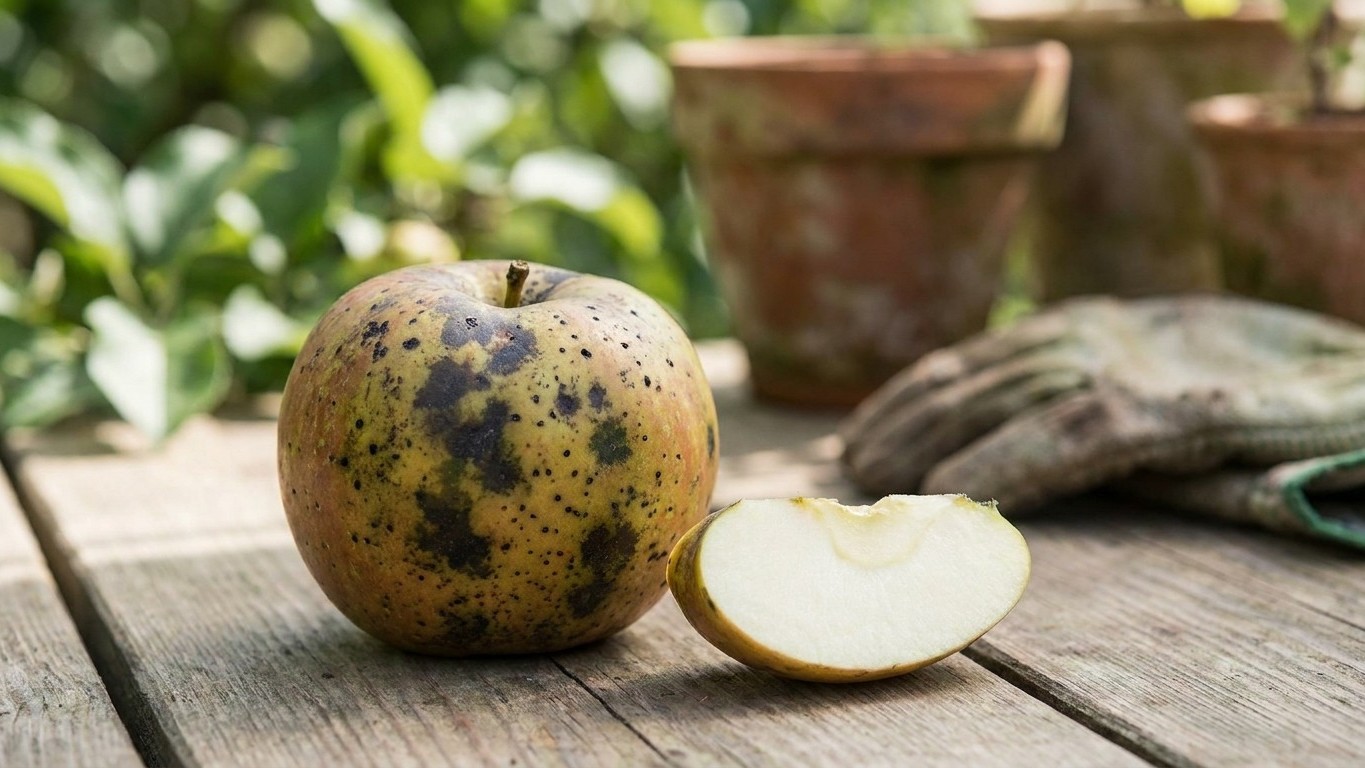
Storage losses cluster around the same mismatch discussed above: fruit picked correctly but then held in a space that’s too warm for its variety softens fast, develops mealy texture, and shows internal breakdown well before it should. Bitter pit, small dark spots inside the flesh linked to calcium movement within the fruit, also shows up more in seasons with irregular watering through the hottest stretch of summer, which is common in desert irrigation setups running on a fixed schedule rather than adjusted for heat spikes.
Common questions
Can apples grow in the Las Vegas valley despite the mild winters?
Yes, with the right variety selection. Low-chill types satisfy their dormancy requirement on the limited winter cold the valley provides, though growers accept the early-flowering trade-off that comes with that choice.
Do Reno and Carson City follow the same frost dates as Las Vegas?
No. The published frost data cited here comes from a Las Vegas reference station and reflects a desert urban-heat-island extreme. Higher-elevation parts of the state freeze earlier in fall and later in spring, sometimes by months, and there’s no single published figure covering the whole state.
How do I know if my storage space is cold enough for apples?
Track the space with a simple thermometer through a full winter before relying on it. In the Las Vegas valley, where the coldest month’s average minimum runs around 39.6°F, an unheated garage typically isn’t cold enough on its own, and refrigerated storage fills that gap.
Where can I get frost dates specific to my part of Nevada?
The University of Nevada Reno Extension service, reachable through extension.unr.edu, publishes region-specific growing information and is the right place to check dates for your county rather than relying on a single statewide figure.