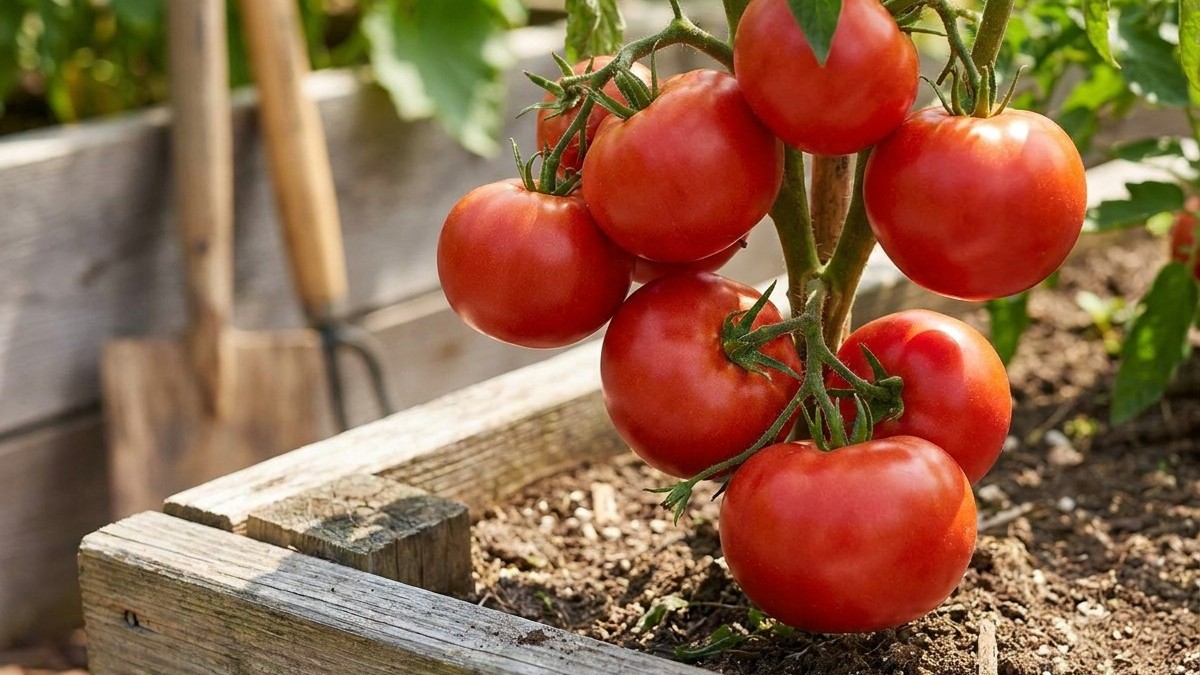

Most tomato plants in Newfoundland and Labrador run out of growing season before the fruit finishes ripening on the vine. The practical answer: harvest when frost is forecast, not when the calendar says a season “should” be over, and plan on ripening a good share of the crop indoors rather than in the garden.
When to pick tomatoes in Newfoundland and Labrador
There’s no fixed harvest date that applies across the province, because frost doesn’t arrive on a schedule. At the ST JOHN’S A station, the first fall frost lands on average around October 17. That’s a mean date from Environment and Climate Change Canada’s 1981-2010 climate normals, and it needs to be read carefully: in one year out of two, frost actually shows up later than that. Treat October 17 as the midpoint of a window, not a safe cutoff. Some autumns give you into November before the first bite of cold; others end the season two or three weeks early.
The same caution applies at the other end of the season. Average last spring frost at St John’s sits around May 30, which puts the average frost-free stretch at roughly 140 days there. But that’s one station in one city. Newfoundland and Labrador is not one climate zone, and inland, northern, or upland districts routinely run weeks behind the coast in both directions, later spring frost, earlier fall frost, which shortens the whole window.
St John’s itself sits in Canadian hardiness zone 6a, based on Natural Resources Canada’s 1991-2020 mapping. That’s worth flagging clearly: the Canadian zone system is built on seven climate variables, not the single minimum-temperature measure used in the US system, so 6a here cannot be read as equivalent to a USDA zone of the same number. It also only describes St John’s. Growers in the interior, in Labrador, or at higher elevation are almost certainly gardening in a colder zone with a shorter effective season, even without a published number for their exact location.
Reading your own yard instead of the calendar
Because the frost date is a mean, not a promise, the more reliable approach is watching the forecast once you’re past Labour Day. When overnight lows are forecast to dip toward freezing, that’s your harvest signal, regardless of what date the calendar shows. For a second opinion tuned to local conditions, the province’s own agriculture service publishes regional guidance at gov.nl.ca/ffa.
What to do with the green ones
Not every green tomato is worth bringing indoors. The fruit that ripens well off the vine is at what’s called the mature green or breaker stage: full size for its variety, the skin has gone from dark, matte green to a paler, slightly glossy green, and there’s often a whitish or pale patch developing at the blossom end. Those tomatoes have finished their growth and just need warmth and time to turn color.
Small, hard, dark green fruit that hasn’t reached full size is a different case. Those tomatoes stopped developing too early, and most won’t ripen properly no matter how long you keep them. Rather than let them go to waste in a bowl on the counter, that’s the fruit to use in dishes built around green tomatoes on purpose, fried green tomatoes, green tomato chutney, or pickled green tomatoes, all of which rely on the firm texture and tart flavor rather than working against it.
Whole-plant harvest, a common short-season trick
When frost is imminent and there’s still a heavy load of mature green fruit on the vine, many short-season gardeners skip picking tomato by tomato and instead pull the whole plant. Cut it at the soil line, shake off loose soil, and hang it upside down in a cool, sheltered spot, a garage, porch, or shed out of direct sun works. The plant’s remaining sugars and moisture continue feeding the fruit for a while, and tomatoes can be picked off individually as they color up over the following weeks. It’s a low-effort way to salvage a plant loaded with green fruit when the first hard frost is only days out.
Either way, sort before you store. Separate the fruit that shows real promise (full size, pale green, firming toward the blossom end) from the fruit that’s clearly immature, and don’t mix them in the same ripening container, since the smaller ones will just sit there taking up space while the good candidates need it.
Ripening indoors, and how long they keep
Once tomatoes are inside, the setup matters more than people expect. Spread mature green fruit in a single layer, never stacked, in a shallow box or on a tray lined with newspaper. Stacking traps moisture against the skin and invites rot before color even develops. Keep them out of direct sunlight; a sunny windowsill looks appealing but tends to cause uneven ripening and can make the skin blister.
Room temperature, somewhere in the 65 to 75 degree Fahrenheit range, ripens fruit fastest, often within a week or two depending on how far along each tomato already was. A cooler spot, a basement or an unheated back room, slows the process down but stretches it out, which is actually useful if you’d rather have a steady trickle of ripe tomatoes over several weeks than a pile all turning red at once. Dropping an apple or a banana into the box speeds things along, since both release ethylene gas, the same compound tomatoes produce themselves as they ripen.
How long the whole batch lasts
Check the box every few days. Pull out any tomato that’s colored up and move it to the counter or fridge for eating, and pull out anything showing soft spots or mold before it spreads to its neighbors. A well-managed batch of mature green tomatoes, checked regularly and kept single-layered, can keep producing ripe fruit for several weeks after the plants themselves are gone from the garden, which for a lot of Newfoundland and Labrador gardeners means fresh tomatoes well past the point the ground has gone cold.
One habit to avoid: putting unripe tomatoes straight into the refrigerator to “save” them. Cold temperatures stall the ripening process and tend to leave the flesh mealy once the fruit does eventually turn color, so the fridge is better reserved for tomatoes that are already ripe and you’re just trying to hold a few extra days.
What goes wrong here
The most common mistake is timing, either picking too early out of nerves or waiting too long and losing the crop overnight. Fruit that’s still small and hard when it’s pulled indoors usually just sits there, never coloring, because it hadn’t reached the stage where ripening chemistry kicks in. On the other side, gardeners who bank on the average October 17 date at St John’s as a hard deadline sometimes get caught, since half of all years bring frost earlier than that.
Storage mistakes show up almost as often. Piling tomatoes several deep in a box traps humidity, and one soft or moldy fruit at the bottom of the pile can take out several others before anyone notices. Fruit ripened on a sunny windowsill instead of in a shaded spot can end up with uneven color, ripe on one side and still greenish on the other, because the heat from direct sun speeds up one side of the tomato faster than the rest.
Location matters more than most gardeners assume. A grower in St John’s working with that 6a Canadian zone rating and the October 17 mean frost date is in a meaningfully different position than someone farther inland or at higher elevation, where the season very likely closes earlier and the effective zone is colder, even though no specific number for that spot is published here. That’s exactly the gap the province’s agriculture service is built to help fill, with guidance tuned to regional conditions rather than a single provincial average.
Common questions
What is the average first fall frost date in Newfoundland and Labrador?
At the ST JOHN’S A station, Environment and Climate Change Canada’s 1981-2010 normals put the average first fall frost at October 17. It’s a mean, so frost falls later than that in roughly half of all years, and locations away from St John’s, particularly inland or at higher elevation, typically see frost earlier.
Can all green tomatoes ripen indoors?
No. Only fruit that reached mature green or breaker stage, full size, paler green skin, some color starting at the blossom end, has a real chance of ripening off the vine. Small, dark green, immature fruit generally stays green and is better used in recipes built for green tomatoes.
Should I refrigerate tomatoes to make them last longer?
Not while they’re still unripe. Cold halts the ripening process and tends to leave the texture mealy once color does develop. Refrigeration is better suited to tomatoes that have already fully ripened and just need a few extra days before eating.
Does the province have one hardiness zone?
No. The 6a rating comes from Natural Resources Canada’s mapping for St John’s specifically, using the Canadian system’s seven climate variables, and it does not translate to a USDA zone. Other parts of Newfoundland and Labrador, especially inland and northern areas, sit in colder zones with shorter growing seasons than the St John’s figure suggests.