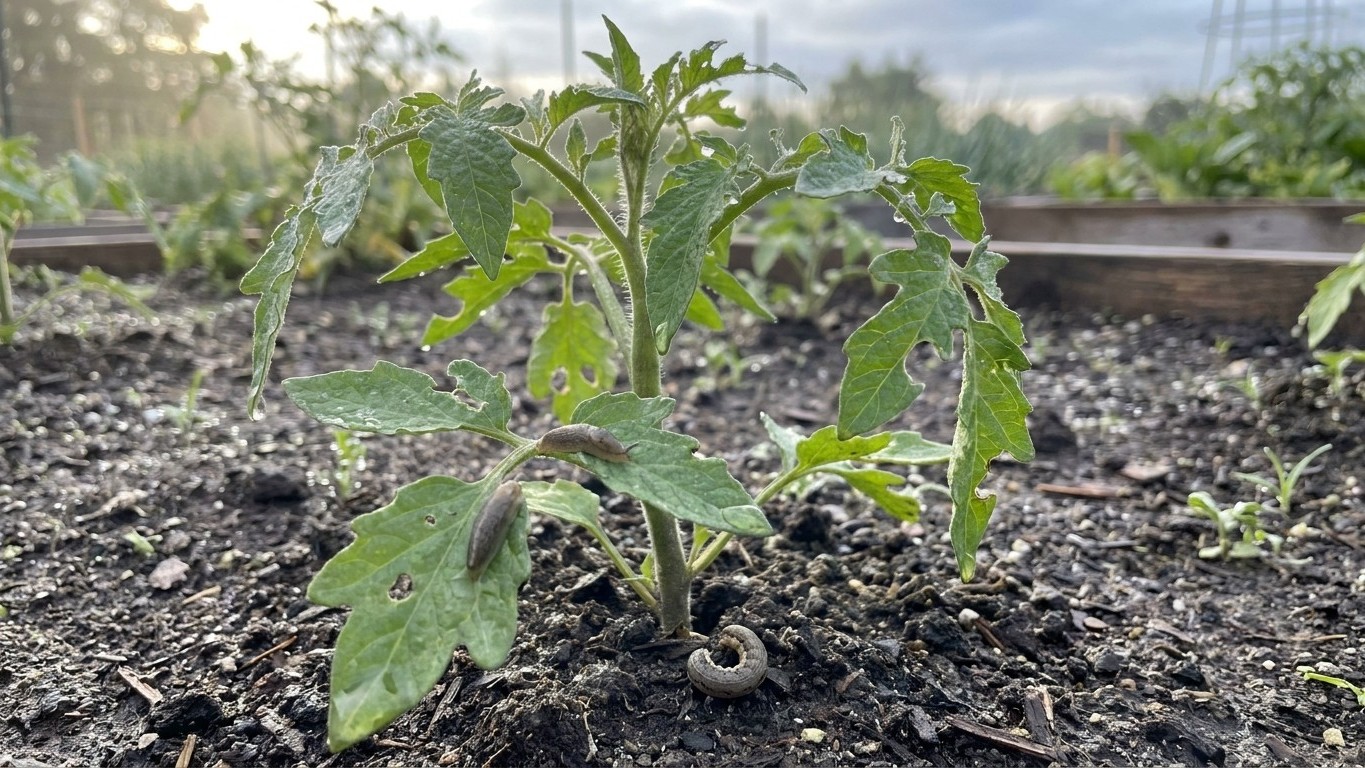

Newfoundland and Labrador’s tomato pests are mostly the cool-season, damp-weather kind, not the heat-loving insects that plague warmer provinces. With the average last spring frost at May 30 and the first fall frost at October 17 at St. John’s A, the growing window stays short and cool enough that only a handful of pests reliably complete a life cycle here.
What this comes down to in Newfoundland and Labrador

In Newfoundland and Labrador, the tomato pests that actually show up are shaped less by which insects exist and more by how short and cool the season runs. With the average last spring frost falling May 30 and the first fall frost arriving October 17 at St. John’s A, gardeners get a narrow, often damp stretch in which only certain pests can build up numbers. That rules out most of the heat-driven insects that dominate tomato pest lists further south, and it puts slow, moisture-loving pests, plus a couple of greenhouse regulars, at the top of the list instead.
Slugs
Gray-brown to nearly black, up to two inches long, slugs feed at night and leave ragged holes in leaves along with silvery slime trails. They show up right at the start of the season, in the cool, wet soil that lingers around the May 30 frost window, and it’s the adult slug itself doing the chewing. Beer traps, diatomaceous earth around stems, and an evening hand-picking round are the main defenses.
Cutworms
These are gray-brown caterpillars, one to two inches long, that curl into a tight C-shape when disturbed. It’s the larval stage that does the damage, severing young transplant stems right at the soil line in the days just after setting plants out. A cardboard or foil collar pushed an inch into the soil around each stem stops them cold.
Flea beetles
Tiny, shiny black beetles about the size of a pinhead, flea beetles jump like their namesake when a leaf is brushed. Adults chew small round holes through leaves, giving a shot-hole look, and they turn up once nighttime temperatures finally climb in early summer. Floating row covers left on until flowering keep them off young plants long enough for the tomatoes to outgrow the damage.
Aphids
Pear-shaped and barely a sixteenth of an inch long, aphids cluster in green or pink groups on the undersides of leaves and along stem tips. Both nymphs and adults suck sap, curling and yellowing leaves and coating them in sticky honeydew, and populations build through midsummer, especially on tomatoes grown under cover. A firm water spray or insecticidal soap knocks numbers back quickly.
Whitefly
Adults are tiny, moth-like, and white, fluttering up in a small cloud when a plant is bumped. The flat, pale, scale-like nymph stage does most of the actual sap-feeding damage on leaf undersides. Whitefly favors the humid greenhouse and cold-frame conditions many gardeners here rely on to stretch the short outdoor season, and it tends to become obvious by mid to late summer. Yellow sticky traps and steady ventilation keep it from taking over.
Tomato hornworm
A big green caterpillar with white diagonal stripes and a horn-like spike at the tail end, growing up to four inches, the hornworm larva can strip whole branches of foliage and chew into green fruit. It’s uncommon in this climate but occasionally shows up on a warm, sheltered site or inside a greenhouse in late summer, when the adult moth’s flight happens to overlap a mild stretch. Hand-picking works, though it’s worth checking first for white cocoons on its back, a sign of a parasitic wasp already doing the job.
Working it out for your own garden
The fastest way to figure out which of these you’re dealing with is to match the timing and the damage pattern before worrying about seeing the insect itself. Damage that shows up as ragged holes and slime trails in the first cool, wet week or two after transplanting, right around the May 30 frost window, points to slugs, not flea beetles, because slugs are active at night in exactly that kind of damp, still-cool soil. A stem that’s been sliced clean through at ground level a few days after transplanting, with no plant to be found nearby, is almost always a cutworm rather than anything chewing leaves above ground.
Once the season warms into June and July, the diagnosis shifts. Small round holes scattered across leaves, appearing once nights finally warm up, are the flea beetle’s signature, and they’re easy to tell apart from slug damage because they show up in daylight-fed patterns rather than overnight slime trails. If leaves are curling and yellowing with a sticky residue and you can see clusters of small, stationary insects on the undersides, that’s aphids. If instead a cloud of tiny white insects lifts off the plant the moment you touch a leaf, that’s whitefly, and it’s worth checking whether the plant is in a greenhouse, cold frame, or polytunnel, since the enclosed humidity that helps tomatoes finish before the October 17 frost is exactly what lets whitefly and aphid numbers climb.
Because the frost-free stretch between May 30 and October 17 runs to only about four and a half months, plenty of gardeners here lean on some form of season extension to get tomatoes to ripen at all. That choice has a direct pest consequence: outdoor, exposed plants deal more with slugs, cutworms, and flea beetles, while covered plants deal more with aphids and whitefly. Knowing which setup your plant is in narrows the list before you even look closely at the damage.
What changes across the state
A single frost window from St. John’s A doesn’t describe the whole province, and pest pressure shifts with it. The Avalon Peninsula’s coastal fog and moderate ocean temperatures keep summers cool and humid, conditions that favor slugs outdoors and whitefly under cover for a longer stretch of the season than inland areas see. Move toward central Newfoundland, away from the immediate coast, and summer days run warmer and drier, which speeds up flea beetle activity and gives aphids a faster path to large colonies, though it also shortens the slug-friendly damp window at each end of the season.
Labrador is a different climate altogether. Colder, with a shorter frost-free period and, at higher elevations or further north, essentially no reliable window for a heat-driven pest like the tomato hornworm to appear at all. Dampness there still favors slugs and cutworms early in whatever short season is available, but the numbers for both cutworm larvae and aphids tend to build more slowly than on the warmer parts of the Avalon or in central Newfoundland. None of these regional shifts change the reference frost dates themselves; they change how long each pest’s window stays open once the season starts.
The mistakes this state punishes
The single most common mistake is transplanting into soil that’s still cold and wet after a brief warm spell in April, well before the May 30 average frost date has actually passed. That soil is precisely what slugs favor, and a stressed, cold-shocked transplant has no strength to outgrow the feeding. The fix is simple: wait until the soil itself has warmed, not just the air, and hold off a week or two past the average date rather than gambling on it.
A second costly habit is setting transplants out without stem collars, on the assumption that cutworms are a southern problem. They’re not, and a whole row of seedlings can be cut down in a single night. Third, gardeners running a greenhouse or cold frame to beat the short season often skip ventilation on the first genuinely warm days, and that’s exactly when whitefly and aphid populations take off unchecked. Cracking vents daily, even briefly, keeps humidity from turning into an infestation. Finally, dismissing hornworm as something that “doesn’t happen here” means it often goes unnoticed until a branch is already stripped bare, so a quick visual check of the plant’s interior every week or two in late summer costs little and catches it early.
Checking this against your county
Newfoundland and Labrador isn’t divided into counties the way many U.S. states are, so the closest equivalent is your regional agriculture office. Pest pressure on the Avalon Peninsula, in central Newfoundland, and in Labrador differs enough that a province-wide list is only a starting point. For local guidance on timing and confirmed pest activity, the province’s own tomato and vegetable growing resources are worth checking directly at gov.nl.ca/ffa.
Common questions
Do tomato hornworms actually occur in Newfoundland and Labrador?
They do, but rarely, and mostly on warm, sheltered sites or inside greenhouses in late summer when conditions happen to line up. They’re not a routine pest here the way slugs or cutworms are.
Why are slugs such a problem for NL tomato growers?
The combination of a cool, damp climate and soil that’s often still moist right around the May 30 average frost date creates ideal night-feeding conditions for slugs just as tender transplants go into the ground.
Should I grow tomatoes in a greenhouse to avoid pests?
A greenhouse or cold frame helps dodge slugs, cutworms, and flea beetles, but it trades that for a higher risk of aphids and whitefly, since both thrive in the warm, humid air a covered structure holds onto.
What’s the very first pest sign to watch for after transplanting?
Check for ragged leaf holes and slime trails within the first week or two after setting plants out, since that early damage is almost always slugs and is easiest to stop before populations build.