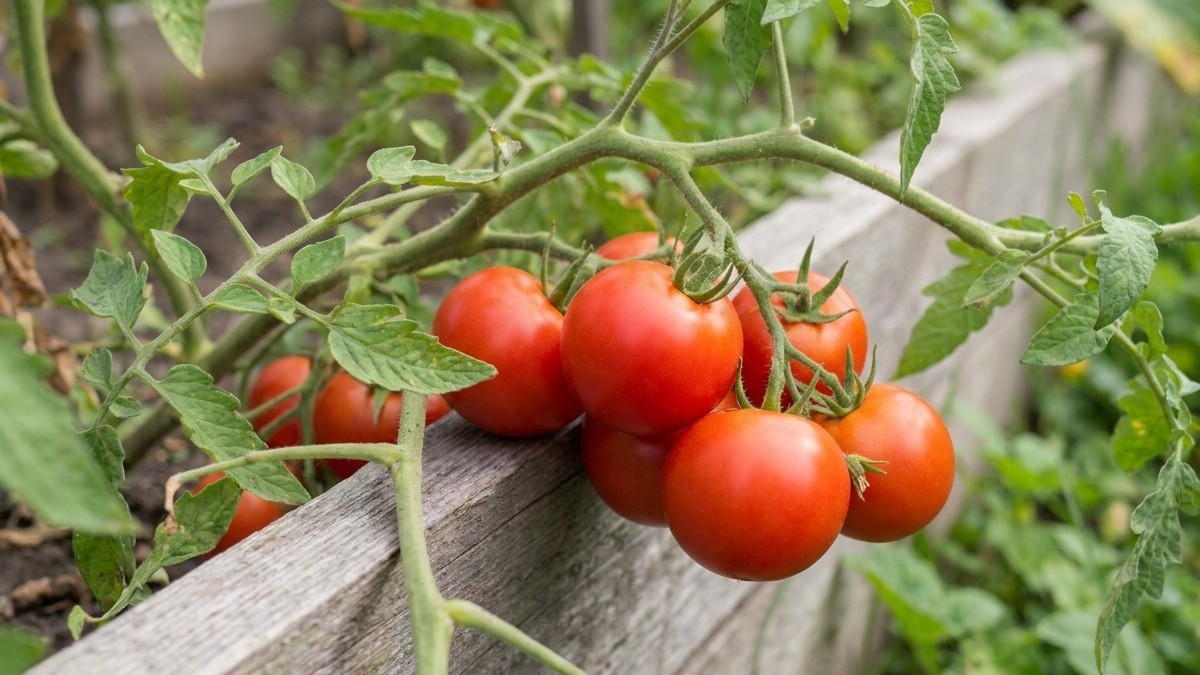

Pick every tomato showing color as soon as it blushes, and pull the rest of the plant, green fruit included, before the first fall frost lands sometime between September 24 and October 5. At higher elevations that window can close weeks earlier, so the real rule is: don’t wait for a calendar date, watch the forecast instead.
When to pick tomatoes in Wyoming
The fall frost window isn’t a single day, it’s a range, and that range comes from one NOAA weather station (USW00024018, Cheyenne) tracking 1991-2020 normals. Freeze probability climbs from 30% to 70% somewhere between September 24 and October 5 at that location. Move a few thousand feet up in elevation, or off toward a mountain valley, and that window shifts earlier. Wyoming spans USDA hardiness zones 3a to 6a, a range built on one number, the coldest temperature a spot typically sees in a year. Cheyenne sits toward the milder end of that scale for the state; plenty of Wyoming gardens sit colder.
What that means for a tomato plant: at roughly 6,000 feet, the frost-free stretch runs about 130 days, and frost is possible in any month at higher elevations. That’s not a rare fluke, it’s baked into the climate. A tomato planted with the last spring frost date of May 7 to May 18 in mind has already spent its whole season racing a fall deadline that can arrive with little warning.
| Milestone | Window | Source |
|---|---|---|
| Last spring frost | May 7 to May 18 | NOAA NCEI 1991-2020 Normals, station USW00024018 |
| First fall frost | September 24 to October 5 | NOAA NCEI 1991-2020 Normals, station USW00024018 |
| Approximate frost-free days (6,000 ft) | ~130 days | NOAA NCEI 1991-2020 Normals |
The practical harvest rule
Start checking the ten-day forecast in early September, not late September. Once nighttime lows are forecast to dip near freezing, that’s the signal to strip the plant, not just the ripe fruit. A single hard frost turns the whole plant to mush overnight, and any tomato still on it, ripe or green, is lost. Growers at elevation, or in a valley that pools cold air, should treat the early end of the fall window (September 24) as the working deadline rather than the late end (October 5). Local frost timing can vary enough within the state that a check with the University of Wyoming Extension office for your county is worth the phone call before you guess.
What to Do With the green ones
Not every green tomato is the same tomato. Before you decide what to do with a whole crate of them, sort by stage. A mature green tomato has reached full size for its variety, has a pale, glossy, almost whitish-green skin, and if you slice one open the seeds are formed and the gel around them has developed. Those will ripen off the vine, given time. An immature green tomato is smaller, harder, often still dull or dark green with underdeveloped seeds inside. Those rarely ripen well; they tend to shrivel or rot before they color up.
Mature greens are worth saving for ripening indoors, which is covered next. Immature greens are better used right away rather than stored, since they’re not going anywhere developmentally. Fried green tomatoes, green tomato relish, and pickled green tomatoes are the traditional uses, and all of them work with fruit that will never turn red. This is also the batch to use first if a hard freeze caught the plant by surprise and you’re facing a full harvest at once rather than a staggered one.
Sorting before storage matters
Don’t mix the two categories in one box. Immature greens breaking down in storage will spread rot to mature greens sitting next to them, and one soft, moldy tomato in a box can take out a dozen good ones within days. Pull damaged, cracked, or insect-bitten fruit out of the pile entirely regardless of size or color; wounds are where rot starts, and a bruised tomato won’t ripen cleanly even if the stage looks right. Wipe fruit dry if it’s wet from rain or dew before boxing it, since damp skin invites mold faster than a dry one.
This is also the point to decide how much fruit you’re actually dealing with. A frost that hits before the fall window even opens can mean pulling an entire plant’s worth of green tomatoes at once, which is a different problem than picking a handful each week. Large batches are worth spreading across multiple shallow boxes rather than piling deep in one container, so you can check on the bottom layer without unstacking everything.
Ripening indoors, and how long they keep
Mature green tomatoes ripen off the vine because the fruit itself, once it’s reached that stage, keeps producing the ethylene gas that drives the color and softening process. Wrapping each tomato individually in newspaper and setting it in a single layer in a shallow box, out of direct sun, is the standard approach. Some gardeners add an apple or a banana to the box, since both release extra ethylene and can nudge slower fruit along. Check the box every few days and pull tomatoes out as soon as they show color, moving them to the counter to finish.
Room temperature ripens fruit faster than a cool basement or garage; a cooler spot slows the process down, which is useful if you’ve got more green tomatoes than you can use ripe in a short stretch and want to spread out the harvest over time instead of getting them all at once. Never refrigerate a tomato you want to ripen, cold stops the process and can leave it mealy even after it eventually colors.
How long the ripening process runs
Not every green tomato ripens on the same schedule, even from the same box. Fruit that was closer to turning when picked will color up sooner than fruit picked at the earliest mature-green stage, and there’s real variation plant to plant. Checking the box regularly rather than on a fixed schedule catches ripe fruit before it goes soft and lets you pull out anything that’s started to rot before it spreads. Once ripe, a tomato holds its quality for a short window on the counter; if you’re not using it right away, that’s the point to refrigerate it, which slows further softening at the cost of some flavor.
A batch of green tomatoes brought in ahead of a frost, sorted, wrapped, and checked regularly, can stretch fresh tomato eating out for weeks past the date the plant itself died in the garden. That’s the real value of getting the timing right at harvest, not just saving the ripe fruit that was already on the vine.
What goes wrong here
The most common failure isn’t picking too early, it’s picking too late because the forecast window got misread. A frost date range of September 24 to October 5 covers eleven days of real uncertainty, and gardeners who wait for the later end of that range, or who don’t check a local forecast at all, sometimes lose the whole crop overnight when a cold snap arrives on the early side.
Elevation makes this worse. Since frost is possible in any month at higher elevations in Wyoming, a garden sitting well above the reference station’s elevation can see its first frost noticeably earlier than the state-level window suggests, and the same garden can also get an unexpected frost in mid-summer in a bad year. Treat the published window as a starting point for your specific location, not a guarantee.
Hail is another factor that catches people off guard at harvest time, since a storm can shred ripening fruit and split skins days before frost is even a concern, pushing up the effective deadline to get fruit off the vine. Cool nighttime temperatures late in the season also slow ripening on the plant itself, which means more of the crop ends up green at frost time than a gardener might expect based on how the summer went. Checking plants more often as the fall frost window approaches, rather than sticking to a weekly routine, catches these problems while there’s still time to act. For frost timing specific to your county, the University of Wyoming Extension is the resource to call rather than guessing from statewide averages.
Common questions
Can I pick tomatoes early to beat a frost, even if they’re still fully green?
Yes, and it’s the right call once a hard freeze is forecast. A mature green tomato left on the vine through a freeze is destroyed along with the plant; the same tomato picked beforehand and ripened indoors is still usable.
Do all green tomatoes ripen if you bring them inside?
No. Only mature green fruit, full-sized, pale and glossy with developed seeds inside, reliably ripens off the vine. Smaller, hard, dull-green fruit tends to shrivel or rot rather than color up, and is better used green.
Why did my tomatoes stay green even though it wasn’t frost season yet?
Cool nighttime temperatures late in the growing season slow ripening on the plant, which is common at higher elevations where nights cool off faster. That’s a separate issue from frost itself and can leave more green fruit than expected by the time the fall frost window arrives.
Should I refrigerate green tomatoes while they ripen?
No. Cold temperatures stop the ripening process and can leave the fruit mealy once it does color. Keep ripening tomatoes at room temperature or in a cool room out of direct sun, and only refrigerate them after they’ve fully ripened if you’re not using them right away.