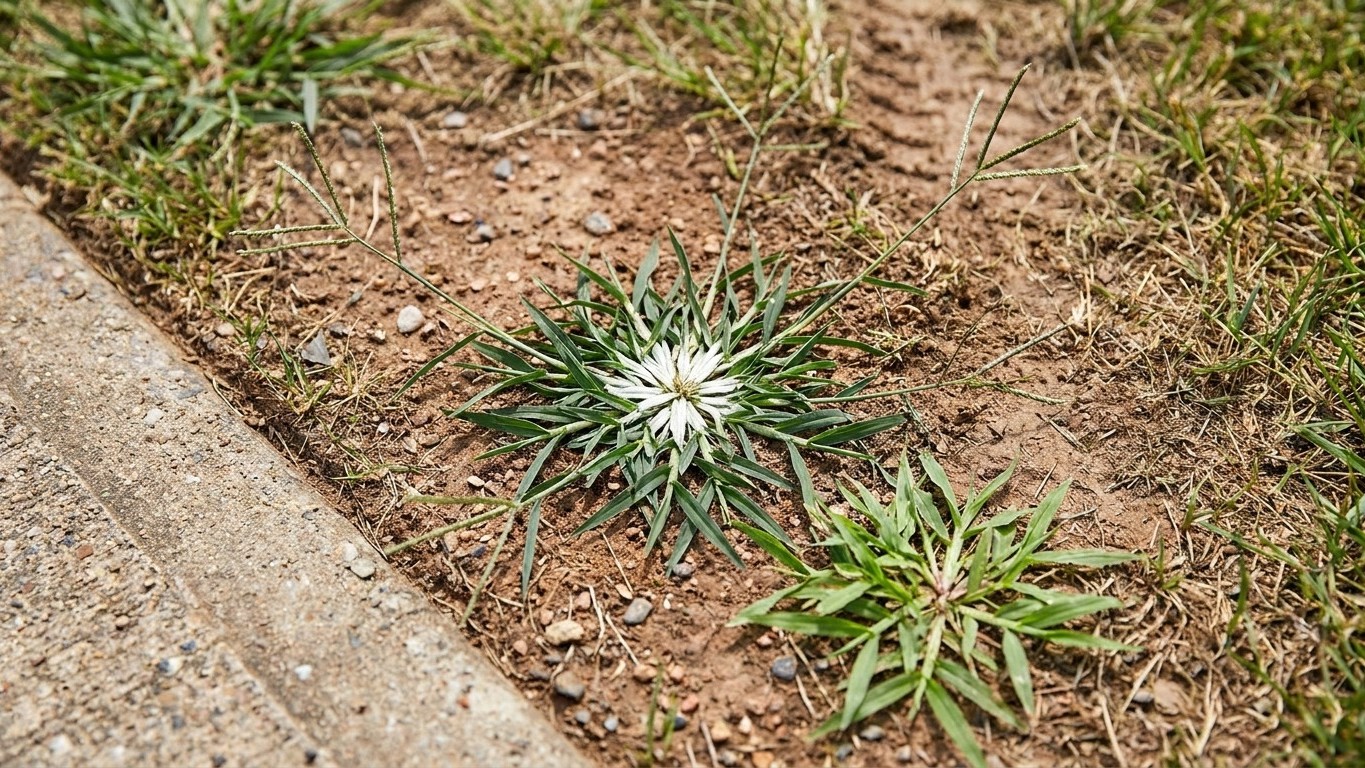

Alabama grows warm-season lawns, and that flips the calendar most seed bags print on the label. Fescue and the other cool-season grasses that go into lawns farther north belong in a fall planting, but Bermudagrass, Centipedegrass, Zoysiagrass and the state’s other lawn grasses need hot ground to germinate, so the window opens in late spring instead. Wait until the soil, two inches down, holds at 65°F and rising before you spread a single seed.
The best time to sow grass seed in Alabama
Warm-season grass, not cool-season
Clemson Cooperative Extension’s HGIC 1214 guide to selecting a lawn grass names seven species suited to this part of the country: Bahiagrass, Bermudagrass, Carpetgrass, Centipedegrass, Seashore Paspalum, St. Augustinegrass and Zoysiagrass. All seven are warm-season grasses. They green up as the ground heats through spring, spread by stolons or rhizomes all summer, then go dormant and tan-colored over winter without dying back to the root. A cool-season grass like tall fescue or perennial ryegrass, the kind that fills seed racks in cooler states, cannot hold through an Alabama summer. It germinates fine in mild weather and then burns out once the heat sets in, so a seeding calendar written for fescue is not just less useful here, it is aimed at a different plant entirely.
Two of those seven do not come as seed at all. Seashore Paspalum and St. Augustinegrass go in as sod or plugs, never seed, so if you are set on one of those two your planting question is really a sodding question, not a sowing one.
- Bahiagrass, Bermudagrass, Carpetgrass, Centipedegrass and Zoysiagrass: seed available, seed rates vary by species
- Seashore Paspalum: sod or sprigs only
- St. Augustinegrass: sod or plugs only
Wait for warm soil, not just warm air
Germination runs on soil temperature, not the date on the calendar and not how warm the afternoon air feels. Clemson and Penn State Extension turfgrass guidance put the threshold at soil holding 65 to 70°F and rising, measured about two inches down, checked mid-morning before the sun has heated just the top surface unevenly. A soil thermometer costs a few dollars and takes the guesswork out entirely: push it into the bed at that depth for a few mornings running, and once the reading holds steady in that range rather than just touching it once, you’re clear to sow.
Near Huntsville, NOAA’s 1991-2020 climate normals put the last spring freeze at March 19 to April 3, a range drawn from airport station data. That date matters for tender transplants, but it is not the seeding trigger here. Soil two inches down typically takes weeks past the last frost to climb into the mid-60s, so the true sowing window for warm-season grass seed opens later in spring than the frost-free date alone would suggest. Gardens outside Huntsville, especially at higher elevation or farther from the city’s heat-holding pavement, often warm a week or two later still, so treat the thermometer reading from your own bed as the deciding number, not this reference figure.
The last date that still works
Seed sown too late in the year comes up, then dies over winter before it has built the root reserves to survive dormancy. Clemson and Penn State Extension turfgrass guidance call for about 45 days of growing weather before the first fall freeze to get a warm-season lawn established enough to hold. That means working backward from your area’s own first freeze date, not from Halloween or Labor Day out of habit.
Near Huntsville, NOAA’s 1991-2020 climate normals put the first fall freeze at November 2 to November 16. Counting back 45 days from each end of that range lands the latest safe sowing window in mid-September to the first days of October. That is a range, not a date, because the freeze itself lands somewhere in a two-week window most years, and your own yard may run earlier or later than the airport station the normals are drawn from.
Sowing right at the edge of that window is a gamble even in a normal year. A cool snap that arrives a week early, or a stretch of cloudy days that slows germination, eats into the 45 days you were counting on. If you’re seeding in early fall rather than the late-spring window, err toward the earlier end of the range you calculate for your own county rather than the later one, and check with your county’s office of the Alabama Cooperative Extension System if you want a freeze-date estimate closer to your own address than an airport reading can give you.
Seed rate and soil preparation
Alabama’s representative state soil, the Bama series named the official state soil in 1997, is an Ultisol: old, heavily weathered, naturally acid, and sandy at the surface, with USDA NRCS Soil Data Access putting the surface pH around 5.3, sand content around 67 percent and organic matter around 0.8 percent. That combination sheds water fast and holds few nutrients, which is exactly the kind of ground new grass seed struggles to establish in without amendment. But the Bama series describes what maps as the state’s representative soil, not your own bed. A yard built on fill, a river-bottom garden, or ground with a different parent material entirely can run alkaline, clay-heavy or nutrient-rich instead. Send a sample to your county Extension office for an actual reading before you add lime or fertilizer by guesswork.
How much seed to put down
Seeding rates are fixed by species, not by location, and Clemson and Penn State Extension turfgrass guidance give these figures per 1,000 square feet of new lawn:
| Species | Seed rate (new lawn) |
|---|---|
| Bahiagrass | 5 to 10 lb |
| Bermudagrass | 1 to 2 lb |
| Carpetgrass | 2 to 3 lb |
| Centipedegrass | 0.25 to 0.5 lb |
| Zoysiagrass | 1 to 2 lb |
Those rates are for bare ground. If you’re overseeding a lawn that already has some cover, whether after winterkill or thin patches, cut every one of those numbers in half. More seed does not mean a thicker lawn. Crowded seedlings compete for the same light and water and the stand thins itself out regardless, so extra seed is wasted money, not insurance. If this is your first attempt at a lawn from scratch, the full walkthrough at Starting a New Lawn From Seed covers the grading and raking steps that come before any seed goes down.
Depth matters more than rate. Cover seed no more than a quarter inch deep and press it in for good seed-to-soil contact, whether with a lawn roller or by walking the bed. Seed buried deeper than that, especially in the sandy surface typical of Alabama’s Ultisols, often never breaks through at all, and a patchy lawn is more often a depth problem than a rate problem.
Watering a new lawn until it holds
A newly sown lawn dies from drying out, not from too little seed. The top half inch of soil where the seed sits has almost no water-holding capacity of its own, especially over the sandy surface common across the state, so it can go from moist to bone dry in an afternoon of sun and wind. Until you see germination, that top layer needs to stay consistently damp, which usually means watering lightly more than once a day rather than a single deep soaking.
Tapering off as roots take hold
Once the new grass is up and green across most of the bed, the goal reverses: you want the roots to chase water downward, not stay shallow. Stretch the interval between waterings and let each one run longer, so moisture reaches deeper into the profile each time. This is the same shift every warm-season lawn goes through as it moves from germination into the establishment period that Clemson and Penn State Extension turfgrass guidance size at about 45 days of growing weather before it can handle a normal mowing and watering routine.
Watch for standing water rather than just checking a clock. On a well-drained, sandy surface like the Bama series described above, pooling is a sign you’re watering faster than the ground can absorb it, and that runoff carries seed with it before it ever gets a chance to root. Water more slowly, in shorter bursts spaced further apart, rather than cutting the total amount back. A new lawn seeded too close to the edge of its fall window has the least room for error here, since every day lost to a poor watering routine eats directly into the 45 days it needs before frost.
Common questions
Can I plant grass seed in Alabama in the fall?
Yes, but only early enough that the lawn gets roughly 45 days of growing weather before the first freeze, per Clemson and Penn State Extension turfgrass guidance. Working back from Huntsville’s first fall freeze window of November 2 to November 16, NOAA’s 1991-2020 normals, that puts the latest safe start in mid-September to early October for that area, earlier if your own county tends to freeze sooner.
Why didn’t my grass seed come up at all?
The two most common causes are seed sown before the soil reached 65°F and rising, and seed buried deeper than the quarter-inch depth these grasses need. Both leave the bed looking bare with no visible reason unless you check soil temperature and digging depth directly.
Is it too late to seed a warm-season lawn in Alabama?
If you’re past the point of getting 45 days of growing weather before your area’s first fall freeze, seed sown now will likely germinate and then die over winter rather than establish. Wait for the spring window instead, once soil two inches down holds at 65°F and rising.
Do I need to test my soil before seeding?
A soil test is worth doing rather than assuming. Alabama’s representative state soil runs strongly acid at the surface, but that figure describes a mapped series, not any individual yard, and a test from your county Extension office is the only way to know your own bed’s actual pH and nutrient levels before you add lime or fertilizer.