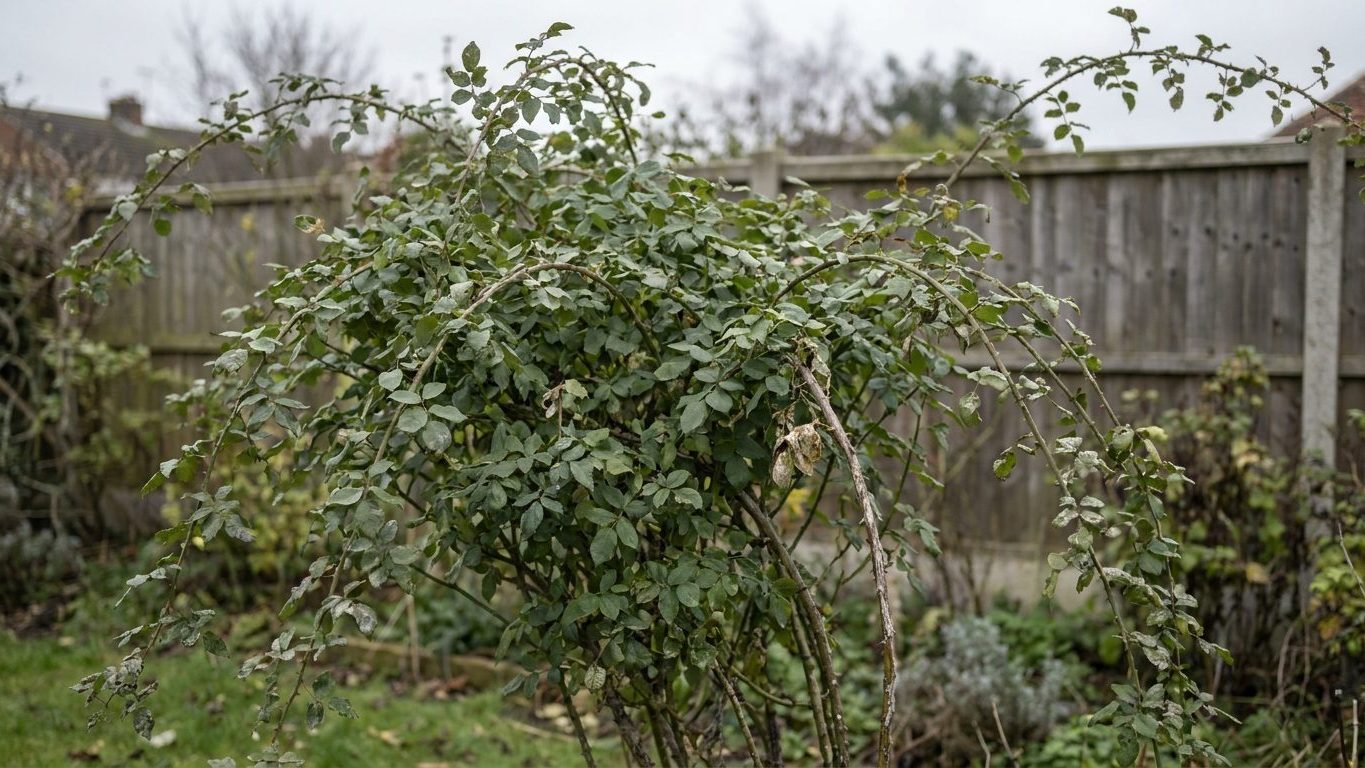

A rose with plenty of healthy green leaves but no buds or blooms is almost never dying. The most common causes are too little direct sun, nitrogen-heavy fertilizer, or pruning cuts made at the wrong time of year. None of these threaten the plant’s survival, and most can be corrected before next season.
What you are looking at
Picture the plant: canes are green and pliable, foliage is dense, sometimes even glossy and dark, but the tips of the canes never swell into buds. That’s the pattern worth naming precisely, because “not blooming” covers several different-looking problems, and only one of them is this one.
In true non-blooming, you won’t see stunted or yellowed leaves, no black spots, no chewed margins. The plant looks, by every visual measure, like it’s thriving. The stems keep extending, new leaves keep unfurling at a normal rate, and the overall shape of the shrub stays full. What’s missing is the reproductive stage: no bud swell at the cane tips, no color showing through sepals, nothing that would eventually crack open into a flower.
This is different from bud blast, where a bud actually forms, then browns and dries before opening, usually from thrips damage or a late frost. It’s also different from a rose that blooms once, hard, and then stops for the rest of the season, which is a repeat-bloom cycle issue tied to deadheading, not a lack of blooming altogether. And it’s not the same as a rose that produces flowers but they’re small, faded, or malformed, which usually points to heat stress or a nutrient imbalance rather than absence of flowering entirely.
Timing matters for the diagnosis too. A rose that was planted this spring and hasn’t bloomed by midsummer is often just establishing its root system, a normal first-year pause rather than a disorder. A mature rose, three years old or more, that suddenly stops producing buds after a season of normal flowering is the case this article addresses. The distinction between “never bloomed yet” and “stopped blooming” changes which cause is most likely, so pin down which one you’re dealing with before moving to fixes.
What actually causes it
The mechanism is almost always a resource or light problem, not a disease. Roses need close to six hours of direct, unobstructed sunlight to shift from vegetative growth (leaves and canes) into reproductive growth (buds and flowers). When light drops below that, the plant keeps growing foliage, because leaves are cheap for a rose to make and sunlight-gathering is its own priority, but it never accumulates enough energy surplus to invest in flower production. A rose tucked against a fence, under an encroaching tree canopy, or on the shaded side of a building is the single most common version of this problem, and it’s often gradual: a tree that was a sapling three years ago is now casting real shade by midsummer.
The second major cause is a fertilizer imbalance, specifically too much nitrogen relative to phosphorus and potassium. Nitrogen drives leaf and stem growth directly. A rose fed repeatedly with a high-nitrogen lawn fertilizer, or with compost that’s mostly fresh manure or grass clippings, will respond exactly as designed: lush, dark foliage, vigorous cane extension, and very little flower initiation. This is where a common myth causes real harm: gardeners see a leafy, vigorous-looking plant and assume it’s healthy and simply “about to bloom.” It isn’t behind schedule. It’s being fed in a way that actively suppresses blooming.
Pruning timing is the third cause, and it’s specific to once-blooming or old-garden roses that set flower buds on the previous year’s wood. Pruned hard in late winter or spring, these varieties lose the exact canes that were going to flower that year. Repeat-blooming modern roses (most hybrid teas, floribundas, and shrub roses) don’t have this vulnerability, since they flower on new growth, so knowing which type you’re growing matters here.
To tell these apart: check the sun exposure first (count actual hours of direct light at midday and mid-afternoon), then check what you’ve fed the plant in the last two months, then check whether it’s a once-bloomer that was pruned this year. Light is the most common culprit by a wide margin.
What to do now
Nothing about this season’s leaf growth is wasted. **The plant isn’t damaged**, so there’s no salvage operation required. The task is redirecting the plant’s energy toward flowering, and some of that can still happen before the season ends, depending on how much growing season remains where you are.
If light is the issue and it’s mid-summer or earlier, prune back overhanging branches from nearby trees or shrubs if that’s feasible and safe. You won’t move a fence or a house, but even an extra hour or two of afternoon sun reaching the plant can shift a stalled rose into bud production within three to four weeks. If the shade source can’t be addressed this season, mark it as a fall or spring project: transplanting the rose to a sunnier spot in dormancy is a realistic fix, and roses tolerate transplanting well when moved while dormant.
If nitrogen overfeeding is the cause, stop nitrogen inputs immediately. Switch to a fertilizer formulated for blooming, meaning one with a lower first number (nitrogen) and higher second and third numbers (phosphorus and potassium) on the label. Don’t expect an overnight change: excess nitrogen already in the soil and root system needs to be used up or leached out, which typically takes several weeks of normal watering before the plant’s growth pattern shifts.
If the cause is pruning timing on a once-blooming variety, there’s genuinely nothing to do this year. **That flush is lost for the season.** The correct move is prevention for next year: prune once-bloomers immediately after their flowering finishes, not before it starts, so next year’s flower-bearing wood is preserved. For everything else, the plant’s leafy growth this season is building the framework that will carry next year’s blooms, so it isn’t time wasted even if this year is a bust.
What does not work
A handful of home remedies get tried on non-blooming roses, and it’s worth being direct about why they fail.
- Bloom booster “shock” doses — dumping a large single dose of phosphorus fertilizer onto a nitrogen-heavy plant doesn’t override the imbalance quickly. Phosphorus also moves very slowly through soil, so a surface application takes a long time to reach the root zone at all, and most soils already hold adequate phosphorus regardless of what’s added.
- Pruning harder to “force” blooms — cutting back a leafy, non-blooming rose aggressively removes more growth without addressing why it isn’t flowering. On a once-bloomer pruned at the wrong time, this compounds the problem by removing even more of next year’s flowering wood.
- Extra water — non-blooming from light or nitrogen causes isn’t a drought symptom, and roses that are already well-watered gain nothing from more. Overwatering on top of an unrelated problem risks root rot without touching the actual cause.
- Talking to it or “encouraging” growth through general TLC — general extra attention, more frequent light watering, moving pots slightly, doesn’t change light hours reaching the leaves or the nitrogen level in the root zone, which are the two variables that actually matter.
The pattern across all of these: they treat the visible symptom (a plant that “needs help”) rather than the two measurable inputs that drive flowering, light exposure and nutrient ratio. Fix the input, and the symptom resolves on its own timeline.
Preventing it next time
**Light exposure matters more than any other factor**, so start there. Before planting a new rose, or if an existing one has gone shady, count actual sun hours at the location across a full day, not just a glance at noon. Six hours of direct sun is the baseline most roses need to bloom reliably; falling short of that by even an hour or two, especially in the afternoon when light is strongest, is enough to suppress flowering even on an otherwise healthy plant.
Next in importance is fertilizer discipline. Feed with a balanced or bloom-formulated product rather than high-nitrogen lawn or vegetable feeds, and taper nitrogen inputs as the season progresses rather than feeding heavily all summer. A rose fed hard in spring and then eased off nitrogen in favor of phosphorus and potassium through summer sets buds far more reliably than one fed the same rich mix all season long.
Know which pruning group you’re growing and prune accordingly: once-bloomers right after their flush finishes, repeat-bloomers in late winter or early spring before new growth starts. Mislabeling this single detail is behind a large share of “my rose stopped blooming” complaints from gardeners who inherited an unlabeled shrub.
Finally, revisit the site every few years. Trees grow, fences get added, neighboring shrubs fill in. A spot that had full sun the year a rose was planted can quietly lose an hour of light per year as the surrounding landscape matures, and that slow drift is easy to miss until the plant stops flowering altogether.
Common questions
How long does it take for a rose to bloom again after fixing the light problem?
Typically three to six weeks after sun exposure improves, since the plant needs to build enough new growth in the improved light before it shifts into bud production.
Can a rose recover if it hasn’t bloomed for an entire year?
Yes. A full year without blooms, caused by shade or overfeeding, doesn’t damage the plant’s ability to flower once the underlying cause is corrected. Structural pruning mistakes on once-bloomers are the main exception, and even those resolve within a year or two of correct pruning timing.
Is a rose with no blooms at all more likely to be a disease issue?
Not usually. Disease and pest problems typically show visible damage on the foliage itself, spots, distortion, yellowing, chewed edges, alongside the lack of blooms. A rose with clean, healthy-looking leaves and no flowers points toward light, nutrients, or pruning timing rather than disease.
Should I remove a non-blooming rose and replace it?
Rarely necessary. Since the leaves and canes are healthy, the plant itself isn’t the problem, the growing conditions or care routine are. Replacing it in the same spot without changing light exposure or feeding habits usually produces the same result with a new plant.