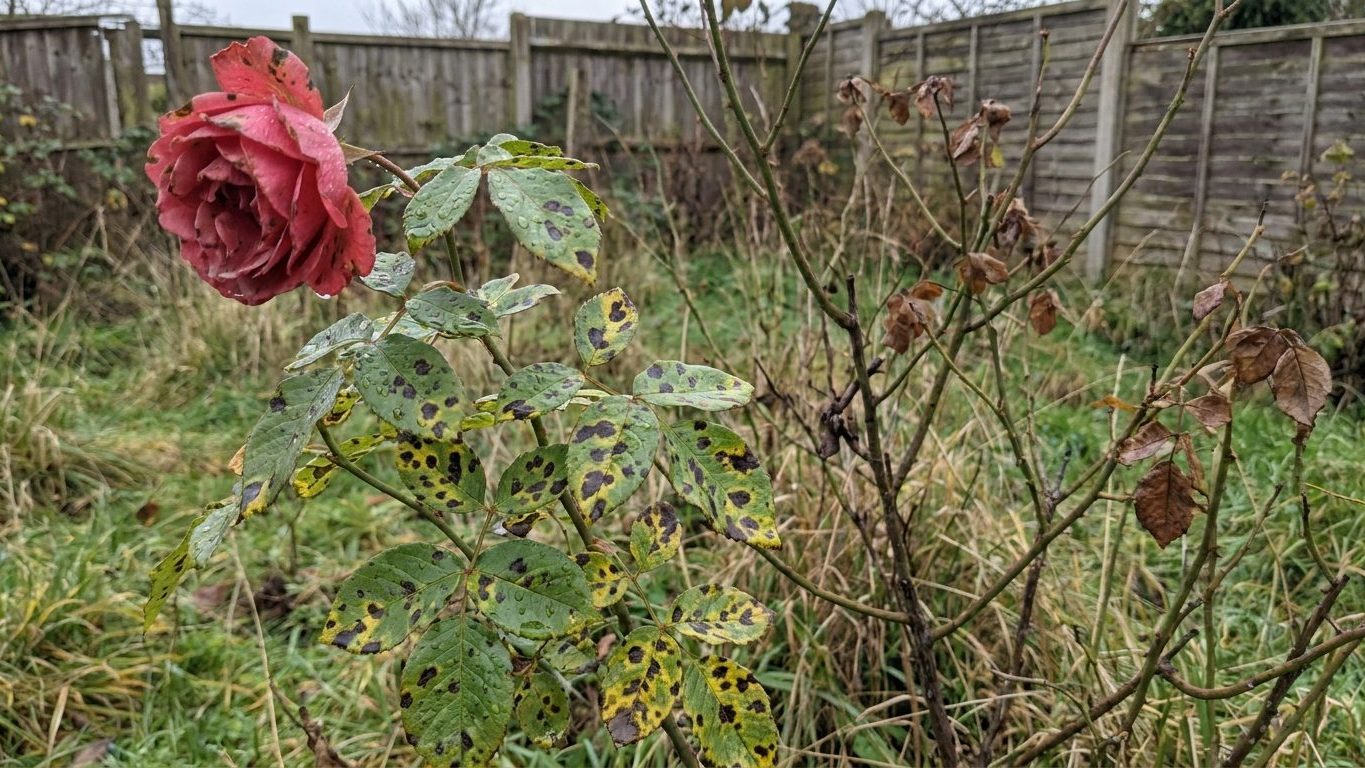

Once black spot shows up on a leaf, that leaf is not coming back to health. The fungus is already inside the tissue, spreading feathered lesions outward until the leaf yellows and drops. What you’re actually managing is spread to the leaves that haven’t been hit yet, and the reservoir of spores that will restart the whole cycle next season.
Why this matters
Black spot doesn’t just make a rose look shabby. Each lesion is a factory pushing out spores that rain down onto lower leaves with splashing water, and a bush that loses enough foliage stops feeding its roots properly. A rose defoliated by midsummer has weaker canes going into fall, fewer stored carbohydrates, and a harder time producing the bloom flush gardeners actually want. Left unchecked for a couple of seasons, chronic black spot can turn a vigorous shrub into a leggy, thin-caned plant that struggles to recover even with good fertilizing.
Skip treatment, or treat too late, and the fungus does something worse than defoliate one season. It overwinters in fallen leaves and, separately, in lesions on the canes themselves. That second detail is the one gardeners miss: raking up every leaf in November does not clear the infection if the canes still carry spots. Come spring, both sources fire off new spores as soon as conditions turn wet, and the cycle restarts before the first flush of growth even hardens.
When to do it
Timing here isn’t about a date on the calendar, it’s about moisture and leaf condition. The fungus needs leaves wet for about 7 hours to infect, according to Clemson Cooperative Extension HGIC, so the window to act is any stretch of humid weather, dew-heavy mornings, or a run of overcast, damp days, especially once new growth has fully expanded after a flush of flowers.
Watch the plant, not the sky. The first sign is usually a small, dark, roughly circular blotch low on the bush, on older leaves near the base, with a ragged, feathered edge that separates it from other leaf spot diseases with cleaner round margins. That feathering is the tell. If you catch it at that early stage, on just a handful of leaves, you’re still ahead of the fungus. If you’re already seeing yellow leaves dropping in clusters, you’ve moved from prevention into damage control, and the emphasis shifts from protecting foliage to stopping the next generation of spores.
The other trigger to watch for is your own maintenance routine. Right after deadheading or a hard pruning session, when the plant pushes tender new growth, that soft tissue is more vulnerable, and a treatment applied just as new leaves unfold protects them before they’re exposed to the first wet night.
How to do it
Managing black spot is less a single task than a routine with three parts working together: sanitation, airflow, and, when needed, a fungicide applied on a schedule rather than as a one-time fix.
Start with sanitation
Walk the bush and remove any leaf showing that feathered dark lesion, dropping it straight into a bag rather than the compost pile, since home compost rarely gets hot enough to kill the spores. Do the same with any leaves already on the ground under the plant. This won’t stop an active infection, but it reduces the spore load available for the next rain to splash upward. A pair of household scissors or hand pruners works fine, wiped down afterward, since some professionals recommend a quick alcohol wipe on tools that also touched diseased tissue.
Because the fungus overwinters in canes as well as leaves, take a slower look at the stems themselves. Lesions on canes look like sunken, darkened patches rather than round spots. Where you find them on canes you’re already cutting back for shape, cut a few inches below the lesion into clean green wood. Where they sit on canes you want to keep, note them for late-winter pruning, when most roses get their yearly structural cut anyway.
Improve airflow before reaching for a spray
Black spot spreads fastest where leaves stay wet longest, so anything that speeds drying helps. Thin out crossing canes and interior twiggy growth so air moves through the center of the bush. If the rose sits crowded against a fence, wall, or other shrubs, that’s worth addressing separately, since morning shade combined with poor circulation is close to ideal for the fungus. Water at the base with a soaker hose or drip line rather than overhead sprinkling, and water early enough in the day that any splashed foliage dries before evening.
Apply a fungicide on a schedule, not a whim
Once lesions are established on more than a few leaves, sanitation and airflow alone usually aren’t enough to hold the line, and a fungicide labeled for black spot on roses becomes the practical next step. Read the product label for the interval, since most protectant fungicides need reapplication every 7 to 14 days through the wet season to keep new growth covered, and a single spray after an outbreak is already visible will not reverse the leaves that are damaged. Cover both leaf surfaces, since spores land and germinate on the underside as often as the top. This page won’t recommend a specific product or rate, since labels and active ingredients vary and the instructions on the container are the ones that apply.
Judge success not by whether spots disappear on existing leaves, which they won’t, but by whether new growth stays clean through the following weeks.
What goes wrong
The most common failure is spraying once after the infection is already visible and calling it done. Fungicides used for black spot are almost entirely protectant, meaning they guard healthy tissue from new infection rather than curing lesions already there. Skipping the repeat applications is the single biggest reason gardeners feel like “nothing worked.”
The mistake that looks like extra care but isn’t: overhead watering in the evening because it’s convenient after work. Wetting the whole canopy right before nightfall guarantees the long wet period the fungus needs, undoing whatever sanitation and spraying you’ve done. Another version of the same trap is composting infected leaves in a home pile that never gets hot enough to kill spores, then spreading that compost right back around the base of the rose the following spring.
Pruning heavily in an attempt to “clean up” the bush can also backfire if it’s done at the wrong time, pushing a rush of soft new growth that has no protection and gets hit by the next wet spell. And clearing fallen leaves while ignoring cane lesions leaves half the overwintering fungus untouched, which is why the plant seems to relapse every spring despite a tidy autumn cleanup.
Doing it differently
Container-grown roses have one real advantage here: airflow around the pot is usually better than in a crowded bed, and you can reposition the container to a sunnier, breezier spot if black spot keeps recurring. Raised beds offer better drainage, which helps foliage and soil dry faster after rain, but spacing still matters, since crowding several roses into one raised bed recreates the same humid microclimate as an in-ground row.
Greenhouse or high-tunnel growing changes the calculation because you control humidity and ventilation directly. Venting during the day and avoiding late-day overhead watering matters even more indoors, where air movement is naturally lower than outside.
By cultivar, resistance is not tied to a group like shrub or climbing rose as a whole, it’s tied to the specific plant. Some shrub roses bred for disease resistance shrug off black spot with minimal spraying, while other shrub, climbing, or old garden cultivars are quite susceptible. If black spot is a recurring, serious problem in your yard, the more effective long-term fix is often replacing a chronically susceptible cultivar rather than intensifying the spray schedule on a plant that will never fully cooperate.
Common questions
Can black spot kill a rose outright?
It rarely kills a mature rose in one season, but repeated years of heavy defoliation weaken the plant, reduce bloom, and make it more vulnerable to winter injury and other stresses.
Is black spot the same as other leaf spot diseases on roses?
No. Black spot lesions have feathered, irregular edges, while other leaf spot diseases tend to produce cleaner, rounder spots. That edge detail is the fastest way to tell them apart in the yard.
Does raking up fallen leaves in fall solve the problem?
It helps but doesn’t finish the job. The fungus also overwinters in lesions on the canes themselves, so clearing leaf litter without addressing infected canes leaves a source of spores ready to restart the cycle in spring.
Will a fungicide clear up spots that are already on the leaf?
No. Most fungicides used against black spot protect healthy tissue from new infection; they don’t reverse damage on leaves that already show lesions. Those leaves either stay marked or drop, while the spray protects the growth that follows.