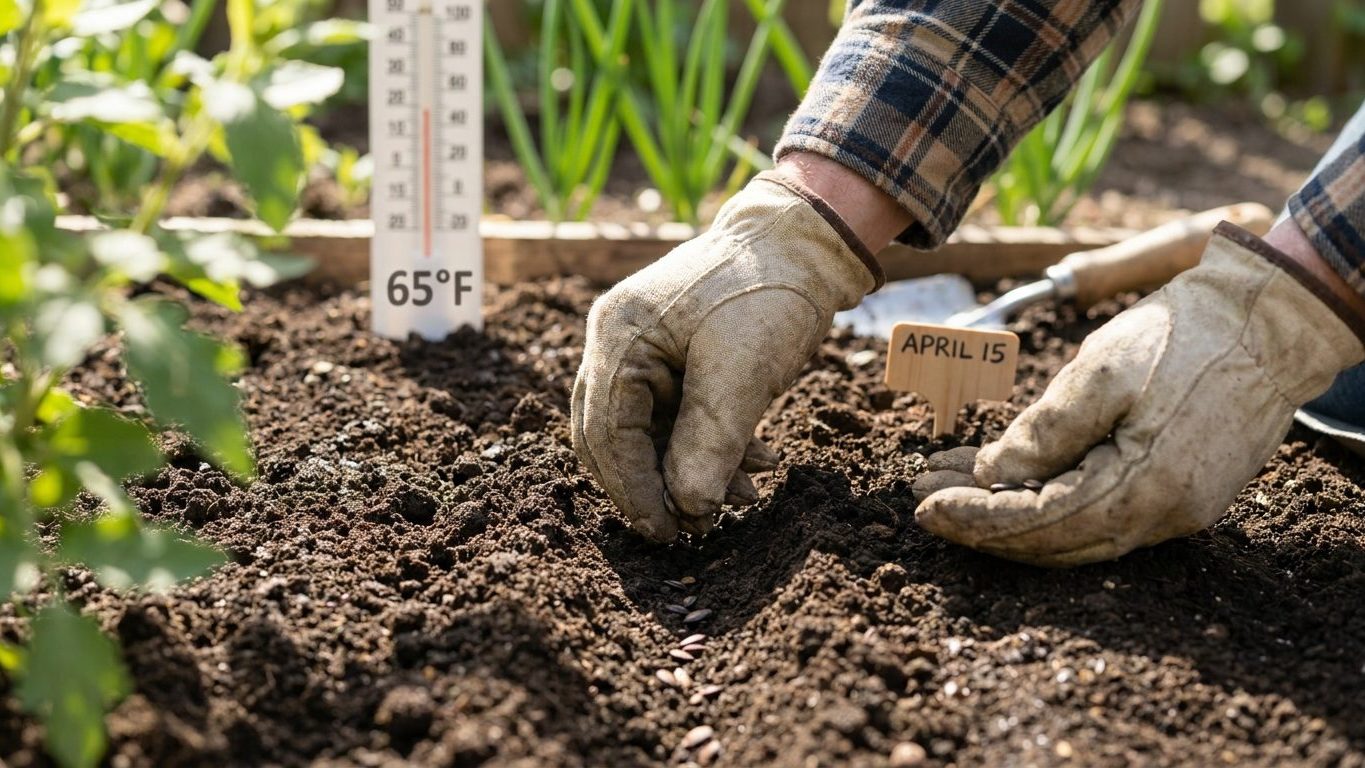

Melons in Oregon go in the ground after the last spring frost has cleared, which west of the Cascades runs from March 6 to March 21 in most years. But that date only tells you when the freeze risk drops. It says nothing about whether the soil, or the summer that follows, can actually ripen a melon.
The short answer for Oregon
The last spring frost window for the Portland reference station sits between March 6 and March 21, and the first fall frost arrives between November 11 and November 27. Both figures come from NOAA’s 1991-2020 climate normals and represent a 30 to 70 percent probability band, not a guarantee. In plain terms: by March 21, roughly seven years out of ten have already seen their last 32F reading, but three haven’t. Treat the later date as the safer target for anything as frost-sensitive as a melon seedling.
That gap between the two dates, March to November, gives a frost-free stretch of around 235 days at the reference station. On paper that sounds generous. Melons don’t care much about frost-free days on their own, though. They care about heat, and Oregon’s western valleys don’t supply much of it. The same climate record shows only 11.9 days a year reaching 90F or above. That’s the number that actually decides whether a melon crop finishes or stalls green on the vine.
Because of that heat shortfall, the practical answer isn’t “sow in March.” It’s: start melon seed indoors three to four weeks before the last frost date, and move transplants outside only once nighttime lows have stopped threatening 32F and the soil has had real time to warm. Direct seeding outdoors in March or even early April usually fails here, because the ground is still too cold for melon seed to germinate reliably. The transplant window that follows the frost date, roughly mid-to-late March into April at the earliest, is the workable target for western Oregon.
One thing this page cannot do is hand you a single statewide date. These frost figures come from the Portland-area reference station, which sits west of the Cascades in a maritime climate. Central and eastern Oregon are high desert, with shorter growing seasons and sharper temperature swings between day and night. If you garden east of the mountains, this window does not apply to you, and no fact available here covers that region’s frost dates specifically.
What will not work here
Direct-seeding melons outdoors in spring is the most common failure west of the Cascades. Melon seed wants warm soil to germinate, and in a region where the last frost can still be arriving as late as March 21, the ground simply hasn’t caught up by the time gardeners are eager to plant. Seed sits in cold, damp soil and rots before it sprouts. Starting indoors and transplanting later sidesteps this entirely.
Long-season melon varieties are the second trap. Some melon types need 85 to 100-plus days of consistently hot weather to fully ripen and develop sugar. Western Oregon’s climate record shows just 11.9 days a year above 90F, which is a thin heat budget compared to melon-growing regions in the Southwest or Southeast. A variety bred for a long, blazing summer will often still be forming fruit when the first fall frost shows up between November 11 and November 27. Shorter-season types built for cooler summers stand a far better chance of actually finishing here.
Watering by habit instead of by the calendar
Summer rainfall averages about 2.7 inches total across June, July and August, with July, the driest month, delivering just 0.51 inches. That’s not enough to carry a melon crop through fruit set and sizing on its own. Gardeners who water on a fixed weekly schedule, rather than checking the soil, often under-water during the hottest stretches, right when melon vines need the most consistent moisture to avoid blossom drop and misshapen fruit. Combine that dry July with the heat load from those 90-degree days, and irrigation needs can shift week to week rather than following a set routine.
None of this means melons can’t be grown in Oregon. Gardeners do it every year. But it does mean the failures tend to cluster around the same three habits: seeding too early into cold ground, choosing a variety built for a hotter climate, and watering on autopilot through a dry, low-humidity summer.
What changes across Oregon
Oregon’s USDA hardiness zones run from 4a to 9b, a spread wide enough that no single planting date can honestly cover the whole state. Zone 9b territory, generally milder and closer to sea level or in southern valleys, has a longer frost-free season and more cumulative heat than zone 4a ground, which shows up at higher elevations in the Cascades and other mountain areas. The frost dates and heat figures cited above come from one reference station in the Portland area, which sits solidly in the milder end of that range, not somewhere near zone 4a.
Nights get colder faster at elevation, and frost can linger later into spring and arrive earlier in fall than anything in the March-to-November range given here. A gardener there needs to shift the whole transplant schedule later and lean even harder toward the shortest-season melon varieties available.
Hardiness zone assignments depend on very local factors, elevation, slope, distance from the coast, that a state-level article has no way to see. The USDA Plant Hardiness Zone Map is the tool built for that job, and it’s worth five minutes before committing to a planting date based on Portland’s numbers alone.
Where to check this for your own county
Oregon State University Extension is the state’s land-grant extension service, and it publishes county-level guidance that goes well beyond what any statewide article can offer. The service is reachable at extension.oregonstate.edu, and it’s organized by county office, each of which tracks conditions specific to its own soil, elevation and microclimate.
Two things are worth looking for once there. First, a local planting calendar for vegetables, which will translate the statewide frost probabilities used in this article into dates adjusted for that county’s actual growing conditions, something particularly important given how much Oregon’s terrain varies between the coast, the valleys, and the high desert. Second, any variety trial results or recommended cultivar lists for melons and other warm-season crops in that county. Extension offices often run or track trials specifically to find out which varieties actually finish a crop given local heat and season length, which is more useful than a generic recommendation built for the state as a whole.
A county-level recommendation will always beat a state-level one, because it accounts for the exact microclimate a gardener is working with rather than a single reference station’s climate normals. This article works from statewide and reference-station data, useful for understanding the general pattern across Oregon, but it isn’t a substitute for what a county extension office knows about the specific ground fifteen miles from where the climate station sits.
Some gardeners also time melons by the Moon: when to plant watermelon and cantaloupe by the moon, as almanac tradition rather than fact.
Checking this against your own garden
Every date in this article is a regional average built from decades of climate records. A gardener’s own plot will often run a week or two ahead of or behind those averages, and three simple observations settle the question better than any calendar.
Soil warmth by feel is the first check. Melon seed and young transplants want soil that’s warmed through, not just air temperature that feels pleasant. If a handful of soil from a few inches down still feels cold and damp rather than merely cool, the ground hasn’t caught up yet, regardless of what the frost-date window suggests.
The first flush of male flowers is the second signal. Melon plants typically produce male flowers before female ones, and their appearance means the plant has shifted from pure vegetative growth into its reproductive phase. Seeing them early, well ahead of when the regional heat normally arrives, can be a sign that a particular spot in the yard, a south-facing wall or a raised bed, runs warmer than the general area.
First true leaves, the ones that appear after the initial rounded seed leaves, are the third marker. Their timing and vigor say a lot about how the season is actually unfolding on that specific patch of ground. Slow, pale true leaves after a cold snap suggest the soil is still catching up; quick, sturdy ones suggest that particular bed is running ahead of the regional average and can be pushed a little earlier next year.